Thursday, June 30, 2016

It's Cheaper to Pay the Fine

The mushrooming costs of compliance with government regulations have caused some companies to reach the breaking point: [bold added]
Another rational response: pull the
sheet over your head and whimper.
Compliance related to regulatory requirements and changes isn’t a new problem for finance leaders, and it’s getting more complex. Most CPA decision-makers see the level of general business complexity getting moderately to significantly more complex in the next three years. Regulatory requirements and changes ranked as the most-cited challenge of U.S. CPA decision-makers in an AICPA survey in 12 of the past 13 quarters. Regulatory issues were cited by many CFOs as a top challenge in a recent CFO Alliance survey, and it was the top challenge of banking CFOs....

Some companies are choosing not to comply, according to a survey by the Global Trade Academy at management firm Amber Road.
That's a rational response: assess the odds of getting caught, and measure the potential fines against the cost of changes to the information systems and workflow.

If you kick the mule often enough, eventually it won't budge.

Wednesday, June 29, 2016

Outside Starbucks in Foster City


I have never seen these people before. Nevertheless....comments!

1) They've been married a long time: they are long past the point of trying to impress each other and are very comfortable in each other's presence.

2) 25 years ago their noses would have been buried in a newspaper.

3) Couples do look like each other over time.

Tuesday, June 28, 2016

Children of Acton

Research supports the notion that power corrupts.

Berkeley students [bold added]
monitored vehicle etiquette at road junctions, kept notes on models and makes. They observed who allowed pedestrians their right of way at street crossings; who pretended not to see them and roared straight past. The results couldn’t have been clearer. Mercedes drivers were a quarter as likely to stop at a crossing and four times more likely to cut in front of another car than drivers of beaten-up Ford Pintos and Dodge Colts. The more luxurious the vehicle, the more entitled its owner felt to violate the laws of the highway.
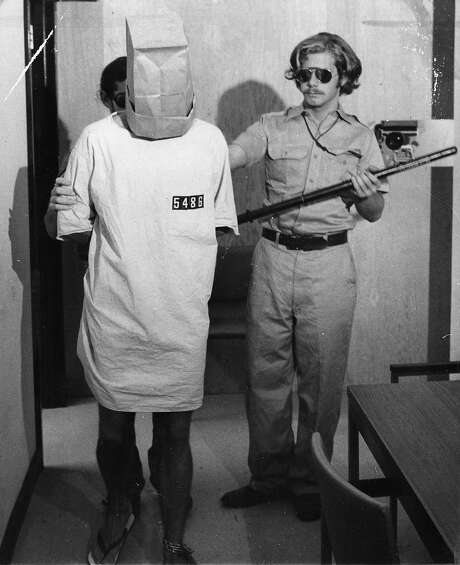
"Prisoner" and "guard" from the Stanford
Prisoner Experiment (SF Gate, 1971)
The Berkeley traffic study continues a long line of research that confirmed the results of 1971's Stanford Prison Experiment, in which "normal" middle-class males began to behave abusively if they were assigned the role of a prison guard over other subjects who were assigned the role of prisoners. Abuse of power results from the power position itself and is less a character defect of the powerful. Berkeley psychology professor Dacher Keltner:
“Here is what power does to just about every human being. It’s going to make you not pay attention to people as well as you used to pay attention to them. You may find yourself swearing at a colleague or telling them that their work is horseshit [blogger's note: this is a situation where it would be helpful to hear the speaker's tone to tell whether he's speaking with self-awareness]. You will be a little less careful in the language you use. You will be a little less thoughtful about how things look from their perspective. So just practise a little gratitude. Listen empathetically. It shouldn’t be that difficult.”
A few more thoughts:

1) Studies that show contradictory findings---that the wealthy are more charitable, for example---run against the prevailing wisdom and don't get published; similarly, hypotheses that the overwhelming left-wing political leanings of academia bias the results are ignored. In other words the social-science gatekeepers themselves are using their power to quash dissent.

2) If we accept that power corrupts, why does it necessarily follow that a larger State will reduce abuses? Encountering jerks in positions of authority is a fact of life, but it's been my experience that it's much more difficult to get rid of those who are in the public sector, who are often protected by higher-ups and even the law, rather than those who are in the private sector and ultimately vulnerable to market forces.

3) Leaders who head most charitable organizations are always asking, wheedling, cajoling, and thanking---but never telling--their volunteers and donors. (Mega-charities with large payrolls have traditional power relationships.) One also sees these non-authoritative leadership styles in organizations where the talent could easily go elsewhere (e.g., big data analytics, professional basketball, neurosurgery).

Said Publius (James Madison) in Federalist 47: "The accumulation of all powers, legislative, executive, and judiciary, in the same hands, whether of one, a few, or many, and whether hereditary, self-appointed, or elective, may justly be pronounced the very definition of tyranny."

Monday, June 27, 2016

San Francisco's "Unsolvable" Problem

Diane Feinstein was the first mayor
to confront the problem (Chron--1986)
This week the Chronicle runs a landmark series of articles on San Francisco's homeless problem. Despite many millions of dollars spent and the attention of six mayors, the headline reads:
"SF homeless problem looks the same as it did 20 years ago."

The limitations aren't just financial. Estimates of San Francisco's homeless population run between 7,000 and 10,000, of which about a third are mentally ill. [bold added]
SF Chronicle--they tried and failed:
Mayors Agnos, Jordan, Brown and
Newsom. Will Ed Lee succeed?
The city would need hundreds of new psychiatric-care beds to get them off the sidewalks — the current inventory of fewer than 1,000 is not nearly enough. But even if it created those beds, getting people into them is difficult. Unless they are judged a danger to themselves or others, the mentally ill can’t be forced into care.
As someone who has encountered the homeless in off-and-on charity work over two decades, your humble blogger has the glimmer of appreciation for how intractable the problem is. Keeping above water in our rapidly changing society is difficult enough, but for those who are mentally ill, disabled, and/or engaged in substance abuse, getting a job and getting off the streets is usually out of the question.

Turning one's life around requires an unwavering commitment that would have probably forestalled homelessness in the first place.

"Mayor Willie Brown...ultimately — and famously — declared the homeless problem unsolvable."

Sunday, June 26, 2016

Hope and Fear

A little over a year ago CRISPR ("clustered regularly interspaced short palindromic repeats") came to our attention. Now it merits the cover of Time:
Just four years old, this discovery is transforming research into how to treat disease, what we eat and how we’ll generate electricity, fuel our cars and even save endangered species. Experts believe that CRISPR can be used to reprogram the cells not just in humans but also in plants, insects–practically any piece of DNA on the planet. [snip]

Talk to any biologist, geneticist or botanist right now and you will hear a level of excitement that comes only from the emergence of something truly groundbreaking. If the evolution from giant mainframes to personal computers forever changed technology, CRISPR promises to do something similar for genetics–democratizing the power to improve on nature for scientists at nearly all levels of expertise in practically every field.
While human beings don't have the power to control the sun, moon, and stars, we now have at our fingertips the ability to redesign not only ourselves but every living thing. Enormous benefits are on the horizon (rejection-proof organ transplants, resurrection of extinct species, crops immune to disease), but there are also enormous risks:
CRISPR means that most microbes driving infectious diseases are just a few DNA edits away from becoming superstrains that could wipe out unprepared populations....With the tools easily bought online, it would be theoretically possible to engineer a killer mosquito that transmits a deadly disease, or a DNA-damaging virus, that could infect human cells and decimate the population.
As mankind races to acquire God's powers, pray that it falls no farther behind in acquiring His wisdom.

Saturday, June 25, 2016

Right Man, Wrong Reason

Earlier this week we opined that Tesla's bid to acquire SolarCity made Elon Musk look more like money-grubbing capitalist than eco-visionary.

Post-announcement trading in both TSLA and SCTY indicates that the market agrees. [bold added]
Musk said the deal was about the “blindingly obvious” synergies of one-stop shopping for a Tesla electric car, a home battery pack, and SolarCity rooftop panels.

Nearsighted investors didn’t see those synergies. Instead, they saw two unprofitable companies aligning behind the name with the better cost of capital, so they can raise the billions they need to achieve Musk’s bold ambitions. By week’s end, Tesla shares (ticker: TSLA) were 12% lower, at $193.15, trimming the announced value of Tesla’s all-stock offer accordingly. More embarrassing for the entrepreneur, SolarCity stock (SCTY) closed Friday at $22.20, two bucks under the $24-to-$25 value of Tesla’s offer. That means investors doubt Musk can swing the deal, even though he chairs both companies and owns about a quarter of each.
Of all the celebrity CEO's in the Bay Area, Elon Musk , we said last year, was the one to watch, but not for the reasons we are watching him this week.

Friday, June 24, 2016

The Upper Hand

The major stock market averages are down about 3% three hours before the close. Yesterday's British referendum to leave the European Union ("Brexit") has injected a huge dose of uncertainty. Normally, your humble small investor would view the current circumstances as a buying opportunity, but the problems may well extend beyond the impact on Great Britain.

According to British WSJ columnist James Mackintosh we can foresee either a short correction or a "rolling crisis": [bold added]
If the world sees Brexit as a cry of anguish from a small island somewhere to the northwest of the world’s biggest trading bloc, then the market correction elsewhere could be nasty and brutish, but short.

As a British passport holder I tend to think an impending disaster for the world’s fifth-largest economy could be the next round of the rolling crisis that started with U.S. subprime, crushed Lehman and then the eurozone before flattening emerging markets. Each showed the weaknesses in the global economy, and prompted proper arm-waving panic before central banks got them under control. I may be biased, but it feels as though there could be a lot further to fall before the central banks can stabilize markets.
The market is driven by both fear and greed, and fear is holding the upper hand.

Thursday, June 23, 2016

Fun and Interesting, But....

The Grauman's Chinese Theatre is also worth a stop.
Native San Franciscan and 55-year Chronicle columnist Carl Nolte finds pleasant surprises in L.A. (as do most of us who don't go south too often). Excerpts: [bold added]
Los Angeles Union Station was full of people, even on a Saturday night. This is the last of the great railroad stations, opened in 1939 when streamlined trains were the cat’s meow....not long ago L.A. Union Station was like a ghost town at night, empty and dusty. Now it’s back.

Los Angeles is noticeably cleaner than San Francisco, Oakland or Berkeley. Less trash, or so it seemed. There was a bit of high fog — June gloom, it’s called — but no smog.

We hear that Los Angeles has twice as many homeless people as San Francisco, but they are not nearly as visible.....we see more beggars in a single block in San Francisco than we saw in three days in L.A.
A tour of L.A. is fun and interesting, but as a place to live? In Northern California the summers are cooler, and the air is cleaner. As Carl Nolte ended his piece, "all roads lead home."

Wednesday, June 22, 2016

His Leash Has Shortened

Tesla Motor's bid to acquire SolarCity makes little strategic sense to outsiders but does enhance the personal fortune of billionaire Elon Musk, who is the Chairman of both businesses. [bold added]
Aside from the familial connection and clean energy angle, there’s not much in common between the two companies in terms of synergies that make this deal logical. Seabreeze Partners’ Douglas Kass expects it to go through, but warns that it was “likely done out of desperation, as Solar City was probably on the way to extinction,” given its debt-heavy balance sheet and negative cash flow.

Jim Chanos has harsher words for Tesla. On CNBC, Chanos today called the deal a “shameful example of corporate governance at its worst.”

Given the state of SolarCity’s finances, and the ambitious Model 3 production schedule, further shareholder dilution may be possible even after the deal closes. Barclays’ Brian Johnson writes that the deal simply magnifies “the losses and cash burn” at both companies and it’s “far from certain” that the equity capital market would remain an “open well” for Tesla. SolarCity’s high cost of capital, which would only increase, it seems, without the deal, looks like an important factor in Musk’s decision to buy it.
Shares of both TSLA and SCTY have plunged this year.
Elon Musk controls both companies, so the motivations behind the merger look more financial than synergistic (he could have coordinated their businesses without this action). Mr. Musk risks tarnishing his image as eco-visionary by looking like a money-grubbing capitalist out to rescue a troubled investment through wheeling and dealing; SolarCity's declining financial condition will be masked by the bright light of Tesla.

Elon Musk's track record so far has earned him the benefit of the doubt, but judging from today's market reaction (TSLA dropped 10.45%) his leash has shortened.

Tuesday, June 21, 2016

Keeping It Simple is not Stupid

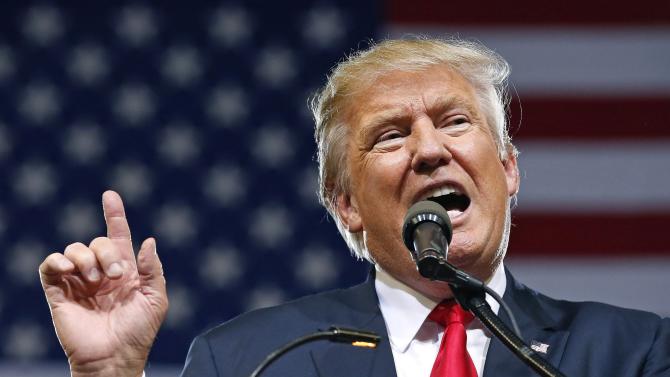
(Yahoo image)
A language maven analyzes why Donald Trump's speaking style has been so effective. [bold added]
First, he keeps it simple....Simplicity is not stupidity; making language easy to apprehend is intrinsic to making it appealing. Countless psychological studies have shown that what is easy to process is seen as more truthful. “I’m going to build a big, beautiful wall and Mexico is going to pay for it” may be preposterous, but it is easy to understand, and the human brain, in its weakness, likes easy things.

Another Trump tactic is repetition. This, too, may be incorrectly seen as childish. Mr Trump does often say exactly the same thing several times in a row in a crude, hammer-blow fashion. But in more sophisticated guise, repetition is a venerable rhetorical tool. Mark Antony sarcastically repeats the taunt that Brutus is “an honourable man” after Brutus murders Caesar. Winston Churchill rallied Britain with, “We shall fight on the beaches, we shall fight on the landing grounds, we shall fight in the fields and in the streets…” And the most beloved rhetorical repetition of the 20th century is the great refrain, “I have a dream.” Mr Trump is certainly no Martin Luther King, but he knows how to leave an audience remembering what he said.

he does not give speeches. Instead, he talks....Mr Trump, as noted above, repeats many tropes. But he also genuinely speaks off the cuff, avoiding the standard sunny string of clichés, which makes him fascinating to journalists. A Trump speech may actually make news...

This unscripted quality is powerful. Even a valid argument is weakened if it sounds canned. Even an invalid one sounds stronger if it appears spontaneous, especially to voters disgusted with the professional politicians.
It's difficult even for experienced speakers to repeat the same themes and come up with fresh insights or examples. And to do it while sounding "spontaneous", not "canned," requires exceptional skill. The cognoscenti may well be mistaking Mr. Trump's crudity and simplicity for a lack of intelligence.

Keep laughing at the barbarians and their leader, but come November they may be the ones laughing last.

Monday, June 20, 2016

As Most Fathers Do

LeBron supplants Steph as best player; Zhuri takes over
from Riley as cutest daughter (SF Chronicle photo)
It was indeed a Happy Father's Day for yours truly: some productivity (a few duties at morning service, finding the right parts at Home Depot), some relaxation (an afternoon nap does wonders), and great entertainment (a close, hard-fought Game 7 of the NBA Finals).

Yes, we have followed the Warriors all season and had a rooting interest, but we weren't as disappointed by the loss as we thought we would be.

LeBron James is an estimable Finals' Most Valuable Player (the 31-year-old has always displayed grace, IMHO, despite being under incredible media scrutiny since he was a teenager), it's about time that the City of Cleveland experienced the joy of a championship parade, and besides, the Warriors didn't deserve the title from the way they played (the team didn't score any points in the final four minutes, thirty-nine seconds of the game).

The Warriors only lost by four points, 93-89, and will likely be contenders for the rest of the decade. So cheer up, fans, and have some perspective, as most fathers do.

Sunday, June 19, 2016

Father's Day, 2016

Dad walks regularly at Ala Moana's Magic Island
While we were waiting for a table in San Mateo, I called Mom and Dad on their landline in Honolulu. Dad's picture popped up on FaceTime. We switched to a mobile videocall and we spent the next ten minutes talking and looking at each other.

Everyone we discussed was doing fine, a remarkable and sadly temporary state of affairs in this journey we call life. 

Happy Father's Day!

Saturday, June 18, 2016

Vast Wasteland of Corporate Accountability

Just because an organization, for example a government agency or a charity, is not chartered to earn a profit does not mean that it is more efficient than business (the latter budgets some funds for profits while the former do not). In fact, these agencies often produce abysmal results, as measured by funds spent versus services delivered. Government or charitable organizations have less oversight from third parties, are not required to divulge as much information as businesses have to, and frequently wield monopoly power (for example, a transportation district that controls bridge tolls). Costs go up, services get cut, and exorbitant compensation is paid to executives for objectively poor performance.

People who work in government are not "worse" than people who work in business. Businesses are forced to improve though competition and outsider scrutiny. Regarding government, if no one forces employees to work efficiently, most of them won't.

In a disappointing but not unexpected revelation the non-profit world suffers from the same disease as government agencies.
Nonprofit accounting is arguably one of the last vast wastelands of corporate accountability; rules are lax, disclosure is minimal, and available data are usually months, or even years, old.

Don’t expect the U.S. government to protect you. “There’s no regulatory agency for nonprofits,” observes CharityWatch President Daniel Borochoff.
Donors beware.

Friday, June 17, 2016

No Mr. Softie Any More

Nearly subsumed by the announcement that Microsoft will buy LinkedIn for $26.2 billion is the news that Microsoft will [bold added]
start offering software that tracks marijuana sales, breaking a corporate taboo on pot.
Perhaps you, dear reader, are puzzled by recent developments in Redmond. Here are the top four reasons Microsoft is getting deep into the weeds.

1) $26.2 billion? LinkedIn "connections." 'Nuff said.


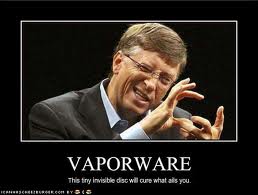
2) Cements Microsoft's dominance in vaporware.


3) Out: blue screen of death. In: blue cloud of doob.


4) If you want more Clippy's, we're gonna need a little extra help.
Clippy (NYMag graphic)

Thursday, June 16, 2016

And Now Orlando

Orlando: the 49 dead (NY Daily News collage)
Whatever we're doing now to stop these mass murders, it's not working. Young lives ended or permanently damaged by strangers is horrible, made more horrible by the reminder that a very black heart beats in some of us.

Nearly a week has gone by, and the reaction was disappointing but not unexpected. There was an instantaneous rush to judgment by thought leaders who seem to be most concerned about validation of their worldview. Can't they all just budge a little on their positions on guns and immigration, whether pro- or anti-? No compromise solution will eliminate terrorist killings entirely, but any reduction in severity and frequency will be a step forward.

I don't know what will be lost by compromising but I know who the big winners will be---the ordinary Americans whose faces will not be on the six o'clock news.