Monday, February 28, 2022

Bank of America: Not Optimal

Asterisks hide passwords from users, too
It's possible to have too much security on an internet bank account.

As many websites do, Bank of America's replaces password characters with asterisks (*) shortly after the characters are typed in. Because passwords now have numbers, special characters, and both lower-case and capital letters, the probability of a mistake has increased as passwords have become lengthier. But one can't see what has been typed.

Unlike all my other financial and shopping accounts, Bank of America does not have a "show" or "eye"(👁) button that allows the user to turn off the asterisks.

After 3 password failures, Bank of America locks the account. And yes, that has happened to me, and I had to call the bank and spend an hour satisfying the person at the other end that I was not a scammer. The bank had me at its mercy, because the fee structure almost forces retail customers to cancel paper statements in favor of electronic access, which makes it impossible to check or reconcile with a locked account.

I've also gotten to the third and final login attempt several times, when my aging arthritic hands shook with trepidation (okay, some poetic license here).

Bank of America does allow FaceID to login on the iPhone, but the user can do it on only one account--I was locked out of one of the other two which required a typed password.

All the above is a protracted preface to a simulation that showed
that five was actually the optimal number—the sweet spot we were hoping to identify. When allowing five attempts, the number of lockouts were minimized, with no adverse effect on security.
Bank of America would make me a happier customer if: 1) the Password field had a "show" option; 2) the account would lock after the fifth attempt, not the third; 3) iPhone FaceID would work on every account, not just one. I would like all of those changes, but I am not expecting any.

Come to think of it, why am I staying with them?

Sunday, February 27, 2022

It's Tough to Labor On

Mosaic Law Synagogue in Sacramento has been without
a full-time rabbi for much of the pandemic. (WSJ photo)
Eighteen months ago our priest of 23 years retired. We were assigned an interim minister--who has been excellent but according to canon law cannot become a permanent replacement--and have been going through an extensive process, again dictated by canon law, of getting to the point where we could even post the job.

Meanwhile three other nearby Episcopal churches, two much larger and wealthier than ours, are also looking for ministers.

Every congregation who is choosing its leader for the next, perhaps 10, years must be thorough, but realistically how selective can we be? The decades-long nationwide decline in Sunday worship has been matched by a clergy shortage:
For eight years, Keith Mudiappa accepted the challenges of serving as pastor at his nondenominational Minneapolis church—the 70-hour workweeks, the low pay, the calls from parishioners at all hours—in exchange for the joy of seeing people come to the faith.

But the rewards of the job were tough to come by during nearly two years of online-only services. Late last year, Mr. Mudiappa quit and moved with his wife and children to Florida. He now works at a bank.

“I decided I wanted to take care of my family,” he said. “I don’t think I could do that in a church setting.”

In religious groups across the country, clergy members are stepping down from the pulpit.

They say the job, always demanding, has become almost impossible during the pandemic: Relationships with and among parishioners have frayed while meeting only over video, and political divisions have deepened, fueled by fights over Covid-19 protocols.

Though no national data about clergy resignations exists, an October study from the Barna Group, which studies faith in the U.S., found that 38% of pastors were seriously considering leaving full-time ministry, up from 29% in January 2021. Among pastors under age 45, nearly half were considering quitting.

In some denominations, resignations are exacerbating clergy shortages that began long before the pandemic. As the country has grown more secular, seminaries have closed and the pipeline of faith leaders has dwindled. The labor shortage within the clergy, which parallels shortages in other industries, is reshaping worship in some parts of the country as more congregations search for ways to operate without a pastor.

Leaders of the Conservative Jewish movement sent an email to synagogues in December, warning that at least 80 of the movement’s roughly 600 synagogues would be looking for a new rabbi this year; they expected at most 60 rabbis would be looking for new jobs. In the Reform Jewish movement, the country’s largest Jewish denomination, there are 5% to 10% more congregations searching for a rabbi than in a normal year, according to leaders.

Some 3,544 Catholic parishes in the U.S. lack a parish priest, up 25% from in 2000, according to Georgetown University’s Center for Applied Research in the Apostolate. The Diocese of Buffalo, N.Y., recently launched a pilot program in which as many as six parishes share one priest.

In the Evangelical Lutheran Church in America, at least 10% of its roughly 120 churches in Montana are looking for a pastor—and still more don’t have a pastor but can’t afford to hire one. Some are beginning to explore sharing a pastor with other mainline denominations, including Methodists and Presbyterians.

“Pastors are tired,” said Laurie Jungling, the ELCA’s bishop for Montana, who said the departure of pastors from their pulpits began accelerating in the summer of 2020. “They’re giving a lot of themselves to help folks deal with the trauma of the pandemic. They’ve had to face polarization in their own congregations, people’s anger and frustration about masks and vaccines, whether to have worship or not.”

In eight years as lead pastor of Rainier Avenue Church in Seattle, Peter Chin built the congregation from about 200 in weekly attendance to around 700 before the pandemic forced them online.

Over the past two years, the congregation has met almost exclusively over video. Relationships have suffered, Mr. Chin said. Staff have resigned, leaving more work for him, and finding replacements has been harder than it used to be, as the nation’s labor markets have tightened. There are disagreements over vaccine policy, politics and whether to gather in person.

“I love to see real change in people’s lives where they don’t feel hope or don’t feel community,” and then find it at church, he said. “I still find a lot of joy in that. But the scale of it, versus the controversy over mandates, political disagreements, expectations that come with pastoring even in the best scenarios—it feels lopsided now.”

Clergy leaving the pulpit now have more options than they did a quarter-century ago. In addition to those making wholesale career changes, some go into chaplain roles. Others are moving to nonprofits, which usually have more limited hours and emotional expectations.

Noah Farkas had expected to remain a pulpit rabbi his entire career. But after 13 years at a Los Angeles synagogue, he left to run the Jewish Federation of Greater Los Angeles, the largest Jewish nonprofit in the area. It became hard to hold the community together during the trauma of the pandemic, he said.

“You get to a point where, after being in the place for over a decade, and you see your friends and parents of your friends dying, it takes a toll,” Rabbi Farkas said.

Some denominations say the pandemic hasn’t affected clergy staffing. A study last year from Lifeway Research found that evangelical and Black Protestant pastors were more likely than in 2015 to say they were frequently overwhelmed and on call 24-hours a day, but that the rate at which they were leaving the pulpit was effectively unchanged.

Still, more congregations around the country now are learning how to cope without an ordained leader. In the Evangelical Lutheran Church in America in Montana, some pastors serve congregations that are 100 miles apart. Laypeople are trained to lead services when there is no pastor.

Mosaic Law Congregation, a Conservative Jewish synagogue in Sacramento, Calif., has spent much of the pandemic without a full-time rabbi since its prior leader of 25 years retired in 2020. A retired rabbi led services on Zoom from Montreal for months, and congregants filled in for events such as funerals and bar mitzvahs.

The congregation has hired a full-time rabbi who starts this year, but Executive Director Caren Rubin said she has warned members that they can’t expect him to remain another quarter-century.

“It’s like corporate culture,” Ms. Rubin said. “People don’t stay.”

Mr. Mudiappa said he works regular hours now in Florida and earns almost 39% more. His wife, who also worked at the church in Minneapolis, can stay home with their two children.

“I was always on the phone. You feel guilty spending time with your family, because there are a lot of other needs,” he said. “I’m enjoying weekends now. The weekends used to be chaos.”
Our church is looking for someone to fill that empty space.
Priests, like teachers, have characteristics--public speaking, leadership, integrity, writing ability, conscientiousness--that attract high compensation in private industry.

In many cases there would be less stress; being responsible for a parishioner's well-being is more soul-consuming than finishing a project.

Baby boomers embarked on second careers in ministry after finding their secular jobs unfulfilling. With some ministers leaving their initial calling, the pendulum is swinging back,

Saturday, February 26, 2022

They Didn't Measure Twice

The Russian invasion of Ukraine is above the fold in most newspapers, but in the Honolulu Star Advertiser the lead was yet another in a long line of stories about the troubled rail project. [bold added]
O‘ahu’s rail was supposed to carry commuters from West O‘ahu’s suburbs to urban Honolulu by now. Instead, the 20-mile, 21-station project is only about 63% complete.

Its costs have more than doubled since the City and County of Honolulu signed an agreement in 2012 with the Federal Transit Administration to build the project for $5.122 billion, and it’s now estimated the full system won’t be operational until March 2031 – 11 years later than promised in that agreement.
The latest snafu concerns a "mismatch" between the width of the train wheels and the tracks:
The gap between rail tracks is too narrow by less than one-eighth of an inch leading into at least five spots where the trains cross onto different tracks...

There are two main ideas to fix the mismatch, including unbolting the track that leads into the frogs and then “(sliding) them over slightly,” then re-bolting the track — a process that could take weeks, [CEO and executive director, Honolulu Authority for Rapid Transportation Lori] Kahikina said.

Another idea would be to cut the problematic track, reweld and retest in a process that could take months and potentially cost “a couple thousand per cut,” she said...

But, Kahikina said, “Worstcase scenario, there could be a derailment,” but “there hasn’t been an issue.”

Board member Jade Butay, director of the state Department of Transportation, asked Kahikina how the problem was just discovered when the track was installed years ago.

“It could be all the way back from the design to the manufacture to the installation … and our own inspection,” Kahikina said. “Right now the main focus is, What is the extent of the issue, and how can we fix it? … Why wasn’t this found sooner? Very good question, and we’re asking the same thing.”
Matching the width of the tracks to the car wheels, and having the width be consistent over the entire system has been a basic principle of rail transportation for almost 200 years. The "gauge" is not a trivial issue, because the engineering needs to be precise and the gauge was not originally standardized. With thousands of miles of incompatible track, it took half a century for the American gauge to be fixed around the Stephenson standard of four feet, eight-and-a-half inches wide, which some claim dates back to ancient Rome(!).

And why does it cost "thousands of dollars" per cut to fix? Below is a video of welding tracks in Sweden.

Remember, dear reader, to measure twice, and cut once.

Friday, February 25, 2022

A Grand Time

Good old Disney days (2016): no masks, no social
distancing, and not having to break the bank.
It's cheaper to stay at Disneyland in Paris for a week, including plane fare, than Disneyland Anaheim.
a recent report from KTLA’s sister station shows that a trip to Disneyland in Anaheim is now nearly twice as expensive as traveling to Disney in Marne le Vallee, France.

This month, the outlet reported that...in June 2022, it costs a total of $4,571.50 for two people to stay at the Paradise Pier Hotel – the cheapest Disney [Anaheim] property resort available – for six nights with five days of park tickets included.

Meanwhile, at Disneyland Paris, the cheapest on-property hotel, the Hotel Santa Fe, was quoted at $2,173.66 for seven days of theme park tickets and a six-night stay (no meals were added on and no insurance was selected). Even with a $1,456.74 flight from Los Angeles to Paris included, the experience would still come out to a grand total of $3,676.06.

Overall, travelers in this scenario could save $895.44 by going to Disneyland in Paris instead of Anaheim.
The cost differential is even higher for Bay Area parkgoers, since we would have to drive to Anaheim. At current gas prices we would save at least a grand by going to Paris.

Thursday, February 24, 2022

It Stinks

The late, great Chronicle columnist Herb Caen called yesterday's paper today's fishwrap.

Events have proved everything about last month's headline ("U.S., Russia Agree", "Talks", "Defuse") as odoriferous as Herb Caen's descriptor. Russia, brushing off threats of sanctions and ignoring the blandishments of diplomats, bombed cities and invaded Ukraine today.

Although I did not vote for him, we only have one President and I suppose we have to support him in whatever action he takes. It's going to be three long, long years.

Wednesday, February 23, 2022

California: Legislate First, Then Look at the Science

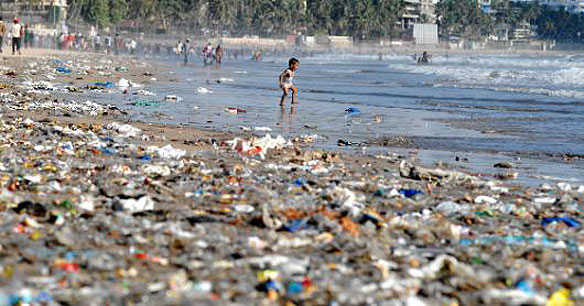
2012: Photo of an Indian beach (coastalcare.org)
A decade ago some scientists were raising the alarm about microplastics. In the intervening years, one would have thought, incorrectly, that there would be at least partial answers to these basic questions:
1) How harmful are environmental plastics to human and animal health?
2) What is the extent of the problem?
3) What is the cost of remedy?
But scant scientific progress hasn't stopped California legislators from considering laws to stop microplastics from entering the oceans: [bold added]
California is set to become the first state, and maybe the first place in the world, to try to limit microplastics at sea...

But there’s a problem with regulating this pollutant. Only so much is known about it — how it gets to the sea and to what extent it’s there. Also, standards for collecting and measuring microplastics are just emerging, and what level of the material may be safe to tolerate is still unclear.

“We can’t sit around and wait for the science,” said Mark Gold, executive director of the Ocean Protection Council, noting the scale of plastic pollution. “There’s a lot of things we can do in the interim.”
Banning plastic grocery bags in 2007 didn't work out, so let's redouble our efforts.

By the way, legislating before all the science was in can make matters worse. Two major examples:
1) requiring MTBE to be added to gasoline for fuel efficiency, then finding out that it poisoned the water supply;
2) banning incandescent bulbs, thereby forcing the purchase of CFLs that poisoned people with mercury when they broke.
When you live in a one-party State, lawmakers don't suffer the consequences of rushed legislation.

Tuesday, February 22, 2022

The Laws Don't Apply to Us Because We're the Good Guys

It was amusing when the town of Woodside attempted to forbid denser housing by declaring itself to be a habitat for endangered mountain lions. Unfortunately for those who enjoy a good debate, Woodside quickly caved in the face of a stern rebuke from the California Attorney General.

It's not a problem for UC-Berkeley to tear down this
112-year-old rent controlled building to build more
housing because the cause is noble.
In a similar manner California's strict environmental law has delayed the construction of faculty and student housing on or near State campuses. The delays have been so severe that UC-Berkeley has been forced to freeze enrollment. The Progressives' solution is not to repeal or amend the law for everyone but to carve out an exception for their own pet projects. [bold added]
State Sen. Scott Wiener says a housing and homelessness crisis on California’s college campuses has become so dire that the state needs to add a major exemption to its premier environmental law to speed up construction.

Wiener is expected to unveil a bill Tuesday that would streamline housing projects by allowing the UC, CSU and community college systems to skip the lengthy review process required under the California Environmental Quality Act.
Environmental laws are fine if they stymie greedy real estate developers and filthy industry. But if mountain lions get in the way of utopian dreams of denser housing in Woodside or if there's a little noise or smoke from developing land for public education (don't you dare try this, Stanford), let's get the Attorney General or a friendly judge or a veto-proof legislature to say the law doesn't apply to us Progressives.

We're the good guys!

Monday, February 21, 2022

Presidents Day, 2022

Still good enough for San Francisco schools (npr photo)
The recall of three San Francisco education commissioners last week has prompted different opinions about what it means for progressive political rule in California.

On one end is the Chronicle editorial board, which said the recall vote has no implications beyond dissatisfaction with San Francisco public education:
Tuesday’s vote was not, in fact, a broader referendum on progressive politics or mask mandates or the ills of a hyper abundance of wokeness.

It was a plea for basic competence and for politicians to listen to the needs of their constituents.
Peggy Noonan opines that the vote is a rejection of woke Progressivism by moderate Democrats:
This was a vote against progressive education officials in the heart of liberal San Francisco. It is a signal moment because of its head-chopping definitiveness, its clarity, its swiftness and its unignorable statement by parents on what they must have and won’t accept. It was a battle in the Democratic Party’s civil war between liberals and the progressive left...

While the board was failing to open the schools it was doing other things. It produced government by non sequitur. The board focused on issues of woke antiracism and oppression. The problem wasn’t whether the kids were getting an education, it was whether the boarded-up schools had unfortunate names. They spent months researching the question and proposed renaming a third of the system’s 125 schools. Many were named for previously respectable people like Abraham Lincoln, Thomas Jefferson, George Washington, Francis Scott Key and Robert Louis Stevenson. Their names were “inappropriate” because their lives and actions could be connected with charges of racism, sexism and colonialism.
On this Presidents Day we reflect how San Franciscans believed that naming schools after all the presidents on Mt. Rushmore, plus a few other dead white guys like Robert Louis Stevenson, John Muir, and Paul Revere, was still "appropriate," or at least not objectionable enough to change.

It may not seem like much to the rest of the country, but last week's vote gives hope to those of us who care about the City by the Bay that it can yet be saved from self-ruin.

Sunday, February 20, 2022

Pope Francis: His Own Man

(Politico photo)
Pope Francis has inveighed so often against capitalism and Western values that the Catholic Church appeared to be another institution conquered by the Gramscian Marxists' long march through history.

Not so fast.[bold added]
Pope Francis is a complicated man who doesn’t fit neatly into American left-right political paradigms. He made a fair number of decisions early in his papacy that exasperated conservative American Catholics, so he got tagged in the public mind as a liberal. Many progressive American priests cheered his reforms, but some went a step further. They began to portray their own revisionist agendas as the pope’s. Some even came to believe it.

Pope Francis hasn’t done all the things those progressives hoped he would. He was widely expected to allow married men to become priests in the Amazon region. Instead he called celibacy a “gift.” He was “supposed to” move forward on the ordination of women as deacons. Instead he has shut down the idea at least twice. While some progressives expected him to change Catholic teaching on sexual morality, he instead forbade priests to offer liturgical blessings to same-sex couples.
The "left-right political paradigm" is far too simplistic: for example, there are many Republicans who support gay marriage and many Democrats who support law enforcement.

It's good to see that the Pope--who ignores the existential threat of Marxism to the Catholic Church--is his own man.

Saturday, February 19, 2022

Inflation: Everywhere You Look

Through most of the past 40 years there have been periods where it appeared that 1970's-style inflation was back. Each time, thankfully, the tide subsided.

But how long could we keep pushing our luck? Was everything we thought we knew about government debt and the printing of paper money wrong? (Hint: no)

At the beginning of the COVID-19 emergency two years ago we were alarmed:
Now the Fed is buying corporate debt--even some risky pieces that pension funds won't touch--and the debt of state and local governments. It has crossed a line and can't go back. ("Why are you letting [State name] go bankrupt?")

Eventually the tidal wave of government debt and paper money will cause an inflation that will dwarf that of the 1970's. Thankfully, with a life expectancy of perhaps 20 years, I won't have to suffer through much of it.
I was thinking about a ribeye roast for Super Bowl
weekend but I couldn't get a 2nd mortgage in time.
Well, we were wrong, not about inflation but that it's years off in the future. It's here now, and it's everywhere. [bold added]
inflation is increasingly widespread across the U.S. economy. Economist Mickey Levy of Berenberg has scrutinized data for more than 200 individual goods and services for which the government tracks prices. An increasing number of individual items are subject to higher rates of inflation, he warned on these [WSJ] pages in December.

His update based on last week’s data suggests the problem is growing worse. Some 73% of the items saw annual price rises of 3% or higher in January, and some 55% of items saw inflation of 5% or higher. Keep in mind the Federal Reserve’s inflation target is 2%.

This is the pattern that typified the inflation of the 1970s. The oil crisis was the “supply-chain disruption” of its day—the go-to, single-item political excuse for inflation. The OPEC cartel was blamed. But the oil-price surge was a response to monetary policy blunders that let inflation loose in the late 1960s and then fed it across the 1970s.,,

The lesson of the 1970s is that once inflation appears, it needs to be corralled with urgency, or it will become embedded and increasingly hard to rein in. We are long past the point where the Fed should have been tightening policy, and the task will be more painful now because of the delay. The evidence of the inflation mistake is everywhere you look.
In the late '70's and early '80's inflation was licked through a change in the political party that ran government, a change in Federal Reserve policy, and a lot of economic pain. Given the quality of our political leadership, a repeat of the '70's and '80's is the optimistic outcome.

Friday, February 18, 2022

A Day for Reconsideration

Questions and answers (Chron photo)
During the previous Administration Vice President Mike Pence provided enough reassurance to Democrats that they moved to impeach Donald Trump on two different occasions.

Now that Mr. Pence is unencumbered by the duties of office, he is free to speak his mind. His speech at Stanford yesterday - "How to Save America From the Woke Left”--was sold out.
Pence condemned what he called “cancel culture” in the Biden administration, criticized critical race theory in public education and applauded parents who are “starting to take our schools back, even here in California.”

....“This week in San Francisco, parents recalled three woke school board members who cared more about renaming schools than reopening,” Pence said to whoops and applause. “Those results, I gotta tell ya — those results are sending shock waves across the country. Democrats who supported cancel culture and school closures are starting to wake up. The truth is, many on the woke left have been spending years trying to agitate for a culture war. It looks like they might just get one. And they’re gonna lose.”
The surprise was not in the content of the speech but in Stanford's refusal to allow the assembly to be disrupted by protestors. The overwhelming majority of listeners, very few of whom were registered Republicans, gave Mr. Pence a respectful hearing.

If Stanford continues to stand up for freedom of speech, especially for people who do not parrot the Progressive narrative, I might have to reconsider my refusal to contribute to any more of its fundraisers.

Thursday, February 17, 2022

Sad Postscript

Ellen Chung, Oski, Jon Gerrish, and Miju (Chron)
Last August we first noted the sad story of the young Gerrish family, whose bodies were found on a hiking trail in Mariposa County.

After investigating multiple, even highly improbable possibilities, the coroner's office ruled in October that the cause was "hyperthermia and probable dehydration."

A final unsent text message on Jon Gerrish's cell phone confirms the coroner's finding.
Shortly before noon on Aug. 15, with temperatures soaring above 100 degrees and the couple, their infant daughter and dog hiking up steep switchbacks with little shade, someone from the family attempted to send a final text from Gerrish’s cell phone.

“(Name redacted) can you help us,” the text started at 11:56 a.m. “On savage lundy trail heading back to Hites cove trail. No water or ver (over) heating with baby.”

The text never went through as the Savage Lundy Trail has notoriously poor cellular service.
It's easy to say that the victims should have known or should have done this or that. But how many of us really subject the dozens of decisions we make each day to that kind of deliberation? 999 times out of 1,000 nothing will go wrong.

There was every sign that each member of the family would have a long, happy, and successful life filled with the love of friends and family. Truly a tragedy.

Wednesday, February 16, 2022

Reaching San Francisco's Limit

Ousted: Alison Collins, Faauuga Moliga, and Gabriela Lopez
In 2020 the seven-member San Francisco Board of Education was preoccupied, not with re-opening classes safely, but with the renaming of 44 schools that bore the monickers of flawed human beings like George Washington, Abraham Lincoln, and Theodore Roosevelt.

The school board in early 2021 removed merit-based admission for Lowell High, the crown jewel of the public school system, in order to make Lowell like the other 14 mediocre high schools in San Francisco. Again, there was little focus on re-opening.

Liberal San Franciscans had reached their limit and "overwhelmingly" voted yesterday for the recall of three Board members:
The landslide decision means board President Gabriela López and members Alison Collins and Faauuga Moliga will officially be removed from office and replaced by mayoral appointments 10 days after the election is officially accepted by the Board of Supervisors.
Supporters of the recalled commissioners blamed the usual suspects: whites, billionaires, and Republicans.
Board of Supervisors President Shamann Walton slammed the recall as being driven by “closet Republicans and most certainly folks with conservative values in San Francisco, even if they weren’t registered Republicans.”

“Trump’s election and bold prejudice brought a lot of that out, even in our Democratic and liberal city,” he told The Chronicle in the days before the election. “There are a lot of people who do not want people of color making decisions in leadership, even though the voters said that is what they want.”
In the 2020 Presidential election Joe Biden won 85% of San Franciscans' votes to Donald Trump's 13%. According to Progressive politicians and educators, Donald Trump and "closeted Republicans'" exerted sufficient power in 2022 to win a San Francisco recall election.

The perspicacity of this political analysis is only matched by the competence of San Francisco's governance.

Tuesday, February 15, 2022

Valentine's Day Dinner

At $12.99 per pound the rib steak was 50% higher than pre-pandemic, but:

1) We hadn't splurged on this cut since last fall;

2) Home-cooked steak would still be cheaper than dining out, which is what we usually do on Valentine's Day.

COVID-19 and inflation seem to have caused long-lasting changes in the shopping and dining habits of Americans:
Americans continue to stockpile food and household goods.

Many are spending more time at home and remain uncertain about product availability. Some have moved from tight-spaced apartments in cities to more spacious suburban homes, and inflation is spurring a search for savings by buying in bulk.

After more than 20 years of steady but slow sales growth, sales at bulk retailers Costco Wholesale Corp., Walmart Inc.’s Sam’s Club and BJ’s Wholesale Club Holdings Inc. rose 26.6% in dollars and 18% in volume during the fourth quarter of 2021 compared with the same quarter of 2019
Though restaurants have reopened, Americans are eating billions (!) of meals more at home than before the pandemic:
At the height of the pandemic, Americans ate 88% of their meals at home, according to retail research firm NPD Group, up from 83% pre-pandemic. Meals eaten at home have since leveled off to about 85%, but the 2 percentage point increase from 2019 levels is equivalent to an estimated 2.9 billion meals and snacks per quarter, NPD says.
BTW, after two years of working on our skills in the kitchen, the steak turned out a perfect medium rare.

Monday, February 14, 2022

The Best Post-Season Ever

The four-game divisional round three weeks ago ("The Best Weekend of Football Ever") was followed by two closely contested Conference championship games: Rams 20, 49ers 17; Bengals 27, Chiefs 24.

The Super Bowl is often a letdown, but not this one:
The Rams beat the Cincinnati Bengals 23-20 in the 56th Super Bowl.

Los Angeles led 13-3 before falling behind 20-13. They survived a pair of interceptions thrown by Matthew Stafford, an injury to Odell Beckham Jr. and long stretches when the offense struggled to move the ball.

Yet with the game on the line, the Rams turned it around. That’s because they went for it.

Down 20-16 with five minutes left on their own 30-yard-line, the Rams faced fourth-and-1. In lieu of punting, Stafford handed the ball off to Cooper Kupp, the NFL’s most productive receiver this season, who ran seven yards for the first down. It was the pivotal play on a drive that ended with a barrage of penalties—before Stafford hit Kupp for a one-yard score.

The Bengals got the ball back with 1:25 to go, and when Joe Burrow is the opposing quarterback anything is possible. He began the drive with back-to-back completions that totaled 26 yards. But after Burrow helplessly threw the ball into nowhere as he was getting dragged down on fourth down, the Rams players stormed onto the field. The Lombardi Trophy was about to be theirs.
Not only were they all close, the final and winning score was made in the last few minutes, sometimes seconds, of each game.

The ancient Romans stupefied the masses with bread and circuses, but they were pikers compared to the NFL.

The half-time show wasn't bad either