Showing posts with label Marijuana. Show all posts

Tuesday, January 21, 2025

Good Things in Small Packages

Your humble boomer-blogger is embarrassed that his first three guesses about the subject of this article were wrong:

Small joints have become big business in California

Is the piece about 1) restaurants/bars; 2) the place where bones of the body meet; 3) prison? Nope, it's marijuana. [bold added]
Big men don't need big joints (SFGate)
Small joints have become big business in California. The state’s biggest pot brands have followed suit, recognizing the reality that many customers don’t actually want that much weed in one session. Micro joints “have exploded” in popularity in the last few years according to Eli Melrod, the CEO and co-founder of the dispensary chain Solful. He said his company is now working on releasing its own version of the bite-sized blunts under the house brand.

Micro joint fans say their benefits are plentiful. The smaller portion allows them to easily be finished in one sitting, as opposed to a larger joint that might require you to put it out and carry around a smelly half-smoked joint in your pocket. Modern pot is extremely potent, so many cannabis users simply don’t want to smoke a full gram joint...

[Chad] Heschong said the only small joint he had previously seen was a half gram, but he took the concept even further by releasing a joint that’s just 0.25 gram. Selfies sells the joints in two-packs, 12-packs and even 28-packs, which he said have become very popular for weddings and other parties where people want to share cannabis with a big group.
At our wedding in the last century we just served alcohol and food. Then, as now. I lacked imagination.

Friday, February 16, 2024

On Kalakaua Avenue

A stroll along Waikiki's tony Kalakaua Avenue is helpful in determining what's trendy. Case in point: Hemptuary, a clever portmanteau that combines "hemp" and "sanctuary."

Marijuana cannot yet be sold legally for recreational purposes in Hawaii, but it is permitted for medical use. If a patient has at least one of ten "qualifying debilitating medical condition[s]" (e.g. cancer, ALS (Lou Gehrig's disease), MS) he may receive a prescription for cannabis. Hemptuary has doctors at the ready to help a patient get a qualifying "329 card" and issue a prescription to said patient.

In related news Senate Bill 3335 is wending its way through Hawaii's Senate Committees. If it becomes law, recreational use for adults can begin on January 1, 2026, upon which strolls along Kalakaua Avenue will become positively uplifting.

Saturday, February 04, 2023

Light Me Up Some Loco Weed

(Image from Veriheal)
There's some evidence that cannabis can help late-stage Alzheimer's patients: [bold added]
Approximately 6.5 million Americans, or 1 in 9 people aged 65 and older, are living with Alzheimer’s dementia. Agitation, aggression, wandering, delusions, hallucinations, mood disturbances and repetitive vocalizations are very common symptoms as the disease progresses. There are no FDA-approved pharmaceuticals to treat the condition, so when behavioral techniques fail, doctors use off-label medications such as antidepressants, mood stabilizers or antipsychotics. Antipsychotics become necessary when the patient risks harming themselves or others due to the severity of the agitation, but they are only modestly effective and carry a black box warning for increasing the risk of death in this population.

Recent research suggests that cannabis may help to relieve agitation by regulating neurotransmitters, reducing brain inflammation and improving circadian rhythm disturbances seen in dementia. It is thought that cannabis binds with receptors located in the same regions of the brain implicated in dementia agitation. A study in mice further found that THC (the major psychoactive component in cannabis) may prevent the harmful plaques associated with Alzheimer’s from accumulating between neurons. Further research may yet determine whether cannabis has the potential not only to treat Alzheimer’s symptoms but to halt the disease’s progression.
I never touched the stuff when younger, but trust the science. If I get Alzheimer's agitation, my caregivers are authorized to light me up some loco weed.

Wednesday, March 30, 2022

Smoke for the Goose

Chris bongs, Iris breathes it in (Chron photo)
Not unexpectedly, a study has shown that marijuana bong smoke is dangerous. The revelation is that bong hits are much more harmful than tobacco smoke.
The results showed that cannabis smoke from the bong produced four times the particulate matter as the smoke produced by tobacco.
From the history of laws against tobacco, we should immediately expect California to enact legislation to protect its residents against bonging: [bold added]
California and its cities and counties have led the way in protecting residents and visitors from these harms through an array of smoking bans that include cigarettes, little cigars (or cigarillos), e-cigarettes, marijuana and hookah. The vast majority of California’s indoor spaces are protected from secondhand smoke, ensuring people breathe clean air while they are at work, school or play. Smoking is prohibited in most indoor places including public and private office buildings, public and private schools and universities, factories, warehouses, restaurants, bars, pool halls, movie theaters, hotel and motel lobbies and meeting rooms and even covered parking lots, among many, many other spaces. There are only a small number of exceptions to these state laws. Because American Indian tribes are sovereign entitities, their lands are not covered by state laws that prohibit smoking in indoor spaces. Many tribal casinos have adopted some policies restricting smoking in tribal gaming casinos and a few have adopted 100% smokefree policies.

Many of California’s outdoor spaces are also protected through local laws as well. To start, many of our parks and beaches have banned smoking to make visiting them more enjoyable to everyone. More than 100 cities and counties have passed comprehensive outdoor secondhand smoke ordinances that prohibit smoking in outdoor dining areas, public events, such as concerts and fairs, recreation areas, worksites and sidewalks. Hundreds more cities and counties have restricted smoking in the entryways of buildings, as well as service areas, which include places such as ATM lines, public transit stops, taxi stands and ticket lines.
Your humble blogger tried smoking cigarettes 50 years ago, didn't like it, and has never smoked since. As one whose allergies are triggered by tobacco smoke, I appreciate the widespread bans, but I think prohibiting smoke outdoors is going too far. I suspect that some of the animus is directed against people who smoke as well as the act itself.

The crowd who uses marijuana is not the same as the one that uses tobacco. If laws to protect bystanders against marijuana smoking are passed quickly, I will be wrong that there are elements of get-the-other-tribe in anti-tobacco ordinances.

But I'm not holding my breath.

Wednesday, December 02, 2020

To SF Politicians: Save Your Breath

San Francisco can forbid and allow whatever activities it wants just because it can: [bold added]

S.F. bans tobacco smoking inside apartment buildings, allows cannabis smoking
A perfectly fine principle
San Francisco residents who live in apartment buildings with three or more units will no longer be allowed to smoke tobacco inside their homes — but they can still smoke cannabis, under a new ordinance the Board of Supervisors passed on Tuesday.

The board voted 10-1, with Supervisor Dean Preston dissenting. San Francisco is now the largest city in the country to ban tobacco smoking in apartment buildings.

“One should not have to live in a single family home to be able to breathe clean air,” said outgoing President Norman Yee, who wrote the ordinance. “That right should exist for every single person and family, regardless of where they live or what their income is.”

The ordinance is intended to protect residents from secondhand smoke. The original proposal sought to ban residents from smoking cannabis in their apartments, but supervisors voted 8-3 — with Yee, Gordon Mar and Ahsha SafaĆ­ opposed — to exclude cannabis from the ordinance.
The fine speech about the right to breathe clean air means that cannabis smoke is harmless, right? According to the American Lung Association
But don't pretend that principle matters
Smoke from marijuana combustion has been shown to contain many of the same toxins, irritants and carcinogens as tobacco smoke...Secondhand marijuana smoke contains many of the same toxins and carcinogens found in directly-inhaled marijuana smoke, in similar amounts if not more...

Smoking marijuana clearly damages the human lung. Research shows that smoking marijuana causes chronic bronchitis and marijuana smoke has been shown to injure the cell linings of the large airways, which could explain why smoking marijuana leads to symptoms such as chronic cough, phlegm production, wheeze and acute bronchitis.
The cannabis exclusion was justified, according to advocates, because marijuana smokers have no choice but to smoke indoors because the activity is not permitted in public spaces.

San Francisco supervisors caved when one of their favored interest groups requested an exemption. OK, that's politics, but please spare us the noble language when you forbid tobacco with one breath and allow marijuana with the next.

Wednesday, May 22, 2019

And the Company's Name is Great, Too

Naomi Granger, founder of Dope CFO, on how she found her niche:
Naomi Granger (WSJ photo)
I picked professional athletes at first, and would go on LinkedIn trying to connect with players. The ones who were actively playing seemed to be bombarded by different financial advisers.

Then I decided to try real estate because I already knew a few agents, but realized most didn’t make enough money to hire an accountant.

That’s when I stumbled upon cannabis. It’s such an underserved industry, facing these huge problems because of the changing laws and massive growth. Most banks won’t serve cannabis companies, and large accounting firms and accounting software providers don’t want to serve the industry either because it’s still an illegal business, federally speaking.
The debits and credits of cannabis accounting don't cover new ground. However, the ethics issues are difficult to navigate, since CPA's are not supposed to be associated with businesses that knowingly break the law (marijuana is still illegal under Federal statutes).

Good luck to Ms. Granger, an entrepreneurial millennial accountant to keep your eye on.

Saturday, January 05, 2019

Often Wrong But Never in Doubt

(Marijuana map from governing. com)
In addition to taxes and regulations stunting sales, there may be another reason for business projections falling short where marijuana has been legalized: the public doesn't trust the enthusiasts who say it's no worse and may even be less harmful than alcohol.

Headline: Marijuana Is More Dangerous Than You Think. Coincident with the rise of marijuana use has been an increase in the incidence of psychosis and paranoia, though we must be careful to state that marijuana has not been proven to be the reason because correlation is not necessarily causation. [bold added]
And last September, a large survey found a rise in serious mental illness in the U.S. too. In 2017, 7.5% of young adults met the criteria for serious mental illness, double the rate in 2008.

None of these studies prove that rising cannabis use has caused population-wide increases in psychosis or other mental illness, although they do offer suggestive evidence of a link. What is clear is that, in individual cases, marijuana can cause psychosis, and psychosis is a high risk factor for violence. What’s more, much of that violence occurs when psychotic people are using drugs. As long as people with schizophrenia are avoiding recreational drugs, they are only moderately more likely to become violent than healthy people. But when they use drugs, their risk of violence skyrockets. The drug they are most likely to use is cannabis.

The most obvious way that cannabis fuels violence in psychotic people is through its tendency to cause paranoia. Even marijuana advocates acknowledge that the drug can cause paranoia; the risk is so obvious that users joke about it, and dispensaries advertise certain strains as less likely to do so. But for people with psychotic disorders, paranoia can fuel extreme violence. A 2007 paper in the Medical Journal of Australia looked at 88 defendants who had committed homicide during psychotic episodes. It found that most of the killers believed they were in danger from the victim, and almost two-thirds reported misusing cannabis—more than alcohol and amphetamines combined.
What about predictions that legalization would reduce violent crime?
The first four states to legalize marijuana for recreational use were Colorado and Washington in 2014 and Alaska and Oregon in 2015. Combined, those four states had about 450 murders and 30,300 aggravated assaults in 2013. In 2017, they had almost 620 murders and 38,000 aggravated assaults—an increase far greater than the national average.
The broad effects of legalization---public health and mental illness, criminal justice, economic activity, taxation--will take years to make themselves known.

But it's called a social experiment for a reason. We can guess at but don't know the results in advance. Possible harmful effects are already appearing. A little humility is called for, especially in the advocates, but I'm not expecting to see it.

Friday, December 28, 2018

Not All It Was Cracked Up to Be

Mid-peninsulans have to go to SF or SJ for weed.
Think of the industries that started off small and have grown big, i.e., video streaming, fracking, ride-sharing, online shopping, organic farming, etc. They each have unique features, but one characteristic they all shared initially is a very light touch by government.

During the early stages employment, income tax, and environmental laws are less stringent for small businesses because society gives them a chance to prove themselves in the marketplace. Ill effects (e.g., pollution) become more apparent as the businesses get larger, at which point regulation may be appropriate.

But there's been no such incubation period for legalized marijuana, which had taxes and regulations imposed from the beginning. Politicians' starry eyes turned bloodshot as visions of plentiful tax revenues vanished in a puff of smoke:
high prices, red tape and competition from the black market have cast a pall over what was supposed to be a triumphant first year of recreational sales.

The cost of legalization was so high in 2018 that hundreds of growers and retailers went out of business, the number of available products spiraled down, tax revenues from sales fell below projections and the black market revved up, according to industry officials and business representatives.

...Meanwhile, growers say, the cost of being in the business is astronomical. Business licenses cost anywhere from $1,205 for a permit to grow 25 outdoor plants to $77,905 for a 22,000-square-foot indoor plantation. Growers and manufacturers also have to pay for lab testing to assure regulators that the marijuana is free of pesticides, chemicals and toxins.

Packaging is another big expense. All smokable and edible cannabis must be in child-resistant containers and affixed with labels that outline potency and dosage amounts. There are also strict protocols on how to transport, distribute and dispose of excess or defective marijuana.
Legalizing marijuana was a favored objective of the educated class in California. It would reduce prison overcrowding from a "victimless" crime and raise oodles of tax boodle.

Like other industries favored by the educated (solar energy, recycling, public transportation), reality showed that they could only limp along if they had government intervention, subsidies, or both. And if you're in an industry that the educated don't favor (big energy, big pharma, big tech, big agriculture, big finance, or for that matter big anything) the handwriting is on the wall.

Get out. Now.

Friday, June 17, 2016

No Mr. Softie Any More

Nearly subsumed by the announcement that Microsoft will buy LinkedIn for $26.2 billion is the news that Microsoft will [bold added]
start offering software that tracks marijuana sales, breaking a corporate taboo on pot.
Perhaps you, dear reader, are puzzled by recent developments in Redmond. Here are the top four reasons Microsoft is getting deep into the weeds.

1) $26.2 billion? LinkedIn "connections." 'Nuff said.


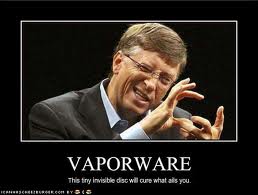
2) Cements Microsoft's dominance in vaporware.


3) Out: blue screen of death. In: blue cloud of doob.


4) If you want more Clippy's, we're gonna need a little extra help.
Clippy (NYMag graphic)

Wednesday, April 22, 2015

Cloud of Confusion

(Image from CPA Practice Advisor)
Staff at the American Institute of Certified Public Accountants, along with the accountancy boards of Colorado and Washington, have published an issues brief for CPA's who are thinking about taking on clients in the marijuana industry.

The issues are many, but they boil down to two: whether to service a business that is "state-legal/federally-illegal" and whether such clients violate the "good moral character" requirement for being a CPA.

The recreational use of marijuana is legal in certain states, but a CPA cannot knowingly provide services to organizations that are violating Federal law.

Furthermore, he or she can forget about trying to get a reciprocal license in a jurisdiction where marijuana use is illegal. Having such a client would be prima facie evidence of poor moral character.

Despite such obstacles it's very clear that this highly scrutinized, regulated and growing industry is in great need of the accounting, tax, IT, and other financial services that CPA's can provide. However, having a client in the marijuana industry risks losing one's license and worse, one's reputation for probity.

I know what you're thinking, dear reader, concern about "good moral character" and "probity"---how quaint!


Wednesday, September 05, 2012

Victimless Crime? Hardly

Consumers of marijuana are portrayed as noble rebels, suffering cancer patients, or peaceful potheads just wanting to be left alone. Whether or not that depiction is accurate, marijuana suppliers are another story. Rivaling the worst Hollywood imaginings of big business polluters, growers have put at risk the local reservoir that serves over a million people.
Last week authorities pulled 7,200 pounds of trash left behind by illicit marijuana growers off the steep hillsides that funnel rain and creek water into [Crystal Springs] reservoir. Among the car batteries and black plastic irrigation tubes authorities carted out by helicopter were toxic pesticides that have been banned from the United States. [snip]

Munsey said agents tearing down the gardens found pesticides methyl parathion and carbofuran, which the Environmental Protection Agency has effectively banned from use in the United States. Both chemicals are considered highly toxic to people and animals. Carbofuran poisoning, in the short term, can mean headache, sweating, nausea, diarrhea, chest pains, blurred vision, anxiety and general muscular weakness, according to the EPA.
Mercury News photo
Are marijuana users endangering the water supply? That argument isn't farfetched if one believes that SUV drivers are (indirectly) responsible for refinery explosions and oil spills. The difference is that the latter are objects of scorn, while the former are way cool, man. © 2012 Stephen Yuen