Showing posts with label Brain. Show all posts

Sunday, October 19, 2025

Of Consciousness, the Brain, and the Soul

(Image from scitechdaily)
Much as UFO skeptics claim that there is no definitive evidence of alien life, so do most scientists believe that consciousness does not exist outside the human brain. Another way of framing the latter proposition is that there is no proof that the soul exists.

American Enterprise Institute scholar Charles Murray thinks that enough evidence has accumulated to question the brain-only view of human consciousness. [bold added]
the most robust, hardest-to-ignore evidence comes from a phenomenon called terminal lucidity: a sudden, temporary return to self-awareness, memory and lucid communication by a person whose brain is no longer functional usually because of advanced dementia but occasionally because of meningitis, brain tumors, strokes or chronic psychiatric disorders.

Terminal lucidity can last from a few minutes to a few hours. In the most dramatic cases, people who have been unable to communicate or even recognize their spouses or children for years suddenly become alert and exhibit their former personalities, complete with reminiscences and incisive questions. It is almost always followed by complete mental relapse and death within a day or two.

The phenomenon didn’t have a name until 2009, but case studies reach back to detailed clinical descriptions from the 19th century. Hospices, palliative-care centers, and long-term care wards for dementia patients continued to observe the condition during the 20th century but usually treated it as a curious episode that didn’t warrant a write-up. With the advent of social media, reports began to accumulate. We now have a growing technical literature and a large, systematic sample compiled by Austrian psychologist Alexander BatthyĆ”ny.

Two features of the best-documented cases combine to meet Sagan’s standard: The subjects suffered from medically verified disorders that made their brains incapable of organized mental activity; and multiple observers, including medical personnel, recorded the lucidity.

A strict materialist explanation must posit a so-far-unknown capability of the brain. But the brain has been mapped for years, and a great deal is known about the functions of its regions. Discovering this new feature would be akin to finding a way that blood can circulate when the heart stops pumping.
Charles Murray analogizes the current state of consciousness science to the late 19th century problems with Newton's physics that required the creation of a new theoretical model:
I see the strict materialistic view of consciousness as being in roughly the same fix as Newtonian physics was in 1887, when the Michelson-Morley experiment proved that the speed of light doesn’t behave as Newton’s laws said it should. It took 18 years before Einstein’s theory of special relativity accommodated the anomaly.

We are identifying anomalies in the materialist position that must eventually lead to a paradigm shift. Science will have to acknowledge that even though conventional neuroscience explains much about consciousness under ordinary circumstances, something else can come into play under the extreme conditions of imminent death.

The implications are momentous. Astrophysicist Robert Jastrow observed that for a scientist trying to explain creation, the verification of the big-bang theory “ends like a bad dream”: “As he pulls himself over the final rock, he is greeted by a band of theologians who have been sitting there for centuries.” Neuroscientists who have been trying to explain consciousness may have to face their own bad dream: coming to terms with evidence for the human soul.
The 21st century was predicted to be the century of the Brain or when the war on cancer would be won. But the century of "soul science"? That wasn't on my bingo card.

Wednesday, September 03, 2025

Having a Big Head Will be a Compliment

There are two schools of thought regarding the change in size of the human brain:
1) Brains are getting smaller because they are exercised less; data and thinking have been uploaded to books, paper files, the internet, the cloud, etc.
2) Brains are getting bigger because of better pre-natal care, nutrition, and education.

(Beth Goody/WSJ)
Whichever theory best describes the past is unsettled, but the artificial intelligence (AI) revolution seems to make future brain shrinkage inevitable. [bold added]
At our [Stanford] lab, we’ve spent a decade treating patients, studying how technology shapes the human mind, and supporting the integration of mental-health and well-being principles into AI and social-media platforms. As generative AI enters workplaces and schools at unprecedented speed, we’re observing a troubling phenomenon: the quiet erosion of our cognitive capabilities.

The allure of the technology is powerful. As our colleague Darja Djordjevic, a psychiatrist at Harlem Hospital and Columbia University says, “Here is a machine that is always available, endlessly enthusiastic, and seemingly competent in every domain. That creates a powerful feedback loop. You skip the discomfort of starting from scratch and get rewarded in seconds.”

No wonder our brain, delighted to dodge difficulty, craves these shortcuts. Humans have always used technology for cognitive offloading—using external tools to reduce mental demands. We write notes to remember, use calculators for arithmetic, and rely on GPS for navigation.

Where previous technologies affected discrete skills, however, generative AI tools raise the stakes. These tools are so expansive in their applications, so autonomous in their execution, that when we activate them, our minds effectively power down.

Therein lies the risk. The very convenience that boosts short-term productivity may also be accelerating long-term cognitive atrophy, across more domains than any technology before it.
The authors offer a variety of remedies, ranging from trying to solve the problem before turning to AI, to an outright AI "fast." I don't hold out much hope that these solutions will make a dent in stemming the AI takeover of our cognitive functions.

In my working life I spent many nights and weekends on audits, business plans, tax returns, and merger deals. If I had an AI bot to help me out, I would have not hesitated to use it. Now that I'm retired (and much lazier) I would still use the tools that made me both efficient and effective.

I pity future generations. I have a bigger brain than they do.

Tuesday, July 30, 2024

Mixed Up Tape

(WSJ illustration)
My late father-in-law would often call any one of his four daughters by another daughter's name. Otherwise as sharp as a tack, he would make this mistake frequently, so we were left with a bunch of implausible explanations: his daughters were not important to him, he was expressing his disappointment that he didn't have a son, they looked alike, etc.

Modern neuroscience has another explanation. [bold added]
Names are especially hard for the brain to learn and recall, according to Samantha Deffler, a cognitive psychologist at York College of Pennsylvania. Most people recall faces more easily, and common nouns roll off the tongue more readily as well.

In an iconic experiment from the 1980s, participants were shown a series of portraits and told each person’s name and occupation. In a twist, words such as “cook” and “baker” were presented as occupations to some participants and as names—“Mr. Cook,” “Mr. Baker”—to others. In what came to be known as the “Baker/baker paradox,” participants recalled the jobs better than the names.

The brain remembers information by linking new bits of data with existing information of similar meaning or context. That makes proper nouns, which are arbitrary “nonsense words,” harder to learn, said Neil Mulligan, a cognitive psychologist who studies memory at the University of North Carolina at Chapel Hill.

Though it occurs nearly instantaneously, recalling a name is a multistep endeavor. A memory cue—perhaps a child’s backpack left on the couch—triggers a search for the child’s name. The memory system offers up multiple potential responses, then rejects all but the correct answer.

The ability to reject wrong responses gets worse with age, which is one possible reason older adults more frequently mix up names, Mulligan said.
Now that I'm in my 70's, I'm finding it increasingly difficult to remember names. What's also worrisome is that I had communicated regularly with some of these forgotten ones only two or three years ago.

I wish I could tell my father-in-law that I'm beginning to understand what he went through.

Saturday, April 13, 2024

Brain Trends: the Science isn't Settled

(Quora image)
Last September we posted about how the human brain has shrunk by the size of a lime since the end of the last ice age about 12,000 years ago. Scientists even hypothesized the reason:
Traniello said the inspiration for applying this idea to why human brains may have shrunk came from “ultrasocial” insects such as ants. Ants form highly cooperative societies in which division of labor has favored smaller-brained individuals due to an advanced level of social organization.

The researchers suggested that perhaps our need to maintain a large brain—to keep track of information about food, social relationships, predators and our environment—has also relaxed in the past few millennia because we could store information externally in other members of our social circles, towns and groups.
The increased offloading of storage and other tasks to the cloud means that our personal computers and cellphones don't need to have as much memory. The brain analogy: no longer do we have to memorize phone numbers, recipes, and addresses, nor do we have to know how to hunt, fish, and farm in order to survive. If we need it, the information is available on the internet. (Isaac Asimov envisioned a future where all knowledge is stored in an Encyclopedia Galactica.)

But what are we to make from this week's headline?

(Image from bigthink)
Our brains are getting bigger — and that could lower the risk of dementia
Human brains are gradually getting bigger, decade by decade, potentially lowering people’s risk of developing age-related dementia, according to a recent study published by Alzheimer’s researchers at UC Davis Health.

People born in the 1970s have more brain volume and more brain surface area than people born in the 1930s, according to the study, published March 25 in JAMA Neurology...

The reasons brains are getting larger are believed to be linked to improvements in the early childhood environment at the population level, including better prenatal care, nutrition, health care and education...

Researchers found that brain volume and surface area grew gradually but consistently in people who were born in each subsequent decade between the 1930s and 1970s. People born in the 1970s had 6.6% more average brain volume than those born in the 1930s — 1,321 milliliters compared with 1,234 milliliters, the analysis found. And people born in the 1970s had nearly 15% more average brain surface area — 2,104 square centimeters compared with 2,056 square centimeters.
There are scenarios where both studies could be true, for example, brains have been shrinking over millennia, but they have been growing over the past century. If I haven't lost so many brain cells, I might be able to think of more of them.

Wednesday, April 10, 2024

They Aren't Forget-Me-Nots

Yesterday I couldn't remember the name of this flower that's been blooming in our yard for over 20 years. Refusing to do an internet search, I wanted to see when the name would come back to me. This morning, after six hours of sleep, the answer came instantaneously: nasturtiums.

Such lapses now come about once a month--well within "normal" and not necessarily a sign of impending dementia--yet I have come to realize that I could have taken better care of my brain when I was middle-aged:
More scientists are looking for clues in the midlife brain because efforts to target dementia in older people have largely failed, says Ahmad Hariri, a professor of psychology and neuroscience also at Duke...

Parts of the brain start to change faster during middle age, especially the hippocampus, which is important for remembering everyday events, says Sebastian Dohm-Hansen, a doctoral student at University College Cork in Ireland and first author of a March review study on brain aging published in the journal Trends in Neurosciences.

In your 40s and 50s, the white matter in your brain—the connections between brain areas—decreases in volume, says Dohm-Hansen. That likely results in slower processing speed, which could have further effects on cognition, he says.

In addition, proteins can build up in your blood, resulting in low-grade inflammation that can affect the hippocampus’s ability to encode and store new information, he says.

People keep their verbal language-based skills their whole life, says Moffitt. But the speed at which you process information and your capacity to solve new problems of logic and reasoning gradually diminishes with age...

There are no guaranteed ways to prevent dementia. But steps that help both your brain and your heart include exercising regularly, eating a healthy diet, and not smoking, as well as trying to avoid getting or managing conditions such as diabetes, high blood pressure and cholesterol, and obesity, and treating obstructive sleep apnea...

Also important is staying socially and mentally active and engaged, [Mayo Clinic Dr. David] Knopman says. “There are benefits of working in a challenging environment—it stimulates the brain—and it seems to be associated with better outcomes,” he says.
It's too late for me but maybe not for you, dear reader. Save yourself!

Saturday, November 18, 2023

Haughty Insouciance

I've written about this phenomenon before:
After generations of protected status the ducks have lost all fear of humans. They sleep in large groups, not caring about our presence...The ducks waddle about, leaving their organic matter everywhere.
In the above photo the ducks stroll fearlessly on a road that snakes around condominiums. As I approached on foot, they looked at me with haughty insouciance but eventually backed away, quacking their displeasure.

Ducks seem to know that cars, slowed by speed bumps and 15MPH signs, will stop for them when they're on this particular road. They also know to stay away from the main avenue a few yards away, where the cars move at 40 MPH.

They've adopted to human environments better than some people have.

Tuesday, September 12, 2023

Half a Brain is All I Need

(Part of) our brain is in the Cloud
In 2018 I tried to buy the maximum memory of 512GB for a new iPhone XS Max but had to settle for the 256GB model in inventory.

Five years later the XS Max is only 40% filled. I didn't create as many files or download as many apps as I thought I would, but the main reason the extra storage is unnecessary is that I've transferred most of the files to Apple's iCloud. (Our subscription costs $9.99 per month for 2TB, which can be shared among the family.)

The larger iPhone capacity was unnecessary because some of the tasks could be offloaded to Apple's network.

It turns out that there's a biological parallel: the human brain has shrunk over the past 5,000 years. [bold added]
But a growing body of evidence suggests our brains recently changed in an unexpected way: They diminished in size sometime following the end of the last Ice Age.

“Most people think of brain evolution happening in this linear way. It grows, plateaus and stops,” said Jeremy DeSilva, a professor of paleoanthropology at Dartmouth College. “But we’ve lost brain tissue equal to the volume of a lime—it isn’t a tiny little sliver we’re talking about.”

The precise timing of that post-Ice Age brain shrink has remained a mystery until now. A group of researchers led by DeSilva used a mixture of fossil and modern specimen data to pinpoint that this loss of gray matter happened between 3,000 to 5,000 years ago, according to research published in June in the journal Frontiers in Ecology and Evolution.

Many anthropologists had initially posited the changes coincided with the advent of agricultural practices around 10,000 years ago, and a global shift away from hunting and gathering.

The more-recent dates from DeSilva’s group point to booming eras for ancient civilizations in North Africa, the Middle East and South America—complex societies that they think may have played a role in the shrinkage.

They hypothesized that human societies got so cooperatively organized in the past 3,000 years that we began relying on what researchers call collective intelligence.

“It is the idea that a group of people is smarter than the smartest person in the group,” said James Traniello, a biology professor at Boston University and one of DeSilva’s co-authors. “So basically, if you live in a group, you solve problems more rapidly, more efficiently and more accurately than what’s possible for any individual.”

Traniello said the inspiration for applying this idea to why human brains may have shrunk came from “ultrasocial” insects such as ants. Ants form highly cooperative societies in which division of labor has favored smaller-brained individuals due to an advanced level of social organization.

The researchers suggested that perhaps our need to maintain a large brain—to keep track of information about food, social relationships, predators and our environment—has also relaxed in the past few millennia because we could store information externally in other members of our social circles, towns and groups.
We don't have to hunt to survive, so it's logical that our senses--and the related parts of the brain--don't have to be as acute as they once were. Nor do we have to store as much knowledge in our head when we can rely on other people, books, and the World Wide Web. The extra brain cells are not needed.

However, I'm still going to try to get the 1TB version of the iPhone 15 Pro Max.

Thursday, August 31, 2023

P or Not P

Dr. Nirao Shah
Stanford researchers have found the specific cells in the brains of male mice that activate sexual desire. They were able to manipulate desire through the application of a protein called "Substance P."
[Nirao] Shah and his team found buried in mice brains, a bit above the roof of the mouth, tiny neural connections that are tasked with processing information from the outside world.

They tell a male mouse whether another mouse is female, and feeling flirty.

If so, this good news is relayed to an adjacent set of brain cells, located on the same circuit. Then a small protein, called Substance P, issues a call to action — like a Marvin Gaye groove.

The team focused on a set of genetically distinct neurons in the amygdala that do something special: They secrete a small and slow-acting peptide dubbed Substance P.

Then the scientists watched a different set of neurons in the preoptic hypothalamus that had receptors for this Substance P. Those two groups of neurons work together, like lock and key.

When Substance P binds to these receptors, it gradually sensitizes the neurons so they become increasingly active...

Normally, male mice are slow to warm up, taking 10 to 15 minutes before mounting. Afterwards, they take a five-day break before regaining interest.

But when the researchers directly infused Substance P into mice brains, the animals turned into love junkies.

Rather than waiting to mate, the mice were ready instantaneously. They even fell in love with lab equipment, mounting plastic tubes adorned with the tail end of a toy mouse bought on Amazon.

They could also become prim, proper and prudish. When researchers silenced the neurons and switched off the circuit, dialing down production of Substance P, the mice lost desire.
We're years away from determining if there's a similar mechanism in the brains of human males and whether the human version of Substance P can be administered (or turned off) safely. If that can be achieved, the control of man's biggest sex organ, the brain, is around the corner.

Monday, May 29, 2023

Deep Sleep and Alzheimer's

The Apple Watch says I'm not getting enough
Deep Sleep. Alzheimer's could be in my future.
Sleep has long been correlated with brain health, and inadequate deep sleep in particular is connected with Alzheimer's disease.
During deep sleep, the brain produces slow electrical waves and flushes out neurotoxins including amyloid and tau, two hallmarks of the disease.

Studies have shown that even one night of lousy deep sleep can lead to an increase of amyloid. A week of disrupted sleep can raise the amount of tau, which is especially insidious because over time it can strangle neurons from the inside out...

In their study, researchers from the University of California, Berkeley, examine how deep sleep affected memory in cognitively normal seniors. What they found is that more deep sleep significantly improved performance on memory tests in patients with higher levels of amyloid and who were therefore at higher risk for Alzheimer’s...

Tne implication is that improving deep sleep could help people at highest risk for Alzheimer’s retain their mental capacities. Sleeping aids might be one way to do it. Studies have also found that exposure to odors like lavender and auditory stimulation at night can improve deep sleep. Regular, moderate exercise does too.
Overnight observation at a sleep clinic is still the gold standard for diagnosis, and a doctor's order is necessary to obtain a CPAP machine and certain medications.

The Apple Watch did confirm the tiredness that I had been feeling, and if lifestyle changes don't do the trick I'm off to the local sleep center. Staving off Alzheimer's is a powerful motivator.

Wednesday, February 15, 2023

Brain Protection: Not Just for Football Players and Construction Workers

Amazon sells this $79 lead cap hood
People who wear tin-foil hats have been mocked for nearly a century, but they weren't crazy, just ahead of their time.

Headline: When Your Boss is Tracking Your Brain
Over the years, these electroencephalogram, or EEG, devices, along with the software and algorithms that power them, have gotten better at tracking brain-wave signals and decoding people’s emotions and cognitive skills. Some employers use the devices to monitor employees’ fatigue and offer brain-wave tracking as part of wellness programs designed to decrease stress and anxiety.
My mental alacrity has diminished significantly from when I was in high school, and I'm glad that I retired before employers' brain-scanning devices could document the degradation.

If I ever do go back to work, I'm wearing a lead hoodie purportedly to hide my balding pate, but you and I will know the real reason, dear reader.

Saturday, February 04, 2023

Light Me Up Some Loco Weed

(Image from Veriheal)
There's some evidence that cannabis can help late-stage Alzheimer's patients: [bold added]
Approximately 6.5 million Americans, or 1 in 9 people aged 65 and older, are living with Alzheimer’s dementia. Agitation, aggression, wandering, delusions, hallucinations, mood disturbances and repetitive vocalizations are very common symptoms as the disease progresses. There are no FDA-approved pharmaceuticals to treat the condition, so when behavioral techniques fail, doctors use off-label medications such as antidepressants, mood stabilizers or antipsychotics. Antipsychotics become necessary when the patient risks harming themselves or others due to the severity of the agitation, but they are only modestly effective and carry a black box warning for increasing the risk of death in this population.

Recent research suggests that cannabis may help to relieve agitation by regulating neurotransmitters, reducing brain inflammation and improving circadian rhythm disturbances seen in dementia. It is thought that cannabis binds with receptors located in the same regions of the brain implicated in dementia agitation. A study in mice further found that THC (the major psychoactive component in cannabis) may prevent the harmful plaques associated with Alzheimer’s from accumulating between neurons. Further research may yet determine whether cannabis has the potential not only to treat Alzheimer’s symptoms but to halt the disease’s progression.
I never touched the stuff when younger, but trust the science. If I get Alzheimer's agitation, my caregivers are authorized to light me up some loco weed.

Friday, January 27, 2023

And How Did That Make You Feel?

(Sleepstation image)
To the list of tips for falling asleep (turn off screens, avoid stimulating entertainment, don't exercise before bed, etc.) sleep specialists have added savoring: [bold added]
Savoring is well-studied as a strategy to improve our general well-being. A considerable body of research shows that it can boost mood and help reduce depression and anxiety. Now, psychologists believe it can help us fall asleep and have better sleep quality, and are starting to study its effectiveness.

Many of us ruminate as we’re trying to drift off. This is where savoring can help. “It gives your brain something else to focus on—something emotionally compelling and pleasurable,” says Dana McMakin, a professor of psychology at Florida International University, who studies savoring.

Savoring differs from other strategies you may use before going to sleep. When you savor, you try to re-create the positive emotional state of the experience. It’s not the same as practicing gratitude, which involves thinking about something rather than trying to feel it. And it’s different from meditating or trying to be mindful, in which the goal is to quiet your mind. Savoring aims to fill it up with positive emotion.
One has to be selective in the positive memories one dredges up: memories from childhood with people who are long gone can turn sad; moments of triumph and vindication can be exhilarating...and stimulative; and of course, recalling savoring's original gustatory meaning, reliving pleasant dining experiences can make one hungry, not sleepy.

Come to think of it (or not), to get to sleep I'll just stick with emptying my mind, not filling it with thoughts, however pleasant they may be.

Tuesday, January 24, 2023

It's the Content That Keeps Us Wide-Eyed

(Cleveland Clinic photo)
The blue light on our smartphone is a minor factor in keeping us awake at night. The content is a much greater disruptor.
If we come across alarming news, a scary movie or an annoying work email right before bed or in the middle of the night, the stress hormone cortisol can rise. A spike in cortisol provides an energy boost by moving glucose from a stored state in the body to an active state. “It’s like eating a candy bar,” says Jamie Zeitzer, co-director of the Stanford Center for Sleep and Circadian Sciences. Coming down from that energy rush can be difficult.

Positive content can be just as disruptive because it can increase the amount of dopamine or norepinephrine in the brain, two neurotransmitters Dr. Zeitzer says can excite the thalamus—the brain’s information-relay center—and disrupt the brain-wave oscillations needed for sleep.
Turning off the phone completely is an obvious solution. The sleep-tracking app is also effective; it dims the iPhone and Apple Watch 15 minutes before the targeted bedtime.

But if you must surf in bed, dear reader, I've been told this blog is an excellent soporific...

Thursday, December 08, 2022

“The eyes are truly the window to our souls”

Maybe her eyes can tell us what she's thinking
The nature of consciousness has long been a fundamental question of human existence, and it's no surprise that scientists are employing scientific methods to improve our understanding of the subject.

For example, human beings are not "conscious" when they are asleep, so one criterion of consciousness is that a person must be aware of objects in the person's surroundings: [bold added]
[Researchers] used a combination of artificial intelligence, mathematics, and a close examination of the eye movements of individuals as they were shown images of people’s faces.

As it turns out, they found that important clues are revealed in the eyes. When people were shown clear images, their eye movements showed a distinct pattern that indicates they were aware of their surroundings. However, as the subjects were presented with progressively dimmer images of faces, the pattern of eye movement changed. Tracking these changes, [Yale Prof. Hal] Blumenfeld said, allowed researchers to discern whether the subjects actually perceived the face or not without asking them.

“The eyes are truly the window to our souls,” he said. “We can tell if people are aware of something by simply looking at their eyes.”

The eye-tracking tool allowed researchers to explore the amorphous dividing line between consciousness and unconsciousness, a state most obvious as we awake from sleep. People become progressively more aware of their surroundings as slumber recedes, a process that is controlled in a region of the brain known as the thalamus.

Ultrasound waves directed at the
thalamus can "jump start" coma
patients (Medindia)
The Yale researchers found that when people awake the thalamus discharges a brief pulse which jumpstarts the transition to consciousness. However, this activity is only a first step in a series of actions throughout the brain that leads to full awareness, they found. For instance, that initial pulse from the thalamus may fail to activate other neural networks, keeping the individual unconscious of most surrounding stimuli. However, the pulse can also activate neurons involved in processing visual cues in the frontal cortex, which in turn amplifies circuits involved in arousal and attention. At the same time, signals irrelevant to the event are turned off.
To those of us who have friends or relatives who regularly experience visual and/or auditory hallucinations, the research into consciousness and awareness can't proceed fast enough.

But for those like your humble blogger, whose brain is healthily grounded in reality (!) and is concerned about scientists being able to read thoughts through eye movements, wearing sunglasses is strongly recommended.

Friday, October 14, 2022

Maybe We Shouldn't Try to Block the Asteroid

I find this disquieting: the Amphibious Robot Turtle (ART). [bold added]
The robot features morphing limbs that can adapt their shape, stiffness, and behavior to the environment. The limbs use variable stiffness materials and artificial muscles to transform their shape when transitioning from one environment to another.

In its legged state, ART can traverse land with a variety of four-legged terrestrial gaits. Upon reaching a body of water, ART can then morph its legs into flippers, enabling it to swim with lift- and drag-based aquatic gaits.

“You can almost think of [adaptive morphogenesis] as a form of evolution on demand,” wrote Karl Ziemelis, chief physical sciences editor for Nature.
I saw the Transformer movies, and I know how this ends.

The rat brain with the human part glowing.
I'm actually more worried about this: Scientists Grow Human Cells in Rat Brains
Neuroscientists at Stanford University transplanted tiny blobs of neural tissue known as organoids into the brains of newborn rats. The human cells grew and made functional connections within the rat brain, generating hybrid neural circuits, the researchers said in a study published Wednesday in the journal Nature.

...Such research could probe the molecular underpinnings of hard-to-study psychiatric conditions such as autism and schizophrenia, neuroscientists said.

That promise will need to be weighed against ethical concerns about animal welfare and how to classify animals with chimeric brains, or brains that have both human and animal cells, some researchers and ethicists said.
Don't worry about human-rat creatures growing in labs. Scientists would never let anything harmful escape. You're not a science denier, are you?

Tuesday, August 02, 2022

Passing a Test

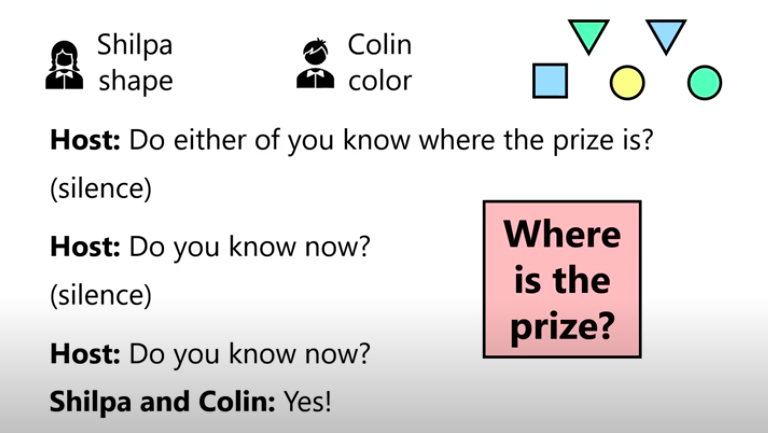
The prize is under one object.
Your humble blogger used to enjoy solving puzzles. That pastime ended when marriage, full-time employment, and later, the Internet, provided more important and/or pleasurable diversions.

Concerned about my absent-mindedness as a precursor to something worse, an adult son played a YouTube clip of a puzzle similar to one used on the Oxford admission test.

The problem is straightforward.

Shilpa is told the shape of the object under which the prize is located, while Colin is told its color. Both participants know that fact about each other. Then the following dialogue ensues:

Host: Do either of you know where the prize is?
(Silence)
Host: Do you know now?
(Silence)
Host: Do you know now?
Shilpa and Colin: Yes!

Where is the prize?

The solution starts at 1:30 in the 5:28 video linked above.

After chuckling at the seeming absurdity of the set up, we froze the video, as the narrator suggested, and I talked through the problem, alighting on the solution in a few minutes. The adult son seemed satisfied that I still had my wits about me.

However, I am always still looking for my eyeglasses.

Note: Wikipedia summarizes variations of these induction puzzles.

Thursday, June 02, 2022

Relevant Article

Deadlines are not friendly to headline writers. Current events can impart unintended meaning and emotions to an unlucky choice of words.

The Yale Alumni Magazine (YAM) cover story is a cheery one.

The women's ice hockey team made it to the NCAA Final Four ("Frozen Four"), where the Bulldogs lost to the eventual champion, Ohio State, 2-1.

Speaking of current events, YAM also has a relevant article on research into the effect of trauma on children's brains.
Children who have endured chronic stress, such as living in a violent neighborhood or within an unstable home life, tend to have thick branches near the brain’s alarm system (the amygdala) and weaker ones near its off switches (the hippocampus and prefrontal cortex). The alarm system blares and there’s nothing to stop it...

(Wiley Online Library)
For children who have endured severe trauma, one option is Trauma-Focused Cognitive Behavioral Therapy (TF-CBT). Dylan Gee is involved in a study designed to assess TF-CBT. Previous studies have shown that it works very well for about half to two-thirds of those who go through it, but less well for others. Her goal is to figure out which children are most likely to benefit from TF-CBT and what might improve the process for those who don’t.

Gee is assessing volunteers, aged 10 to 17, before and after therapy. The theory is that the reason many children show fewer symptoms of trauma after TF-CBT is because the therapy strengthened their regulatory centers. In other words, the children have better control over their brain’s alarm center than they had before.
Children exposed to traumatic events, especially those involving extreme violence, will, of course, need therapy ("TF-CBT").

The Yale study indicates that physical intervention in the development of children's brains at the cellular level is also necessary to right the ship.

Although we are years, if not decades, away from devising the methodology, at least we know the direction in which we're headed.

Tuesday, May 17, 2022

Not Getting the Picture

In the mind's eye: not for everyone (WSJ image)
Visualization is a principal tool for self-improvement. From sinking a putt to sitting in the C suite, from playing in Carnegie Hall to walking down the aisle, from looking good in a swim suit to hoisting a trophy, visualization has helped many people achieve their goals.

But not those who have aphantasia.
About 3% said they had little or no mental imagery, while a similar percentage were “hyperphantasic” with imagery that was almost painfully vivid, and there was a wide range in between.

There was no correlation between seeing mental images and creating them...

[New South Wales researchers] studied 48 random undergraduates and 18 people who were aphantasic. They showed the participants bright and dark triangles and measured how much their pupils involuntarily contracted when looking at the bright shape or expanded when the shape was dimmed.

Then they asked the participants to imagine the same sequence of triangles. The undergraduates’ pupils contracted or expanded just as if they were looking at the actual shapes; but aphantasics’ pupils didn’t change at all.
Aphantasia does seem less important than other problems. Nevertheless, does the inability to form mental images disadvantage individuals? And if so, are there remedies?

The "Century of the Brain" has wrinkles that no one anticipated.

Wednesday, April 06, 2022

Forgetfulness: Not Just an Elderly Problem

(Image from Dr. Jenny Brockis)
We've written about memory issues before. They are most apparent in elderly acquaintances who have dementia and/or Alzheimer's disease. Now they are increasingly manifested in younger people. [bold added]
Short, temporary instances of forgetfulness—those ‘senior moments’—are happening to more of us more often these days, memory experts say. We’re finding it difficult to recall simple things: names of friends and co-workers we haven’t seen in a while, words that should come easily, even how to perform routine acts that once seemed like second nature.

We’re living in yet another moment of big change as we return to offices, create new routines and find our footing in yet another new normal. (And don’t forget a scary war in Europe on top of that.) All this change consumes cognitive energy, often much more than we think, neuroscientists say. It’s no wonder we can’t remember what we had for breakfast. Our minds are struggling with transition moments...

The chronic and cumulative stress of the past two years has taken its toll, too. Research led by Dr. Shields shows that people who have experienced recent life stressors have impaired memory. Stress negatively affects our attention span and sleep, which also impact memory. And chronic stress can damage the brain, causing further memory problems, says Dr. Shields, an assistant professor in the department of psychological science at the University of Arkansas.

The deluge of information coming at us on multiple channels is cluttering our brains, too. We’re terrible at paying attention, constantly scrolling our phones while we’re doing other things, which neuroscientists say makes it hard to encode memories in the first place. And it can be hard to remember something out of context, such as the name of the co-worker suddenly talking to us in person, rather than on Zoom.

Then there’s the sameness of our lives during the pandemic. How are we supposed to remember a specific event when each day was exactly the same as every other?

Memory benefits from novelty,” says Zachariah Reagh, a cognitive neuroscientist and assistant professor of psychological and brain sciences at Washington University in St. Louis. “When all of our experiences blend together, it’s hard to remember any of them as distinct.”
Alzheimer's may not be under our control, but our environment mostly is. So turn off the TV, radio, and other distractions while you are focusing on a task, pay attention to the other person while engaging in conversation, and get enough sleep.

The brain is the most important organ, and compared to the heart, lungs, liver, and stomach we are still at the early stages of learning how to take care of it.

Saturday, February 12, 2022

Sherlock: Ahead of His Time

Piqued by the many references to the Great Detective, I read the first Sherlock Holmes novel, A Study in Scarlet, in eighth grade. I liked the story so much that I went on to complete the entire Holmes oeuvre.

(Image from boingboing.net)
One memorable (notice what I do here) passage that stuck was Sherlock's theory of memory: [bold added]
I consider that a man's brain originally is like a little empty attic, and you have to stock it with such furniture as you choose.

A fool takes in all the lumber of every sort that he comes across, so that the knowledge which might be useful to him gets crowded out, or at best is jumbled up with a lot of other things, so that he has a difficulty in laying his hands upon it. Now the skillful workman is very careful indeed as to what he takes into his brain-attic. He will have nothing but the tools which may help him in doing his work, but of these he has a large assortment, and all in the most perfect order. It is a mistake to think that that little room has elastic walls and can distend to any extent. Depend upon it there comes a time when for every addition of knowledge you forget something that you knew before. It is of the highest importance, therefore, not to have useless facts elbowing out the useful ones.
             ------Arthur Conan Doyle, Study in Scarlet
From the vantage of the 1960's Sherlock's mind-as-an-attic metaphor was not correct. The prevailing theory was that the mind was like a tape recorder. Memories, particularly traumatic ones, were repressed; they could be retrieved by skilled psychotherapists and hypnotists.

Mind-as-tape-recorder fell into disrepute when "recovered" memories were shown to be false or at least questionable in infamous child-abuse cases.

The latest model of the mind is that [bold added]
Memory is more reconstructive than it is reproductive. That is, new details may be included into a memory each time it is recalled. Long-term memories become susceptible to change when remembered. This is because when you call to mind an event from the past, you bring the memory into your short-term memory. And in the process of recalling, new details may be attached to the old memory and reconsolidated with the memory.
Furthermore, the mind has limited storage capacity, and it is possible to have memories "jumbled up", if not lost altogether:
When a person tries to access a memory, their brain quickly sifts through everything stored in it to find the relevant information. But as we age, many of us have difficulty retrieving memories. In a review publishing in the journal Trends in Cognitive Sciences on February 11, researchers propose an explanation for why this might be happening: the brains of older adults allocate more space to accumulated knowledge and have more material to navigate when attempting to access memories.
Be thoughtful about how you arrange your attic. Sherlock Holmes, though fictional, was ahead of his time.