Showing posts with label Leasing. Show all posts

Tuesday, April 23, 2024

A Valuable Hole in the Ground

Long before I joined it, my former employer did a leasing deal with an energy company at the height of the early-80's energy bust. At the end of the long-term lease my employer, as owner, made a few bucks selling the heavily used equipment (aka "residual value"). It also retained ownership of an underground salt dome used for the storage of natural gas. The people who did that deal were mocked incessantly for years as buying a "hole in the ground."

Underground salt domes are valuable commodities in the energy industry for their ability to store large quantities and varieties of substances. The latest application is hydrogen storage. [bold added]
Salt caverns like these are emerging as one possible solution to the question of how to store solar and wind energy for later use.

It’s a three-step process. First, electricity from solar and wind farms is used to produce hydrogen. Then the hydrogen is stored in caverns like those scheduled to be completed next year at the Advanced Clean Energy Storage project in Delta, Utah. Finally, the hydrogen can be used as a green substitute for climate-warming fossil fuels in uses ranging from power generation to steel manufacture and shipping...

The problem is that renewable power generation can fluctuate a lot depending on the time of day or year. Solar-panel output, for instance, stops when the sun sets, and in California can roughly halve in winter versus summer.

Utilities are building big battery installations that can suck up some of that renewable electricity when it’s plentiful during the day, and release it for a few hours in the evening. But the lithium-ion batteries most commonly used today are too small and expensive to absorb the massive amounts of power needed to balance out grids over months or seasons, energy-industry executives say...

Capturing that renewable power by making hydrogen with it and storing the gas underground isn’t cheap. Industry executives say the cost to make a salt cavern could easily exceed $100 million, on top of expenses for the equipment needed to produce the hydrogen. But trying to provide similar storage with batteries is much pricier.

Green Hydrogen International, a company planning a cavern project in South Texas, estimates it would take around 38,500 Tesla Megapacks—a type of battery popular for large-scale utility installations—at an estimated cost of $59 billion to store the amount of energy it is hoping to keep in its caverns, which it estimates will cost $150 million to make...

Salt caverns have been used since at least the 1940s to store fossil fuels. The U.S. keeps a good portion of its natural gas underground, as well as its emergency crude-oil reserves, which reside in four huge salt caverns in Texas and Louisiana.

The caverns are typically hollowed out of deposits of rock salt, formed from the remnants of ancient seas that have hardened into layers or been squeezed into pillars or mushroom-shaped domes of salt underground.

Salt deposits have advantages for storing hydrogen, a notoriously tough gas to trap. They are more leakproof than other types of rocks used for storage sites—a feature especially important for hydrogen, which is the smallest molecule in existence. And the rock salt doesn’t react with hydrogen, which can be corrosive to tanks when it is stored above ground.

To create a cavern, engineers drill deep down into a salt deposit, then flush it with massive amounts of water, which slowly erodes the salt and forms a long, tubelike hole, a process that can take two or three years.
As for my employer's hole in the ground, it was sold for a multiple of the original cost of the entire project (it helped that the dome was required to be filled with increasingly expensive natural gas when it was turned over to us). And the men who did that deal became CEO's and Executive Vice Presidents.

Friday, January 05, 2024

Containers: No Longer Just for Transportation

Shipping containers form a makeshift wall around
People's Park in Berkeley (Mercury photo)
My former employer leased large transportation equipment (airplanes, locomotives, barges) to industrial customers. Shipping containers were an adjunct to the main business.

Basic used containers then cost in the $5,000 range, and that market was highly competitive. To be successful, lessors had to be good at moving thousands of units. Specialized containers--for example those that are refrigerated and insulated--could be expensive, but the bulk of the business was commodity-like, not high-tech, and not subject to obsolescence.

Durable, heavy, relatively cheap and portable containers have been produced for decades, and estimates are that there are hundreds of millions of them in existence. It's not surprising that they are being put to uses that were not originally envisioned. In an ongoing, publicized example shipping containers are being used to keep out activists from People's Park in Berkeley:
After the overnight raid of the park to remove protesters of the development, as well as longtime unhoused residents, the block of open space was largely closed off by the 160 big metal boxes. Most were dirty yellow with a few orange and blue scattered in, with all wording and numbers haphazardly covered by blue or white paint.

The hulking boxes each weighed at least 5,000 pounds...

“We learned in August of 2022 that even a really sturdy fence, and an expensive one at that, that we put up, was not sufficient to withstand attacks on it by people who were ready and willing to engage in vandalism, and who would resort to just about anything to tear the fence down,” said Dan Mogulof, university spokesperson, adding that alternatives would probably be expensive and unsuccessful as well. The shipping containers “seemed to offer the best solution given that our primary objective was to close what is a construction site.”
An example of "cargotecture"
As for the other uses,
Shipping containers have had something of a rebirth in recent years, their typical job of transporting goods shifting to a variety of uses, including border security.

Arizona officials double-stacked 1,700 containers along its southern border with a plan for such a barrier to block 10 miles, but caved to protesters and threats of federal litigation, trucking the big metal boxes away for auction early last year. They are now being made into tiny homes.

But shipping containers have also been chic darlings of industrial design, becoming homes, restaurants, bunkers, pop-up shops and playgrounds, among a wide range of uses.

The famed Starburst House in Joshua Tree, which looks like a bunch of rectangular boxes sticking out at odd angles, is 2,000 square feet of living space made entirely of shipping containers.

Los Angeles has an apartment complex made from containers, designed for homeless people.

And then there was the 2022 FIFA World Cup stadium in Qatar built from 974 shipping containers.

The concept has become so trendy in recent years that it has its own moniker: cargotecture.
Accountants may have to adjust upward the 25-40 years they've been using for the useful life of containers.

Saturday, August 26, 2023

Local Boys' 15 Minutes of Fame

I drive by the Hawaiian Rent-All sign nearly every day when I go back to the Islands. On the corner of Beretania and McCully, it's on the way to the H-1 on-ramp that's closest to my parents' house.

Long known for its silly puns (think Dad jokes), the sign recently has included political humor. The latest Hawaiian Rent-All sign went viral this week when it criticized President Biden for his Maui speech (representative tweet at bottom).

The store's owners, the Jung brothers, get a chuckle out of me when they're at their best. I suppose I'll now have to treat their humor with more respect.

Friday, March 25, 2022

Buying a Used Car: the Joy Was Absent

At 9,000 miles the 2019 model still looks like this.
Yesterday I went to the dealer to buy the 2019 SUV at the end of its three-year lease.

In 2015 we had switched from the buy-and-hold-till-the-wheels-come-off strategy to one of leasing a new car every three years: 1) technology was changing rapidly; 2) we could afford the monthly hit; 3) slowing reflexes and poor vision argued against purchasing a long-term asset.

6½ years into the plan circumstances changed. Runaway inflation in both new and used cars, plus the ultra-low mileage during the lockdown, made the case for buying the leased car overwhelming.

And so we did, though writing a check put a dent into the cash cushion we had built up in retirement.

Not having to make a car payment going forward should have made me happy, like the last house payment in 2016, but the feeling was different. The joy was absent.

On the way out, I saw our same model, one year older and looking like it had been driven a lot more, going for $12,000 above our price. OK, I feel better now.

Saturday, March 05, 2022

Makes Sense, But It's Not Enjoyable

Our 2019 Lexus has mainly sat in the garage.
In July we realized that, contrary to the original plan of turning the car back in, there was a distinct possibility that we would exercise the fixed-price purchase option to buy the car at the end of the three-year lease.
A quick check of prices shows that a used car of the same year and model is going for $7,000 more than our option price.

Mostly because of the pandemic, at 8,000 miles in 27 months we are also well under the expected mileage for the model.
Now it's March, when our lease expires.The Wall Street Journal says that the 2021 price of the average used SUV is $31,415, which is $6,124 higher than 2020.
Prices of used SUVs. "Then"=2020. "Now"=2021. 2022 is likely higher.


For the record our Purchase Option (before sales tax and processing expenses) is $33,719.46. Since it's right in the ballpark of the average SUV price, and we've only driven the car 9,000 miles in three years (normal wear and tear assumes 30,000 miles) we are proceeding with the purchase. A comparable new 2022 car, if we can find one, would cost at least $10,000 more than a new Lexus in 2019.

The heart wants to lease new, but the head says to buy used. Well, I've gotten this far following the head, but it's usually not enjoyable.

Tuesday, August 31, 2021

Trappings of Luxury Not Needed

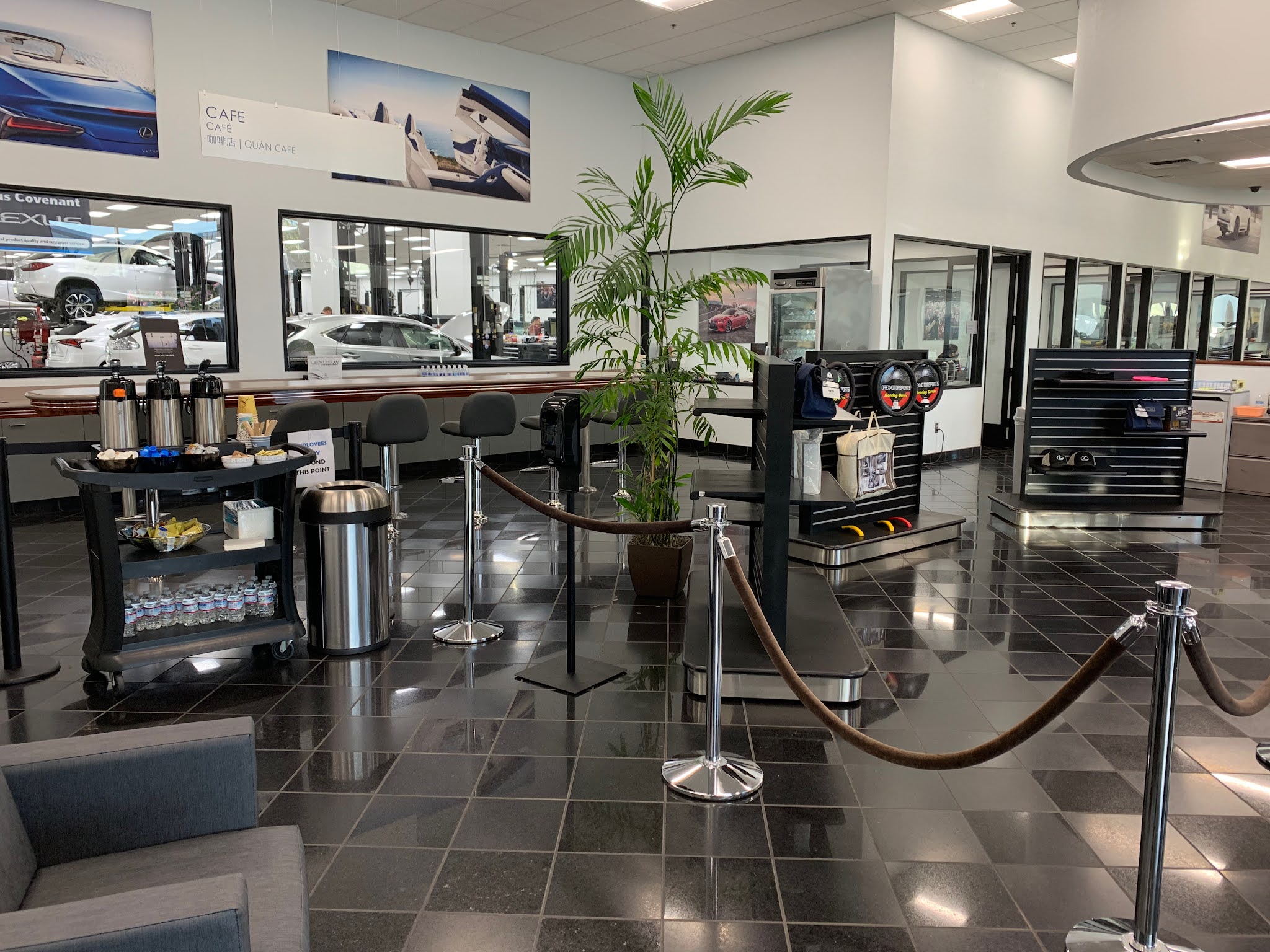
Gone are the snacks and sodas. The car display has been removed. The free shuttle service to the shopping center has been cancelled.

Lexus has pared back the appurtenances at the San Jose service facility.

Coffee and water were the only offerings. The lounge had a few circular tables, along with a dozen comfortable chairs, spaced far apart.

The place seemed half as busy as I remembered. Perhaps the brand is less popular, or perhaps Lexus customers have drastically cut back on their driving. We've only brought in the car twice in 2½ years; the original expectation in 2019 was for four service visits. The shop was done in two hours; if they're going to be this quick I don't need trappings of luxury.

Nothing's changed from last month's rumination about buying out the lease. At 8,000 miles in 28 months we've become the little old lady (not the one from Pasadena) who hardly takes the car out of the garage.

Maybe we'll end up like Bob Costas, who's driven his 14-year-old Lexus LS 460 only 50,000 miles:
Lexus makes good cars—they last a long time and have a classic design. If you spray it with a hose now and then, no one will know the difference between the 2021 and the 2007.
Spraying with a hose now and then---I wish it were as easy with these old bones.

Tuesday, July 20, 2021

Leasing a Car: Changing Our Mind Again

Our 2019 Lexus  has mainly sat in the garage.
Six years ago, for the first time in our boomer lifetime, we leased a car. That experience was pleasant, so we returned the vehicle at expiration and leased another one. The original rationale for leasing has not changed.
The century-old automobile industry is undergoing such speedy technological change that it would be imprudent to absorb the capital cost of an asset that could well be obsolete in 3-5 years.
However, COVID-19, like in many other areas of life, has forced the re-examination of premises; used-car price escalation has caused us to consider buying the automobile at its option price in 2022.
Used-car prices, which have soared in recent months, are now defying economic gravity.

Once thought of as the ultimate depreciating asset, some car owners are finding their vehicles are worth as much as—if not more than—they originally paid for them, dealers and analysts say...

The recent jump in used-vehicle pricing is the latest in what has been a topsy-turvy year for the U.S. car business. Consumer demand for cars and trucks is near an all-time high, but car companies are struggling to keep up, slammed by a global computer-chip shortage that is curtailing factory production on the new-car side.
A quick check of prices shows that a used car of the same year and model is going for $7,000 more than our option price. Mostly because of the pandemic, at 8,000 miles in 27 months we are also well under the expected mileage for the model.

We would be leaving money on the table if we just turned it in. Besides, we will need a vehicle anyway and are aghast at the cost of leasing a new one.

It's likely that we'll exercise the option and be owners again, but a lot can happen in a year.

Thursday, October 15, 2020

COVID-19 Blew Up the Business Model

Nice house in San Jose. Hope they work it
out with the owner (Chron photo).
It was a great pre-coronavirus housing concept.

With San Francisco and prime Silicon Valley studios costing close to $3,000 per month, four unrelated individuals could be eager to house-share by paying $1,750 ($7,000 total rent) for a four-bedroom house. The middleman would lease the home from an owner-landlord for $5,000-$6,000 and would manage the hassle of credit and collections from four different renters. The intermediary would find a replacement if a tenant moved out--not too difficult in a hot job-and-housing market.

COVID-19 blew up the co-living business model. People lost their jobs and left the area. Many who kept their jobs didn't want to live with non-family members.

With the lockdowns dragging on for over six months the following headline was inevitable:

Bay Area co-living startup HubHaus implodes, stranding renters and homeowners
HubHaus, a venture-backed startup in the burgeoning new field of “dorms for grownups,” has imploded, stranding hundreds of renters and homeowners, mainly in the Bay Area.

The 4-year-old Los Altos company, which had raised $13.4 million, is undergoing “a closure and liquidation process, commencing Sept. 23, 2020,” it wrote in emails to homeowners and tenants. It’s laid off all employees, the letter said, blaming the coronavirus pandemic’s severe impact on housing. Several renters and landlords provided copies of the emails to The Chronicle.

“The company is unable to pay October rent,” the emails said, suggesting that landlords use security deposits to cover it. The emails said that tenants’ leases were being transferred to the homeowners.
When landlords go bankrupt, tenants who have paid rent are left high and dry when the bank takes over the property. When the middleman goes bankrupt, both the renters and landlords take a financial hit.

Nevertheless, there are the makings of an acceptable arrangement because the subleases "have been transferred to the homeowners." If the parties can direct their anger at HubHaus, they have a good chance of working out a deal with each other.

Friday, January 10, 2020

Homelessness: Props for Trying

The Post (booking.com image)
Cheap hotels--under $100 per night--in San Francisco were built in the early 20th century. They're located on blocks of the City that are distant from the tourist haunts, and the buildings struggle to remain on the right side of respectability.

The City of San Francisco will lease 151 rooms in two of these hotels, the Abigail and the Post, to get the homeless off the streets.
The city hopes the first occupants at both hotels will be able to move in by April. The Post will charge $1,300 a unit per month and the Abigail will charge $1,400. Residents will be expected to pay 30% of their income — whatever it may be — toward rent, with the city subsidizing the remainder.
The Abigail (Loopnet image)
Housing programs always need on-site monitoring to prevent the importation of behaviors like drug use, prostitution, and overcrowding. This pilot program will be supervised by two non-profits, the Tenderloin Housing Clinic and Episcopal Community Services.

There's much to be hopeful about. If the room subsidy is, say, $800 per month or about $10,000 a year, that would still be much less than the City's $25,000-$36,000 annual expenditure per homeless person. (To be fair, job training, health care, etc. will make the costs higher than $10,000 per year per hotel resident.)

The oversight by motivated charities, not indifferent bureaucrats, has a good chance of identifying problems earlier. Also, the housing is available immediately, instead of waiting for the units to be built years from now.

The project risk is much lower than the cost of building shelters that turn in to white elephants, so give them props for trying.

Monday, November 13, 2017

Same Persons, Different Decisions

We've always driven--and obviously owned--our cars for at least 150,000 miles, but when the 18-year-old Dodge Caravan finally expired in 2015 we decided to lease its replacement. The century-old automobile industry is undergoing such speedy technological change that it would be imprudent to absorb the capital cost of an asset that could well be obsolete in 3-5 years.

Over-capacity, a plethora of producers, and rapid obsolescence should make it a buyer's market for used equipment, such as cars coming off lease, but to almost everyone's surprise prices are holding steady. One of the reasons is hurricane damage.
The number of lease returns is expected to reach 11.3 million in the three years ending in 2019, 49% more than the same three-year period that ended in 2016, according to research firm J.D. Power.

Thus far, the market is absorbing the extra supply thanks to tighter inventory controls by various industry players and the loss of as many as a half-million cars to hurricanes in Texas and Florida.
If both new- and used-car prices go crazily upward in a year, that would be a compelling reason to buy the Lexus when the lease expires in October (at a fixed price of 70% of cost and mileage of 30,000). Otherwise, we're returning the best car we've ever driven.

We're the same persons today as we were decades ago, but our decisions sure are different.