Showing posts with label Volkswagen. Show all posts

Thursday, December 12, 2024

A Good Home

The truck arrived at 11:30, and the Volkswagen was winched up onto the flatbed.

Carlos said he would take a few months to fix it up. He will bring the car by when he was finished. Carlos intends to commute in the VW from San Mateo to his job in Redwood City. He was the only buyer among three who promised not to flip the car immediately for a profit.

A car is not the same as a beloved pet, much less a human child, but it's nice to know the car that I've had for 51 years is going to a good home.

Wednesday, December 11, 2024

Good Times

The 1976 pink slip
The California State Automobile Association clerk studied the Ownership Certificate ("pink slip") for the 1967 Volkswagen bug. The pink slip was 48 years old and was in a format that he was unfamiliar with. He called his supervisor for help in filling out the paperwork for the transfer of title.

After 51 years I said goodbye to the automobile that I had driven in college. In 2020 I thought I would keep it forever. In 2022 there were still strong reasons for holding on to it.

However, circumstances changed, as they always do. Repairs were required, and it is difficult to find mechanics who were versed in the electrical and engine systems of old Volkswagens. And even if I could get it fixed, no one in the next generation wanted it. Was I interested in using it as a local runaround car? Not badly enough to hold onto the Bug. In bygone days I had invested $thousands (pictures below) to keep it together, but no longer.

2012: before
2012: after
Carlos, who works in Foster City and lives in San Mateo, had been eying the Beetle for a decade. After he called in October, the time seemed right, especially since I'm on this kick to minimize the assets that my heirs have to deal with.

Goodbye, girl, we had some good times.

Friday, April 21, 2023

And So It Goes.....Maybe

Having encountered a malfunctioning electrical system, I hadn't run the VW Bug since last fall. Big mistake. Some problems go away if you ignore them, but not if they have to do with cars.

The battery had fully discharged in the interim, and I tried to jump-start the engine to no avail. The gas had completely evaporated.

I poured three gallons into the tank and, using a plastic syringe, injected fuel into the line to the carburetor. The engine caught briefly, but the gas wasn't getting through.

The poor man's "fuel injection" failed, but I'll keep futzing with the lines, fuel pump, and carburetor to get it running.

Eventually I'll take the car to a repair shop, but pride won't let me have it towed. In the meantime, I replaced the battery, and we'll see how it goes.

Saturday, April 02, 2022

They'll Have to Pry the Stick From My Cold, Dead Hands

The VW foils thieves who don't use a
stick. Also, there's no gas in the tank.
I have been thinking of selling the 1967 VW bug because modern cars are safer and more practical.

However, the rationale for keeping it, which I wrote about in 2020, has grown stronger:
A 2016 survey revealed that only 18% of Americans know how to drive a stick...Periodically one hears of a car hijacking that is foiled because the thief can't operate a manual transmission.

Other advantages of driving an ancient automobile:
1) no GPS for Big Brother to track;
2) A terrorist EMP attack would cripple newer cars only;
3) No biennial smog check.
The escalating costs of gas and car repairs are added reasons:
Manual-transmission cars are also easier and cheaper to repair. Although the latest automatic transmissions are more fuel-efficient than older versions, Consumer Reports suggests that manual transmissions can improve gas mileage by 2 to 5 miles a gallon, partly from the decreased weight of the car. The purchase price of a new car often runs $800 to $1,000 lower.
And for those who are prone to distractions, having to keep both hands and legs occupied focuses the mind:
Using a manual transmission might even make you a safer driver. A study from the National Institutes for Health found that manual transmissions enhance the attention and driving performance of adolescent males with ADHD. The study concluded that “objectively, participants drive safer in the manual transmission mode.”
Safer, cheaper, simpler, and the kids can't steal it. Guess I'll hold on to it for a bit longer....

Wednesday, March 31, 2021

The Joke Backfired

Volkswagen made an April Fool's joke related to the intense interest in electric cars. Unfortunately the joke backfired:
Volkswagen AG’s U.S. subsidiary said Tuesday the company would rebrand itself as Voltswagen of America to promote its electric car strategy, but a spokesman for the parent company in Germany later said the move was a joke.

The name change, which immediately lit up social media and online news sites, was originally intended as an early April Fools’ Day stunt to get people talking about VW’s ambitious electric car strategy.
Too bad, the Volkswagen-with-a-K nameplate on my 1967 Beetle could have become a collector's item.

Thursday, June 18, 2020

Dwindling Knowledge, Dwindling Value

Taking the VW Bug for its weekly outing, I left the keys in the ignition when I stopped at Starbucks for a blackeye.

All was well upon returning. A 2016 survey revealed that only 18% of Americans know how to drive a stick...and I suspect that most of the skilled are over 50. So there was little risk in leaving the keys.

Periodically one hears of a car hijacking that is foiled because the thief can't operate a manual transmission.

Other advantages of driving an ancient automobile: 1) no GPS for Big Brother to track; 2) A terrorist EMP attack would cripple newer cars only; 3) No biennial smog check.

Like the fancy bamboo slide rule my Dad gave me, the Bug has value only to someone who knows how to use it.

Friday, January 17, 2020

Tuesday Rumination

More useful than facial rec after plane crashes.
As we noted in 2015, we used to wait half an hour for the results. (Actually, I remember when mouth X-rays took overnight to process. The dentist would read the results over the phone the next day and schedule dates to fix cavities.)

At Tuesday's appointment the results were flashed instantaneously on the monitor, and the pictures revealed no changes, hence no additional procedures this time.

Stan asked about my 1967 Volkswagen Beetle. (He used to drive one when he went to Berkeley.) Still running, I said, all I have to do is change the oil. Would that my own maintenance were as simple.

Wednesday, January 25, 2017

In Hawaii the Perfect Runaround Car

(Hana Hou photo)
I learned to drive on three different cars, a black Chevy, a blue Pontiac, and a white Volkswagen bug. All had manual transmissions, and by far the easiest one to drive was the white VW, which handled like a toy compared to the Chevy (power steering was another luxury accessory I didn't acquire until I was nearly 30).

My bachelor uncle, who didn't drive much, let me use his car. After he died in 1982, relatives fixed and painted the car, which was stolen shortly thereafter. In Hawaii then and now, Volkswagen beetles are prized. [bold added]
There are Volkswagen enthusiasts all over the world, but Hawai‘i’s attachment to the brand is so deep and abiding that the cars have become an inextricable part of local culture. Only in Hawai‘i is VW to classic cars what Spam is to breakfast. If you think about it, there are some striking similarities: Both Volkswagens and Spam are dependable, inexpensive and fundamentally utilitarian. Both are also packed with grease. And while one comes in a shiny can and the other is a shiny can, both have a powerful appeal to local tastes that’s not easy for outsiders to understand.
I will install a security system in Hawaii, however.
On the contrary, the appeal is easy to understand. Pre-1975 VW's don't have catalytic converters or radiators. Maintenance is easily within the skill set of the backyard mechanic. To a young single person who doesn't care about impressing a client or a date (or for safety or air-conditioning), it's the perfect runaround car.

It's one of the few things that I'll take to Hawaii if I ever move back.

Saturday, February 27, 2016

The Glorious Future

(Image from the Guardian)
"The car will be the smartest device that people will own"
Former Motorola and Cisco executive Padmasree Warrior has joined electric carmaker NextEV in Silicon Valley. She [bold added]
thinks the auto industry is starting to look a lot like the cellphone business just before the iPhone shook things up....

"In the next decade, the car will be the smartest device that people will own, and NextEV wants to bring the mobile Internet experience to the vehicle. In other words, why can’t your car be as easy to own, operate, update and personalize as your smartphone?"
Time: "The computer is simply a better driver than a human."
Let us count the ways:
Better at keeping its eyes on other drivers; better at maintaining a steady cruising speed and thereby maximizing fuel efficiency; better at parsing GPS data, weather data, traffic data–any and all kinds of data, really–and better at making rapid-fire adjustments.

The computer doesn’t get distracted by a spouse, kids or the jerk who just made an illegal lane change. It doesn’t sneak a glimpse at Snapchat, or fumble with a leaky burrito, or steer with its knees while playing air guitar. The computer couldn’t blink even if it wanted to. It never says yes to a fourth chardonnay, never convinces itself that weed improves its driving. Asking directions is a computer’s favorite activity, and unless ordered to, the computer never falls asleep.
In the glorious future car "owners" will not be able to control the object sitting in their driveway. For one thing, they will not be able to turn it off and on. They cannot
a) pull the plug because the car runs on batteries,
b) disconnect the batteries because the car will be hermetically sealed like new laptops today, or
c) drain the car of electricity and/or gas because it automatically goes to a refueling station.
Given the advancement of artificial intelligence, it won't just be the smartest device in the household but will be smarter than any person in the household. Also, there will be a backdoor that will allow the NSA, the car manufacturer, and/or Chinese hackers to take control of "your" car, which, to repeat, is smarter than you. You have been warned.

I am definitely keeping the old VW.

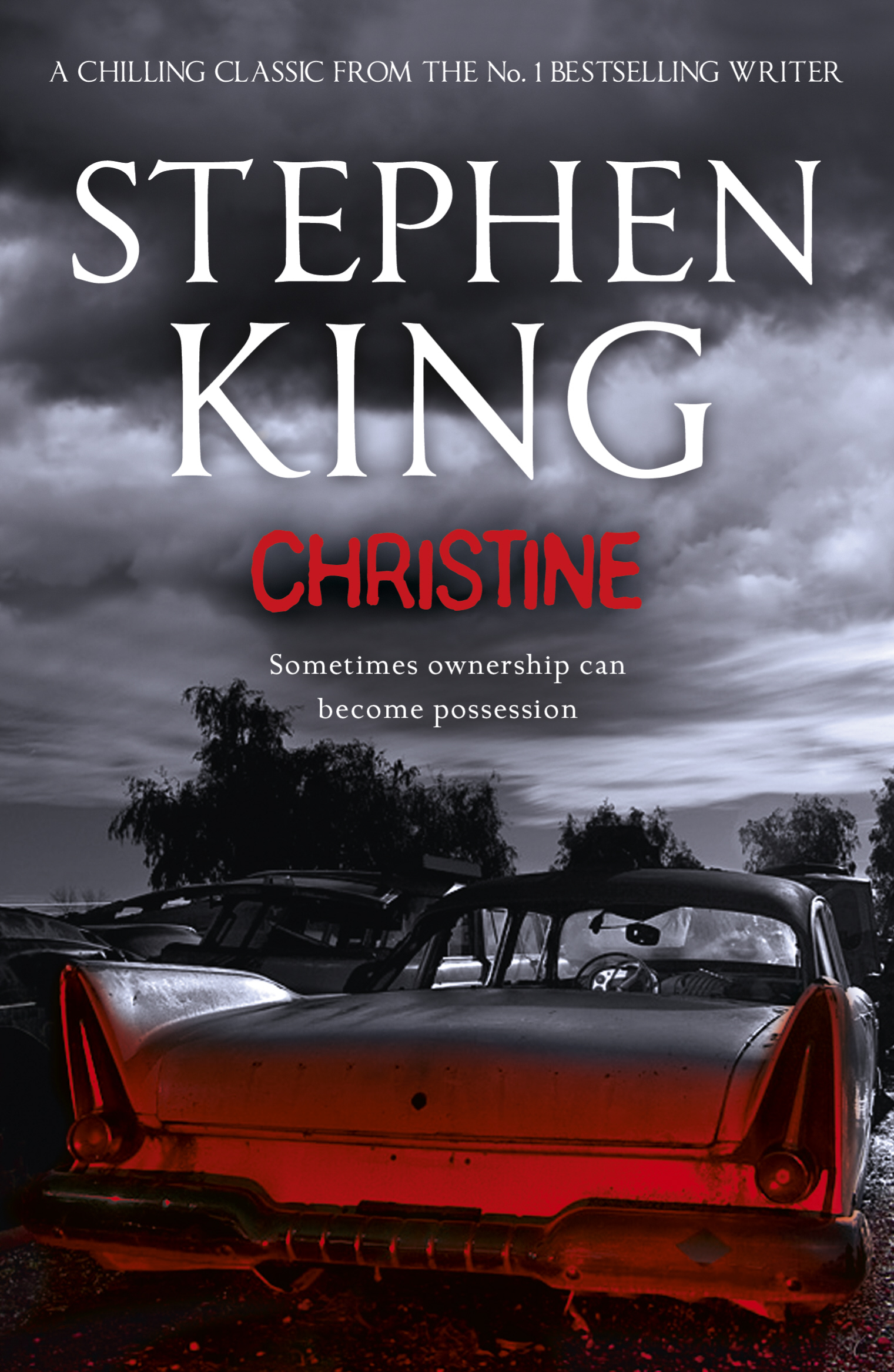
1983's Christine: Life catches up to art.

Tuesday, January 05, 2016

I Can't Wait to Be Transported by My Robot Masters

Mercedes self-driving car at the 2015 CES (Fortune)
The two-cars-in-every-garage template that shaped American life for over half a century will not be around much longer [bold added]:
Today, cars are people’s second-largest household expenditure, and they sit unused 23 hours a day. When they’re on the road, some vast proportion of them are looking for parking

An average of 30 percent of all cars in any urban downtown are cruising for a space—wasting time, worsening congestion, and adding to vehicle-miles traveled. “If someone described that model to you and didn’t tell you it was cars, you’d say it was ripe for disruption,” GM’s Ammann says. A 2015 study of Lisbon, Portugal, by the Organisation for Economic Cooperation and Development found that a fleet of just 26,000 TaxiBots—hypothetical on-demand, autonomous carpool vehicles—could replace every one of the city’s 203,000 cars. Think about that: the same population, 565,000 people, served by a tenth the number of cars.
This is not a brief for mass transit. The 21st-century transportation network is far removed from the top-down design beloved by central planners. It combines needs, resources, and pathways--what's different now is the degree of information, computational power, and speed of communication--to get people and goods from Point A to Point B at the maximum speed at the lowest cost. Trains, taxis, Uber, or RobotCo will all be available for selection by a mobile phone app, just as Amazon displays pages of choices for anything one wants to buy.
This decentralized approach to remapping our physical roads is fundamentally (and finally) changing everything about how we get around. Bus, train, ferry, Lyft, self-­driving car, hyperloop, or a combination of all of these things—it doesn’t matter. Think of it this way: To the new transportation supernetwork, you and I are just data. It doesn’t matter where we want to go; it just knows how to get us there—faster, cheaper, and utterly in control.
The VW I'll keep, the Toyota behind it probably not.
I drove cars with manual transmissions-only for the first fifteen (15) years after I got my driver's license. Automatic transmissions meant some loss of control, which I found difficult to accept. Today, only a seldom-driven Volkswagen bug remains from those clutch-happy days. (Control is an illusion, little grasshopper.)

I, for one, can't wait to be transported in a self-driving car which I probably won't own. Getting rid of the tons of metal taking up space in the garage and driveway will be liberating.

But I'll probably still keep the VW.

Monday, April 27, 2015

If You Have to Ask, You Can't Afford It

Like the incessant remodeler who is never satisfied with her kitchen (one of my neighbors is working on her third), I'm tempted to start all over on my 1967 Volkswagen when I read articles such as these.

Zelectric engine compartment
(WSJ photo)
Zelectric Motors of San Diego takes old VW Bugs and
and over the course of a few months converts their engines to run on zero-emission, 100 percent electric power.....the Bugs boast top speeds of over 100 mph—more than double the horsepower of the original stock and with a charge range of between 80 and 100 miles.
Asking how much it costs throws cold water on that fantasy:
The typical turnkey ZelectricBug sedan (1958-1966) starts at $64,000....We can also retrofit your currently owned rear-engined air-cooled classic with select components starting at $40,000.
If one has that kind of dough plus a desire for a technically advanced car, one may as well get a Tesla and have both an ultramodern interior and exterior.

As the Good Book says:
And no man putteth new wine into old bottles: else the new wine doth burst the bottles, and the wine is spilled, and the bottles will be marred: but new wine must be put into new bottles.

Thursday, January 22, 2015

The Internet of Cars

Progress, or just a tangle? (photo from Kapsch.net)
In a few years, according to GM CEO Mary Barra, v2x will become a household word:
The next frontier is a wireless technology called v2x, which companies in America, Europe and Japan are developing. It encapsulates vehicle-to-vehicle [v2v] and vehicle-to-infrastructure [v2i] communications. Essentially, special modems allow v2x-equipped cars to talk to each other and the world around them, and warn drivers when there is trouble ahead [snip].

GM has announced plans to put its first v2x-equipped vehicle—the 2017 Cadillac CTS—on the road in about two years. The state of Michigan has committed itself to building 120 miles of v2x-enabled infrastructure in and around Detroit.
Your humble observer is bemused by these predictions of "talking", intelligent automobiles by companies that can't even get the current crop of brakes, airbags, and engines to work right.

Decades ago, I nearly sent my non-GPS-enabled, completely analog (chips had not been invented) VW Beetle to the scrap heap. Today I'm grateful to have a car that will operate without WiFi (or even a radiator or catalytic converter!). Sometimes doing nothing is the best decision of all.

Being restored at the body shop school in Burlingame

Monday, July 28, 2014

Who Needs eBay?

The 1967 VW now gets about one unsolicited offer per month, usually from an aging boomer who remembers the good parts of the Sixties.

Investing lesson: if you can hold on long enough, an asset can eventually recover and may even turn a profit. In this case it took 40 years.... © 2014 Stephen Yuen

Thursday, October 10, 2013

Rescued from the Shredder

A paean to the automobile shredding machine:
The shredder stands as the singularly most important piece of recycling equipment ever developed. It is, among other things, the best and really only solution to managing the biggest source of consumer waste in the world today: the roughly 14 million American automobiles that are junked annually.
The blue '67 Bug was destined for the shredder, but after the following video's graphic depiction I just couldn't bring myself to consign it to this fate.


Fred's Garage (now run by his sons) in Redwood City has given
new life to VW Bugs, Buses, and Karmann Ghias

Wednesday, May 15, 2013

There Will Be Cramming

At the Auto Body School the students are wrapping up this year's projects. The school is part of San Mateo County's Regional Occupational Program (ROP), which teaches skills that local employers seem to want.

Students bring in their own cars to work on. They also sand and repaint cars that other owners have left as training vehicles (finally I get to use that term literally).

The cost is reasonable--less than $1,000, basically for materials but not labor. Periodically one has to check in with the school to pay for miscellaneous parts that are too rusted or damaged to be put back.

VW rear carpet
Owners must be patient, because the project spans one (sometimes two) school years. The exterior of my beetle was more or less finished in March, and an upholsterer has been contracted to do the interior work. It will be a close call whether he can finish the work this week, when the facility will be closing for the summer. (Due to funding cutbacks the Auto Body School may be closing for good; ABS programs are no longer showing for the ROP fall semester.)

It's an educational axiom that, no matter the level or type of school, there will be cramming. © 2013 Stephen Yuen

Monday, March 18, 2013

My World in a Car

Longtime readers of this journal know that your humble observer finds it difficult to part with his old cars. Apparently, there are enough of us "jalopy drivers" around to merit a study:
Clinging to a car isn't just about money. Here's what one automotive research firm discovered when it surveyed consumers who held on to their cars for 10-plus years:
  • They like to travel overseas
  • They look for security in their relationships
  • They have a college degree
  • They tend toward libertarian political views
  • They like to garden and do their own home repairs

    Source: Strategic Vision, Inc.
  • The study appears to be about people who can afford a new car ("like to travel overseas" infers that "like" means "being able to") but choose not to buy one. Those who drive beaters because of economic limitations may well have a different profile.

    In my case the Strategic Vision description is about 80% accurate. The overarching characteristic of us jalopy-by-choicers appears to be that we subscribe, consciously or not, to the 1970's small-is-beautiful ethos. We don't throw away stuff if it's working, we ignore markers of social status, we value our independence, and we buy what we need, not what we want. These are all principles that we break from time to time because of ego, social pressure, and convenience, but our lives are better off for having followed them.

    On the other hand, sometimes an old car is just a clunker. © 2013 Stephen Yuen

    Our van qualified for the 2009 cash-for-clunkers program. We're still driving it.

    Thursday, March 07, 2013

    The Buggy House

    Business took me to the East Bay, so on the way home I popped in on the Buggy House, one of the last classic VW parts suppliers in the Bay Area.

    Air-cooled VW buses and bugs were once plentiful throughout the area. The shops hung on for years, then disappeared as the founding proprietors were overtaken by age.

    A flattering portrait of the Buggy House made me want to check it out as a place to rebuild the engine after the painting was done. The store was clean, well-appointed, and a promising candidate to do the work.

    VW Fuel Line
    When I showed the clerk a difficult-to-find bumper bolt, he was back in one minute with a set of four new matching nuts and bolts. I also picked up three feet of the old fabric-wrapped VW fuel line that one can no longer find in regular auto stores. The online VW suppliers can be cheaper, but often there's no substitute for visually inspecting the wares and avoiding the hassle of a return.

    The bumpers have been put back on, and we can see the light at the end of the tunnel:

    © 2013 Stephen Yuen

    Monday, December 03, 2012

    Not As Bad As It Used To Be

    The experience of going to the dentist for a check-up has improved to the point where it has almost become a pleasure. The technician covers the patient's eyes with tinted plastic and carefully explains what he's doing each step of the way. His tools are more precise and operate with much less vibration than they used to. There's little or no pain during the scraping, especially if one has been flossing and using an electric toothbrush.

    Without the distraction of smartphones and the Internet, the enforced isolation of the dentist's chair (where no conversation is possible) can bring on a meditative state. I've even dozed off for a few minutes. After the polishing, the dentist comes in to do a quick inspection.

    A Berkeley grad, former VW Bus owner, and child of the Sixties, Stan inquired about my VW Bug. I showed him pictures. He seemed pleased. Gleaming, just like my teeth. © 2012 Stephen Yuen

    Sunday, November 25, 2012

    Rejuvenation

    Nine months ago
    Today
    My old college car is looking better after sanding and painting.  It still needs a lot of work; dozens of parts are unusable and need to be replaced.

    Rejuvenation hasn't been quick or easy, but at least it's possible. Unfortunately, the same can't be said about the car's owner....

    Tuesday, November 29, 2011

    In Order to Get Better, You Must First Look Worse

    The blue beetle has been stripped bare, with not even a gown to protect its dignity. Today I ordered replacement gaskets and moldings from a vendor in Southern California.

    Next month I'll shop around for bumper restorers. I'd rather rechrome the German originals than buy replacements made in Brazil or China. Rechroming is expensive due to the skilled labor and powerful chemicals employed. I'm still hoping that this labor of love doesn't turn into a time and money sink, but the signs aren't promising.