Showing posts with label Robots. Show all posts

Friday, September 12, 2025

"A Toaster on Wheels"

Seven years after relocating to Foster City and five years after Amazon acquired it, autonomous-driving company Zoox is introducing its robotaxis in Las Vegas.
Zoox’s first public launch kicks off Wednesday on the Las Vegas strip. The company is offering free rides from a few select locations, with plans to expand more broadly across the city in the coming months. Riders will eventually have to pay, but Zoox said it’s waiting on regulatory approval to take that step.

Amazon is jumping into a market that’s all about the future, but one where Waymo has a major head start, having offered commercial driverless rides since 2020. Earlier this year, Waymo said it surpassed 10 million paid rides, and the company now operates in five cities, with Dallas, Denver, Miami, Seattle and Washington, D.C., coming next year.

Tesla, meanwhile, began testing a limited robotaxi service in Austin, Texas, in June, though with human supervisors on board.

But unlike Waymo and Tesla, Zoox’s electric robotaxi doesn’t resemble a car. There’s no steering wheel or pedals, and the rectangular shape has led many in the industry to describe it as a toaster on wheels. Zoox co-founder and technology chief Jesse Levinson says, “We use robotaxi or vehicle or Zoox.”
Our driving skills have been eroding, and in 3 to 5 years we foresee being in the market for a self driving vehicle. Waymo and Tesla would've been at the top of our shopping list, but we'll take a look at Zoox. I wonder if they'll give a hometown discount to local customers?
2018: Zoox prototype (Bloomberg photo)

Wednesday, May 14, 2025

The Perfect Egg

The "perfect" boiled egg (Di Maio/WSJ)
Your humble blogger will go through some time and effort to acquire good food, but I don't love boiled eggs enough to spend over half an hour preparing them:
A group of Italian scientists has cracked the secret of how to boil a perfect egg.

The catch? It takes 32 minutes, two containers of water held at different temperatures, and a fastidious chef moving the egg between the containers every two minutes...

The scientists aimed to cook an egg evenly throughout. The conundrum was that an egg’s layers—its yellow yolk and white albumen—cook at different temperatures. Eaters risk a chalky yolk if they want a fully cooked white, or a runny white if they want a creamy yolk.

Transfer eggs between pots every 2 minutes
To achieve perfection, [Prof. of materials engineering Ernesto] Di Maio’s group, aided by mathematical models, simulations and experiments, invented “periodic cooking,” a method that calls for starting an egg in a pan of boiling water, leaving it there for two minutes, transferring it to a bowl of tepid water at 86 degrees Fahrenheit for another two minutes, and repeating the cycle eight times.

That’s 16 steps.

The goal is to keep the yolk at a consistent temperature of around 149 degrees Fahrenheit while still cooking the white, which usually needs to reach 185 degrees Fahrenheit to cook.
This is the ideal task for our first AI robot. It will never lose count of how many transfers it made and will make each transfer at the two-minute mark. It will do the job I won't do and do it better than I could ever have done it

Saturday, January 21, 2023

Another Sign I Should Stay Retired

If I'd known personal branding was important
I would have taken better care (WSJ illuatration)
Here are Five Skills College Students Will Need for Their Future Careers
  • Entrepreneurship in the Metaverse
  • Ethics and AI
  • Networking 101
  • Designing for Natural Disasters
  • Building a Personal Brand
  • Back in my business school days nearly 50 years ago, none of the above subjects would have been deemed worthy of spending more than an hour on. I also would have had no idea what "Metaverse" meant, and "Ethics and AI" would have been a topic in a science fiction course.

    By the way I think it's more important to have a basic knowledge of marketing, finance, MIS (Management Information Systems, how quaint), accounting, business law, production, and human resources to advance one's career. I also place communications and math skills higher than the aforementioned ones, which is why I should stay retired.

    Wednesday, November 02, 2022

    The Terminator is Coming

    (WSJ graphic)
    Seven years ago I laughed at those first videos of "walking" robots falling down. Now there are robots that can run, then transform their legs into flippers and swim.

    As minimum wages are forced higher not by the market but by government fiat to "protect" workers, companies are installing robots at a record pace.

    The next step is easily foreseeable. Robots, not humans, will be the bosses and even fire people.
    In November, International Data Corp. predicted that by 2024, 80% of the G2000—the 2,000 biggest companies in the world, according to Forbes—will be using “‘digital managers’ to hire, fire, and train workers in jobs measured by continuous improvement.”
    Scientists have found that human workers [we would never have needed that qualifying adjective in my day] prefer to be criticized or even fired by robots with little or no human characteristics.
    When a robot gives employees feedback, [Singapore professor Kai Chi Yam] says, they don’t typically see any bad intent, because they don’t believe the robot has any agency—the ability or the will to exert power over them or harm them. The robot, the employees say to themselves, is just doing its job, Dr. Yam says.

    However, when the robot has been given human characteristics, employees don’t respond as well, because they are more likely to think that the robot is out to get them, he says.
    Companies obviously have to think through the ramifications. If employees are managed by human-like robots, they'll hide when the regular manager is switched for a machine marching down the hall.

    "Run! the Terminator is coming," won't be said only in the movies.

    Monday, October 17, 2022

    Action and Reaction

    A robot, a billionaire, and a billionaire-robot
    hybrid (Euronews image)
    CNN, September: New California law could raise fast-food minimum wage to $22 an hour [bold added]
    Under the legislation, the council could raise the minimum wage for fast food workers to up to $22 an hour — well above the $15 an hour in the state for employers with more than 26 workers.

    The new standards apply to chains with at least 100 locations nationally.
    WSJ, October: Robots are spreading at a record pace
    A half-million industrial robots were installed globally last year, according to data released Thursday by the trade group International Federation of Robotics—an all-time high exceeding the previous record, set in 2018, by 22%.

    The total population of industrial robots in the world has now also reached an all-time high, 3.5 million, which exceeds the population of every U.S. city save New York and Los Angeles, according to the federation.
    Thanks, California, for accelerating the adoption of technology!
    “We have really built a world meant for humans to navigate, not for robots to,” says Dr. Webster of Ball State University. “In the future, we will have to make a world that is attuned to the needs of the robot.”

    Friday, October 14, 2022

    Maybe We Shouldn't Try to Block the Asteroid

    I find this disquieting: the Amphibious Robot Turtle (ART). [bold added]
    The robot features morphing limbs that can adapt their shape, stiffness, and behavior to the environment. The limbs use variable stiffness materials and artificial muscles to transform their shape when transitioning from one environment to another.

    In its legged state, ART can traverse land with a variety of four-legged terrestrial gaits. Upon reaching a body of water, ART can then morph its legs into flippers, enabling it to swim with lift- and drag-based aquatic gaits.

    “You can almost think of [adaptive morphogenesis] as a form of evolution on demand,” wrote Karl Ziemelis, chief physical sciences editor for Nature.
    I saw the Transformer movies, and I know how this ends.

    The rat brain with the human part glowing.
    I'm actually more worried about this: Scientists Grow Human Cells in Rat Brains
    Neuroscientists at Stanford University transplanted tiny blobs of neural tissue known as organoids into the brains of newborn rats. The human cells grew and made functional connections within the rat brain, generating hybrid neural circuits, the researchers said in a study published Wednesday in the journal Nature.

    ...Such research could probe the molecular underpinnings of hard-to-study psychiatric conditions such as autism and schizophrenia, neuroscientists said.

    That promise will need to be weighed against ethical concerns about animal welfare and how to classify animals with chimeric brains, or brains that have both human and animal cells, some researchers and ethicists said.
    Don't worry about human-rat creatures growing in labs. Scientists would never let anything harmful escape. You're not a science denier, are you?

    Monday, November 16, 2020

    Out with the Old, In with the SKU

    The latch on the door to the garage got stuck. No amount of WD-40 would loosen it because the problem was a spring that had lost its springiness.

    After disassembling the doorknob, I took the part to Home Depot.

    There were shelves upon shelves of new locksets but nowhere a spare latch to be found.

    The old-timers who used to work at Home Depot would have walked the customer to the spot and fished for the part out of a box.

    Instead, that morning, there was only a kid, barely out of high school, who was restocking the shelves. He was proficient at scanning numbers on boxes, looking up their location on a hand-held device, then putting the box on the proper shelf.

    He didn't need to know anything about hardware; he could be filling up the spaces with cans of soup or cotton socks.

    I showed him the latch. He asked, "What's the "skew"?" (Yes, I know he meant SKU.)

    Largely successful in eliminating sarcasm--the kid didn't deserve it--I replied, "The latch is over 20 years old. I don't think it had a 'skew.' It's a latch for a Kwikset lock."

    He struggled, furiously typing on his device.

    I pulled up the Home Depot app on the iPhone, searched for Kwikset, and scrolled down to the SKU (pictured) in 20 seconds. He re-entered the numbers and found the item at location L-something, hidden behind some boxes on the floor. I found a new latch for $8, so the expedition was a success.

    I did give a passing thought to the old-timers. They would know what to do with the part after taking it home, but that knowledge is unnecessary to the functioning of 21st-century retail stores. The kid's job is safer, but I felt sorry for him, too. The robots are coming.

    Thursday, May 16, 2019

    No "Yes, But's" Allowed

    At Northeastern University computer-science majors are required to take a course in theater and improv.
    (GIPHY Image)
    The course requires public speaking, lecturing on such nontechnical topics as family recipes. Students also learn to speak gibberish—“butuga dubuka manala phuthusa,” for instance.

    The class is a way to “robot-proof” computer-science majors, helping them sharpen uniquely human skills, said Joseph E. Aoun, the university president
    All the world's a stage, nerds, so you'd better get used to it.

    As for liberal arts majors, laugh it up, fuzzballs, but a little science, technology, engineering, and math will get you on the good side of our future robot masters.

    Thursday, January 10, 2019

    Vast Benefits, Vast Risks

    Microsoft research head Eric Horvitz believes that computers will be able to tell if you're sick. They will know this before you do and before you ask them to look. [bold added]
    Eric Horvitz (Microsoft)
    He and Microsoft colleague Ryen White, along with co-investigators from Stanford and other universities, have examined anonymized data from hundreds of millions of users of Bing, Microsoft’s search engine. They initially looked at query terms—what you search for—and the time and date of searches. Then, they added IP addresses—your computer’s unique identifier—and other location information. Most recently, they have focused on motor movements such as keystrokes, clicks and mouse activity.

    This data can reveal critical diagnostic evidence. People confide intimate secrets about their health—yellow skin, odd-looking stools and other curious symptoms—to their search engine that they do not share with others, even physicians, Horvitz says. And the biometric and geographic information picked up by search engines may uncover secrets of which even users are unaware.
    Just because someone did a web search on symptoms doesn't mean that he or she has cancer, but that datum can be correlated with other information, for example, if the user comes from a region with a high incidence of cancer. Similarly, a change in mouse-click speed and accuracy may indicate sleeplessness or a budding neurodegenerative condition, relatively easy to determine from other indicia (age, family history, whether the cellphone was active at 3 a.m., etc.)

    We're not there yet, but we're nearing the point when computer networks will know each individual better than they know themselves. The benefits are vast, but so are the risks.

    Sodden afterthought--if the Graduate were remade today, the dialogue might well go something like this:
    MR. MCGUIRE: I want to say two words to you. Just two words.

    BENJAMIN: Yes, sir.

    MR. MCGUIRE: Are you listening?

    BENJAMIN: Yes, I am.

    MR. MCGUIRE: Predictive analytics.

    Monday, September 17, 2018

    Local Company Driving to the Future

    Foster City is home to two large companies, Visa and Gilead Sciences, but its most exciting business, potentially, is the "secretive" startup Zoox.
    Founded by two relative unknowns, Zoox isn’t backed by a major auto company like General Motors’ Cruise, or by a major tech company like Waymo, Baidu, Apple, Uber or Lyft.

    But it has raised $800 million, has a private-market valuation of $3.2 billion, has attracted almost 600 employees and says it’s on track to offer a robot taxi service in 2020 in San Francisco.
    Zoox' car does seem different from other self-driving vehicles on the drawing board:
    The front and back will be symmetrical, and the car will be able to drive in either direction with ease. Each wheel will have its own motor, with sensors and cameras integrated. The four passengers will experience “social seating” in which they face one another as if around a dining table. A battery will power the all-electric vehicle all day.

    Custom lights and sounds will communicate with pedestrians and other cars, such as notifying someone who is in the way. “It will be inclusive and multicultural so as not to shout English words at them,” [CEO Jesse] Levinson said.
    A more in-depth article from Bloomberg is here.

    Zoox will work on the esthetics later (Bloomberg photo)

    Wednesday, March 14, 2018

    Ready or Not, Here (Will Be How) We Go

    (Illustration from Stanford Alumni Magazine)
    Much like the automobile was in 1900, self-driving cars in 2018 are a curiosity. However, those who are involved in the research (major car companies, universities, and tech giants, not to mention Uber and Lyft) say that we are on the verge of a dramatic societal transformation:
    Babies born today won’t ever need a driver’s license....
    • Only 20 percent of Americans will own a car in 15 years.
    • Passenger vehicles on American roads will drop from 247 million in 2020 to 44 million in 2030.
    • Driverless technology will transform many, if not most, modes of transportation: trucks, tractors, ships, forklifts, trains, construction equipment.
    • Transportation costs will drop to about 20 cents a mile, at which point everyone will have affordable access to road travel. (That’s about a threefold decline, according to a 2017 AAA report.)
    Disruption may be too mild a descriptor for what is happening to our means of transportation. How we get from here to there is not merely a convenience, but rather has the potential to affect poverty levels, social standing, our daily human interactions, cultural norms and even life span, according to Stanford scientists and researchers.

    On the one hand, self-driving cars could democratize transportation, making independent travel possible for many who lack it, including people who are blind, disabled, young, old or poor. Prognosticators also expect reductions in pollution, traffic, collisions and the cost of getting around, and an increase in green space as the demand for parking lots declines.

    But skeptics worry that the adoption of driverless cars will eliminate too many jobs and give hackers a new way to attack, even possibly turning cars into lethal weapons. As the debate unfolds, autonomous vehicles are hitting the road in droves. Ready or not, say experts, here they come.
    Autonomous vehicles, robots who are smarter, faster, and stronger than we, Mars colonies, and the elimination of disease and the ravages of age---we are rushing pell-mell into a future that is barely imaginable.

    Wednesday, December 20, 2017

    Monday, October 16, 2017

    Progress in Education

    Intelligent, sentient, machines have been a staple of science fiction since Isaac Asimov began writing about robots in 1939. His robots were for the most part benign because they were programmed to obey the Three Laws of Robotics, but most science fiction is not so rosy.

    Sci-fi artificial life that is smarter, faster, and stronger than human beings is often shown as something to be dreaded (see, for example, Blade Runner and Battlestar Galactica). In the real world we see glimmerings of this dystopian future in killer drones, sex with robots, and worries that more jobs will be lost than created by automation.

    But surely there are positive applications for human-like machines in science, education, and medicine. SynDaver Labs uses
    a library of polymers to craft synthetic cadavers that twitch and bleed like real suffering humans.

    Hospitals and med schools use the fakes to teach anatomy and train surgeons, and the most lifelike model is the $95,000 SynDaver Patient. This exquisite corpse can be controlled wirelessly so practitioners can rehearse elaborate medical scenarios in which the patient goes into shock and even “dies.”
    Unlike HBO's fantasy Westworld, an amusement park where human beings can torture, rape, and kill robots that look like humans, SynDaver's cadavers cannot think, feel, or remember anything.

    At least we hope they can't.

    Thursday, July 06, 2017

    My Furniture Has a Mind of Its Own

    There's undoubtedly a manual release if the bed retracts while you're still sleeping (right?). (Ori photo)
    If you have nightmares about your bed swallowing you at night, then this furniture is not for you. [bold added]
    With the push of a button—or, with future versions of the software, at the sound of a voice or wave of a hand—pieces of Ori furniture will slide up, down, or over, reconfiguring spaces in mere moments. The harder you press the arrow button on the interface, the faster the wall will move—an interaction Larrea says is like moving a heavy wall with one finger. A bed can disappear, to make room for a work desk. A wall can come down, to create private spaces in an otherwise open studio apartment. A 350-square-foot apartment will, ideally, function more like a 600-square-foot one.
    In a market where a one-bedroom apartment can be $1,000 more than a studio, a $10,000 investment in the Ori system will be paid back in a year. It's much cheaper to have a living room change into a bedroom than to have the "luxury" of moving from one room to the other. How many rooms can one physically occupy at a time?

    Monday, June 26, 2017

    Revolutionary Upheaval in an Old Industry

    Who's driving? And I thought getting rid of a clutch
    was a big deal (Mercedes concept)
    For most of its 100+ years as a mass-market industry, the automobile business was evolutionary--a little higher mileage, more safety, and less pollution every year on average--but now it's entered a revolutionary phase.

    Technology has disrupted traditional ownership, use, and financing patterns. We may well be witnessing the end of mass car ownership.
    Drivers, for instance, may no longer be drivers, relying instead on hailing a driverless car on demand, and if they do decide to buy, they will likely share the vehicle—by renting it out to other people when it isn’t in use.

    Auto makers, meanwhile, already are looking for ways to sustain their business as fewer people make a long-term commitment to a car.
    Other predictions: [bold added]
    One-quarter of miles driven in the U.S. may be through shared, self-driving vehicles by 2030, according to an estimate by Boston Consulting Group.

    Chief Executive Elon Musk has hinted that he’s preparing to create a network of Tesla owners that could rent out their self-driving cars to make money.

    Autonomous vehicles could ultimately free up more than 250 million hours of consumers’ commuting time a year, unlocking a new so-called passenger economy.

    the alcohol industry might see a rise in drinks consumed weekly with customers not having to worry about driving home.

    ...a vision of a car that replaces a vehicle’s windows with video screens that create a wraparound movie theater inside the cabin.

    ...“pods”—seats that can be adjusted to block a passenger from the view of the others—and there are areas in the vehicle that allow them to lock items while other people use the car.
    When a product is experiencing rapid change it doesn't pay to own it if the cost reflects a life longer than three years. (An analog is real estate: if you plan to stay in an area at most for three years, you probably won't go through the expense and risk of buying and selling a house.)

    We've owned all our vehicles since the early 1970's. In 2015 we leased our first car, will return it to the dealer instead of paying 67% of cost to buy it in 2018, then probably lease another one.

    Wednesday, February 08, 2017

    The Trend is Not Our Friend

    U.S. companies are coming "back home", but many aren't bringing back jobs. Here's a new buzzword---no-shoring: [bold added]
    digitizing back-office tasks brings them back to the country in which a company operates, but without bringing back any jobs.
    From the Labor Day post:
    we just may be in one of those historical inflection points where automation, robots, and artificial intelligence finally destroy more jobs than they create.
    We are living longer, but the trend is toward fewer jobs that give life meaning. I hope I'm wrong.

    [Note: the fact that the elite of the elite talked about the issue at Davos doesn't give much hope. How often does a top-down solution, for example job retraining, help more than a few people?]

    Tuesday, November 01, 2016

    November, Full of Portent, Begins

    a person should say "rabbit, rabbit, white rabbit", "rabbit, rabbit, rabbit", "rabbit, rabbit" or simply "white rabbits" upon waking on the first day of each new month, and on doing so will receive good luck for the duration of that month.
    It's been over four years since I uttered "rabbit, rabbit" on the first of the month---and I'm not particularly superstitious---but the end times may be near and we're going to need a lotta luck.
  • There's a realistic chance that a loudmouth businessman with no political experience is going to be the next President. It shows how bad things are that I am considering voting for him.
  • Italy, the center of Western Christendom, has been hit by a wave of earthquakes.
  • "David Levy, an artificial-intelligence expert and author of “Love and Sex with Robots,” believes humans will be having sex with interactive robots within the next year or so, falling in love with them after that and marrying them by 2050."
  • There's a realistic chance that (11/2 Update!) the Cubs will win the World Series.
  • Monday, July 11, 2016

    Question of the Day: "Will Robots Replace Accountants?"

    [Author and Oxford lecturer Daniel Susskind] will be presenting a session entitled “Will Robots Replace Accountants?” at The ICAS Conference 2016. Excerpts from the preview:
    “The thesis is, very broadly speaking, that we see two different futures for the professions, both of which rest upon technology.”

    The first future bears a striking resemblance to the present day. Professionals will use increasingly sophisticated technologies to enhance their traditional ways of working.

    The second future Daniel describes, however, is radically different from the first.

    “Here technology doesn’t simply streamline and optimise that traditional approach, it actively displaces the work of traditional professionals.”
    Comments, some too easy:

    1) "Will robots replace accountants?" Wait, hasn't that already happened?

    2) "Some of these systems will still require humans in order to function." Still? That's a relief.

    3) Robot accountants don't make mistakes--and presumably will be hard-wired to be honest*--so bye-bye audits!
    *Obviously, robot lawyers are many years away.

    4) Robot accountants preparing financial statements and robot financial advisors making investments may be alarming, but if robots can do my tax returns I'm all in.

    Friday, June 10, 2016

    In Praise of Engineers

    SF sinkhole: gonna need a bigger patch (NBC Bay Area)
    Potholes have ruined a few of my tires---no axle damage yet, thankfully---and it's encouraging that researchers are developing 21st-century solutions to this scourge of the roads [bold added]:
    any repairs that do happen are usually a lash-up [blogger's note: British - a makeshift, improvised structure or arrangement]. To save money, the material used for the patch is frequently “worked cold”. This means it is not heated with specialist equipment to make the bitumen in it soft enough to flow into the shape required and meld properly with the edges of the pothole. Instead the stuff is simply shovelled off the back of a lorry and pounded down.

    [Univ of Minnesota professor Larry] Zanko and his colleagues built an experimental repair vehicle equipped with a microwave generator on the end of a hydraulic arm. Using this on asphalt that contained between 1% and 2% magnetite, he found he could heat the material in a patch to 100°C in about ten minutes. At that temperature it could be tamped down to produce a more effective repair.

    [Leeds professor Phil Purnell's] system would then activate a robotic repair vehicle when it came across a crack that needed fixing. This robot would come to the crack and fill it with a fast-setting bonding material (asphalt would not be needed, since no hole would yet have formed).
    Microwaved patches, preventive-maintenance robots, and nanoparticle surfaces that "require no more than driving over them once a year with a special vehicle which generates an appropriate magnetic field" demonstrate that engineering minds remain keenly occupied in solving an important but un-sexy problem.

    Thank goodness for engineers; while we talk, they do.

    Saturday, February 27, 2016

    The Glorious Future

    (Image from the Guardian)
    "The car will be the smartest device that people will own"
    Former Motorola and Cisco executive Padmasree Warrior has joined electric carmaker NextEV in Silicon Valley. She [bold added]
    thinks the auto industry is starting to look a lot like the cellphone business just before the iPhone shook things up....

    "In the next decade, the car will be the smartest device that people will own, and NextEV wants to bring the mobile Internet experience to the vehicle. In other words, why can’t your car be as easy to own, operate, update and personalize as your smartphone?"
    Time: "The computer is simply a better driver than a human."
    Let us count the ways:
    Better at keeping its eyes on other drivers; better at maintaining a steady cruising speed and thereby maximizing fuel efficiency; better at parsing GPS data, weather data, traffic data–any and all kinds of data, really–and better at making rapid-fire adjustments.

    The computer doesn’t get distracted by a spouse, kids or the jerk who just made an illegal lane change. It doesn’t sneak a glimpse at Snapchat, or fumble with a leaky burrito, or steer with its knees while playing air guitar. The computer couldn’t blink even if it wanted to. It never says yes to a fourth chardonnay, never convinces itself that weed improves its driving. Asking directions is a computer’s favorite activity, and unless ordered to, the computer never falls asleep.
    In the glorious future car "owners" will not be able to control the object sitting in their driveway. For one thing, they will not be able to turn it off and on. They cannot
    a) pull the plug because the car runs on batteries,
    b) disconnect the batteries because the car will be hermetically sealed like new laptops today, or
    c) drain the car of electricity and/or gas because it automatically goes to a refueling station.
    Given the advancement of artificial intelligence, it won't just be the smartest device in the household but will be smarter than any person in the household. Also, there will be a backdoor that will allow the NSA, the car manufacturer, and/or Chinese hackers to take control of "your" car, which, to repeat, is smarter than you. You have been warned.

    I am definitely keeping the old VW.

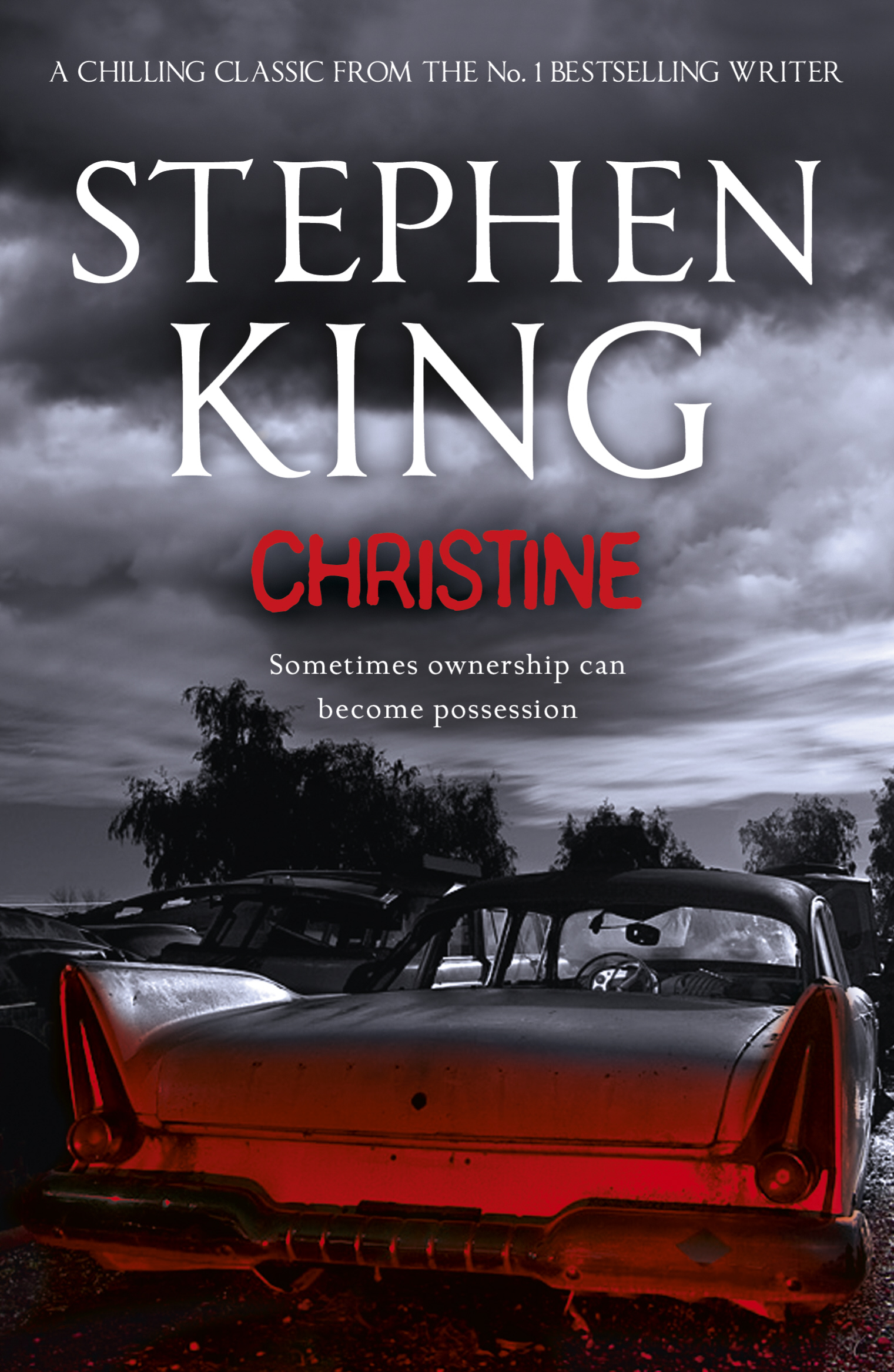
    1983's Christine: Life catches up to art.