 |
| The dining room |
At the top of the list were the sleeping arrangements and the bathroom. If those are comfortable, then we can be confident everything will work out. It took two days, but we got it right eventually.
|
| The dining room |
 |
| Preparing for communion. |
 |
| Beans are roasted in the facility and shipped to other locations in Hawaii. |

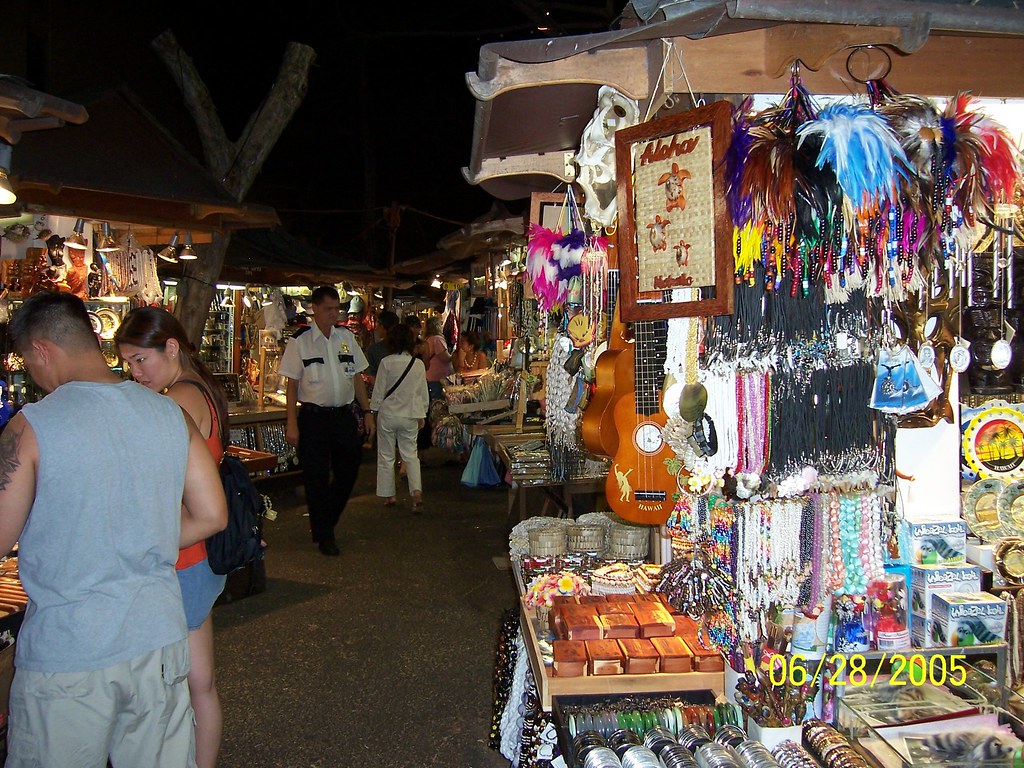 |
| 2005: the way it used to be |
 |
| 2018: trying to keep the feel at much higher prices. |
 |
| Mariposa roads are now open on Google Maps |
Google Maps. The popular navigation app is regularly showing that roads to and from Mariposa are closed, when really they’re not, making it appear as though the region is still gripped by disaster.. Sad observation from a Mariposa businessman:
At least four such errors have occurred in the past two months, according to numerous reports from residents. Efforts by retailers, county leaders and even the National Park Service to prevent the misinformation have been unsuccessful, meaning only more lulls in tourist traffic — and an emerging sense in the community that a small town is of little concern to big tech
“It’s not like people say they don’t believe you when you tell them the road is open,” Shaw said, recalling countless back-and-forth with potential guests. “But they’re essentially saying Google is more believable than you are.”
Someone here is lying.Asking the question is like questioning the existence of God a hundred years ago. Kids, stay away from this person.
In Washington, to the contrary, senators managed to spend three weeks on Ford’s and Kavanaugh’s diametrically opposed, impossible-to-reconcile versions of events without confronting this critical, seemingly unavoidable fact. Instead, after watching, first, Ford’s trembling rendition of an atrocious attack and, then, Kavanaugh’s forceful denial, the Senate decided not to decide who was telling the truth.
It is a psychobabble default: We are to believe that Professor Ford is completely earnest, that she was undeniably subjected to a harrowing sexual assault, but that she has somehow misidentified her assailant — notwithstanding that she says she knew who Kavanaugh was before the attack and is “100 percent” certain he is the culprit.
Cowed by the “survivors must be believed” hooey — as if there were a link between X chromosomes and truth-telling — Republicans blithely went along, as if this preposterous mistaken-identity scenario were incontestable. Loud, aggressive hard-left activists had them afraid to confront Ford’s story … so they didn’t — and now they wonder why the media and Kavanaugh’s other critics keep pronouncing that the unconvincing, uncorroborated allegations against him are “credible.”
On the other hand, Kavanaugh is very persuasive in his indignant denials, and there is — if we may again mention this inconvenient fact — no support for Ford’s account, just her say-so. Just as no one in the Senate dared suggest that Ford might be lying, no one wanted to call Kavanaugh a liar to his face, either. As a result, we got more psychobabble: Kavanaugh occasionally drank beer to excess as a teenager, so maybe he tried to rape Ford in a drunken stupor (in front of a close friend of his) and, since no one mentioned it to him for 36 years, he can’t remember doing it.
Right.
It’s absurd. What happened here is simple. Either Ford is lying about being assaulted by Kavanaugh, or Kavanaugh is lying in denying it.
 |
| (Image by Sutori) |
Christopher Columbus introduced horses, sugar plants, and disease to the New World, while facilitating the introduction of New World commodities like sugar, tobacco, chocolate, and potatoes to the Old World.One of the most impactful transplants was "Isabella's Pigs" (Kenneth C. Davis. America's Hidden History):
The process by which commodities, people, and diseases crossed the Atlantic is known as the Columbian Exchange.
Isabella is credited as the one who encouraged Columbus to take some pigs aboard ship, along with dogs and horses.In honor of Columbus Day I had some bacon this morning.
Once introduced to the New World, Isabella’s pigs became one of the staples of Spanish armies and colonists. Able to forage for themselves and remarkably fertile, the pigs provided a valuable source of easily transported and self-perpetuating protein. For the conquistador on the move, the pigs offered many advantages, according to historian Charles Hudson: “Pigs are the most efficient food producers that can be herded…. A pig’s carcass yields 65 percent to 80 percent dressed meat…. A four-ounce serving of pork yields 402 calories…. Pigs are unusually fecund. A female as young as nine months may become pregnant, and she can give birth to as many as twelve in a litter…. Thus a herd of pigs can increase prodigiously within a few years.”
Along with the side benefit of producing fertilizer in the form of manure, these pigs offered one other very estimable advantage to Spanish Christians, as Hudson points out. “They ate pork not only for sustenance but also to remove any suspicion that they were Jews.”
Perhaps the greatest unintended consequence of this mobile mess hall may have been the waves of disease that are credited with wiping out so much of the native American populace the Spanish encountered.....Charles C. Mann fingers the pigs, the “ambulatory meat locker,” as the possible culprit behind the deadly epidemics that swept the New World’s original inhabitants. “Swine, mainstays of European agriculture, transmit anthrax, brucellosis, leptospirosis, trichinosis, and tuberculosis. Pigs breed exuberantly and can pass disease to deer and turkeys, which then can infect people…. Only a few…pigs would have to wander off to contaminate the forest.


 |
| Festivities begin at the morning service. |
Arguing on Twitter. pic.twitter.com/lItC9NEGVN— Paul Bronks (@BoringEnormous) October 3, 2018
it’s the nine minutes and 42 seconds in “Bullitt” that changed the landscape....The duel between Bullitt’s Ford Mustang and the 1968 Dodge Charger R/T driven by the villains, in which the hunted (Bullitt) becomes the hunter, took three weeks to film. An Aeroflex 2C, a portable movie camera that had been used by the military during World War II, was mounted by suction cups across the back seat to give moviegoers the driver’s perspective.The car chase is all real, i.e., it was filmed before computer generated imagery (CGI) had been invented. The entire movie, except for two seconds added post-production, was filmed in San Francisco.
When [Director Peter] Yates and [film editor Frank] Keller were editing the film, they felt something was missing in the chase. Finally, they came up with an answer: Just as the chase revs into high gear, one of the villains fastens his seat belt. Yates and [cinematographer William] Fraker filmed it in a studio in Los Angeles. It lasts all of two seconds.I liked the chase scene when I saw it in the 1970's and '80's, but I enjoy it even more now that I know San Francisco well and get a chuckle out of watching the cars instantaneously appear in different locations around town. And what's with the all the green Volkswagens?
“There’s a ‘click,’ and then you know something big is about to happen...Then you know you’re in for a ride.”
Rents for new offices in the city’s central business district reached $81.25 per square foot in the third quarter, according to brokerage Cushman & Wakefield. The previous record of $80.16 per square foot was recorded in the fourth quarter of 2000, as the previous tech boom was ending.After the 2000 dot-com crash resulted in unplanned vacancies, and with a raft of new construction coming online, prime ("Class A") SF office space in 2001 could be had for about half today's rate.
Between 50 and 65 San Francisco high-rises used specific types of steel welds that were later found to fracture during the 1994 Northridge earthquake in Los Angeles.

 |
| (Image from the Weekly Standard) |
One of the most striking aspects of the debate over the sexual assault accusations against Supreme Court nominee Brett Kavanaugh is the extremely high correlation between what people think of the allegations and whether they believe Kavanaugh should be confirmed aside from them. Conservatives Republicans who like Kavanaugh's jurisprudence tend to dismiss the accusations. Liberal Democrats who oppose Kavanaugh on jurisprudential grounds tend to think the accusations are true (or at least highly likely to be so). A similar pattern emerges when it comes to the issue of burden of proof, with conservatives often claiming that it rests on the accuser and that Kavanaugh is "innocent until proven guilty," like a defendant in a criminal trial. Liberals, by contrast, tend to argue that the situation should be treated as more a "job interview" than a legal process, and it is up to Kavanaugh to prove that he is fit to be a Supreme Court justice. Some even contend that we should presumptively believe the accusers.I tried to keep an open mind during the hearings last Thursday. This meant suppressing defensive thoughts when a witness or questioner challenged what I wanted to believe. It meant empathizing with each witness, trying to imagine myself in his or her shoes and assuming what he or she said was true.
 |
| Ribbon cutters included SF supervisor Jane Kim, Nancy Pelosi, and Mayor London Breed (3rd from right). |
Thousands of visitors jammed the new Transbay Transit Center for its grand opening party Saturday...Lines stretched the length of the Grand Hall as people tried to get into the $2.2 billion multistory transportation hub.But that was then.

The $2.2 billion Salesforce Transit Center is expected to remain closed at least through the end of next week after inspectors found a second cracked steel beam beneath the center’s rooftop park, officials said Wednesday.Flashback to 2015, after spending $6 billion:
 |
| These changes to 0.075%-1.825% don't look so bad |
 |
| until you notice the Base Rate is 7.75% |

