Showing posts with label Memory. Show all posts

Tuesday, July 30, 2024

Mixed Up Tape

(WSJ illustration)
My late father-in-law would often call any one of his four daughters by another daughter's name. Otherwise as sharp as a tack, he would make this mistake frequently, so we were left with a bunch of implausible explanations: his daughters were not important to him, he was expressing his disappointment that he didn't have a son, they looked alike, etc.

Modern neuroscience has another explanation. [bold added]
Names are especially hard for the brain to learn and recall, according to Samantha Deffler, a cognitive psychologist at York College of Pennsylvania. Most people recall faces more easily, and common nouns roll off the tongue more readily as well.

In an iconic experiment from the 1980s, participants were shown a series of portraits and told each person’s name and occupation. In a twist, words such as “cook” and “baker” were presented as occupations to some participants and as names—“Mr. Cook,” “Mr. Baker”—to others. In what came to be known as the “Baker/baker paradox,” participants recalled the jobs better than the names.

The brain remembers information by linking new bits of data with existing information of similar meaning or context. That makes proper nouns, which are arbitrary “nonsense words,” harder to learn, said Neil Mulligan, a cognitive psychologist who studies memory at the University of North Carolina at Chapel Hill.

Though it occurs nearly instantaneously, recalling a name is a multistep endeavor. A memory cue—perhaps a child’s backpack left on the couch—triggers a search for the child’s name. The memory system offers up multiple potential responses, then rejects all but the correct answer.

The ability to reject wrong responses gets worse with age, which is one possible reason older adults more frequently mix up names, Mulligan said.
Now that I'm in my 70's, I'm finding it increasingly difficult to remember names. What's also worrisome is that I had communicated regularly with some of these forgotten ones only two or three years ago.

I wish I could tell my father-in-law that I'm beginning to understand what he went through.

Wednesday, April 10, 2024

They Aren't Forget-Me-Nots

Yesterday I couldn't remember the name of this flower that's been blooming in our yard for over 20 years. Refusing to do an internet search, I wanted to see when the name would come back to me. This morning, after six hours of sleep, the answer came instantaneously: nasturtiums.

Such lapses now come about once a month--well within "normal" and not necessarily a sign of impending dementia--yet I have come to realize that I could have taken better care of my brain when I was middle-aged:
More scientists are looking for clues in the midlife brain because efforts to target dementia in older people have largely failed, says Ahmad Hariri, a professor of psychology and neuroscience also at Duke...

Parts of the brain start to change faster during middle age, especially the hippocampus, which is important for remembering everyday events, says Sebastian Dohm-Hansen, a doctoral student at University College Cork in Ireland and first author of a March review study on brain aging published in the journal Trends in Neurosciences.

In your 40s and 50s, the white matter in your brain—the connections between brain areas—decreases in volume, says Dohm-Hansen. That likely results in slower processing speed, which could have further effects on cognition, he says.

In addition, proteins can build up in your blood, resulting in low-grade inflammation that can affect the hippocampus’s ability to encode and store new information, he says.

People keep their verbal language-based skills their whole life, says Moffitt. But the speed at which you process information and your capacity to solve new problems of logic and reasoning gradually diminishes with age...

There are no guaranteed ways to prevent dementia. But steps that help both your brain and your heart include exercising regularly, eating a healthy diet, and not smoking, as well as trying to avoid getting or managing conditions such as diabetes, high blood pressure and cholesterol, and obesity, and treating obstructive sleep apnea...

Also important is staying socially and mentally active and engaged, [Mayo Clinic Dr. David] Knopman says. “There are benefits of working in a challenging environment—it stimulates the brain—and it seems to be associated with better outcomes,” he says.
It's too late for me but maybe not for you, dear reader. Save yourself!

Thursday, November 24, 2022

Thankful for the Memories

Today we are thankful for our memories of those who have walked the way with us.

We are thankful that we have become better at distinguishing the important from the unimportant.

And we are thankful that we have learned not to let the unimportant stuff bother us as much.

Tuesday, August 02, 2022

Passing a Test

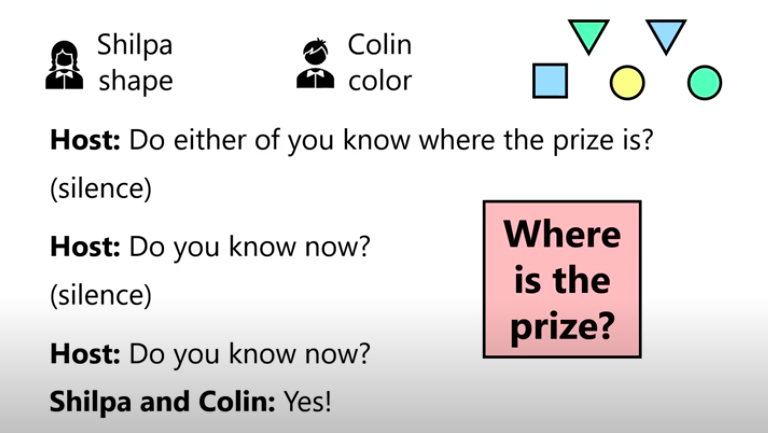
The prize is under one object.
Your humble blogger used to enjoy solving puzzles. That pastime ended when marriage, full-time employment, and later, the Internet, provided more important and/or pleasurable diversions.

Concerned about my absent-mindedness as a precursor to something worse, an adult son played a YouTube clip of a puzzle similar to one used on the Oxford admission test.

The problem is straightforward.

Shilpa is told the shape of the object under which the prize is located, while Colin is told its color. Both participants know that fact about each other. Then the following dialogue ensues:

Host: Do either of you know where the prize is?
(Silence)
Host: Do you know now?
(Silence)
Host: Do you know now?
Shilpa and Colin: Yes!

Where is the prize?

The solution starts at 1:30 in the 5:28 video linked above.

After chuckling at the seeming absurdity of the set up, we froze the video, as the narrator suggested, and I talked through the problem, alighting on the solution in a few minutes. The adult son seemed satisfied that I still had my wits about me.

However, I am always still looking for my eyeglasses.

Note: Wikipedia summarizes variations of these induction puzzles.

Wednesday, April 06, 2022

Forgetfulness: Not Just an Elderly Problem

(Image from Dr. Jenny Brockis)
We've written about memory issues before. They are most apparent in elderly acquaintances who have dementia and/or Alzheimer's disease. Now they are increasingly manifested in younger people. [bold added]
Short, temporary instances of forgetfulness—those ‘senior moments’—are happening to more of us more often these days, memory experts say. We’re finding it difficult to recall simple things: names of friends and co-workers we haven’t seen in a while, words that should come easily, even how to perform routine acts that once seemed like second nature.

We’re living in yet another moment of big change as we return to offices, create new routines and find our footing in yet another new normal. (And don’t forget a scary war in Europe on top of that.) All this change consumes cognitive energy, often much more than we think, neuroscientists say. It’s no wonder we can’t remember what we had for breakfast. Our minds are struggling with transition moments...

The chronic and cumulative stress of the past two years has taken its toll, too. Research led by Dr. Shields shows that people who have experienced recent life stressors have impaired memory. Stress negatively affects our attention span and sleep, which also impact memory. And chronic stress can damage the brain, causing further memory problems, says Dr. Shields, an assistant professor in the department of psychological science at the University of Arkansas.

The deluge of information coming at us on multiple channels is cluttering our brains, too. We’re terrible at paying attention, constantly scrolling our phones while we’re doing other things, which neuroscientists say makes it hard to encode memories in the first place. And it can be hard to remember something out of context, such as the name of the co-worker suddenly talking to us in person, rather than on Zoom.

Then there’s the sameness of our lives during the pandemic. How are we supposed to remember a specific event when each day was exactly the same as every other?

“Memory benefits from novelty,” says Zachariah Reagh, a cognitive neuroscientist and assistant professor of psychological and brain sciences at Washington University in St. Louis. “When all of our experiences blend together, it’s hard to remember any of them as distinct.”
Alzheimer's may not be under our control, but our environment mostly is. So turn off the TV, radio, and other distractions while you are focusing on a task, pay attention to the other person while engaging in conversation, and get enough sleep.

The brain is the most important organ, and compared to the heart, lungs, liver, and stomach we are still at the early stages of learning how to take care of it.

Saturday, February 12, 2022

Sherlock: Ahead of His Time

Piqued by the many references to the Great Detective, I read the first Sherlock Holmes novel, A Study in Scarlet, in eighth grade. I liked the story so much that I went on to complete the entire Holmes oeuvre.

(Image from boingboing.net)
One memorable (notice what I do here) passage that stuck was Sherlock's theory of memory: [bold added]
I consider that a man's brain originally is like a little empty attic, and you have to stock it with such furniture as you choose.

A fool takes in all the lumber of every sort that he comes across, so that the knowledge which might be useful to him gets crowded out, or at best is jumbled up with a lot of other things, so that he has a difficulty in laying his hands upon it. Now the skillful workman is very careful indeed as to what he takes into his brain-attic. He will have nothing but the tools which may help him in doing his work, but of these he has a large assortment, and all in the most perfect order. It is a mistake to think that that little room has elastic walls and can distend to any extent. Depend upon it there comes a time when for every addition of knowledge you forget something that you knew before. It is of the highest importance, therefore, not to have useless facts elbowing out the useful ones.
             ------Arthur Conan Doyle, Study in Scarlet
From the vantage of the 1960's Sherlock's mind-as-an-attic metaphor was not correct. The prevailing theory was that the mind was like a tape recorder. Memories, particularly traumatic ones, were repressed; they could be retrieved by skilled psychotherapists and hypnotists.

Mind-as-tape-recorder fell into disrepute when "recovered" memories were shown to be false or at least questionable in infamous child-abuse cases.

The latest model of the mind is that [bold added]
Memory is more reconstructive than it is reproductive. That is, new details may be included into a memory each time it is recalled. Long-term memories become susceptible to change when remembered. This is because when you call to mind an event from the past, you bring the memory into your short-term memory. And in the process of recalling, new details may be attached to the old memory and reconsolidated with the memory.
Furthermore, the mind has limited storage capacity, and it is possible to have memories "jumbled up", if not lost altogether:
When a person tries to access a memory, their brain quickly sifts through everything stored in it to find the relevant information. But as we age, many of us have difficulty retrieving memories. In a review publishing in the journal Trends in Cognitive Sciences on February 11, researchers propose an explanation for why this might be happening: the brains of older adults allocate more space to accumulated knowledge and have more material to navigate when attempting to access memories.
Be thoughtful about how you arrange your attic. Sherlock Holmes, though fictional, was ahead of his time.

Sunday, June 20, 2021

Father's Day, 2021

Prof. Tannen and her late father, 97, in 2006
This is the second Father's Day without my father.

Linguistics professor and best-selling author Deborah Tannen shares advice about how to discover more about a father's life after he has passed away.
Many people go through their parents’ things when they die, and they find documents, notes, letters, memorabilia. If you’re interested, don’t pass up that opportunity.

Talk to people who knew him, such as a friend or sibling. Ask what he was like when he was young. You could also read about the place and time your father grew up in. Many fathers have been through wars or historical events.

And talk to your own siblings, to get their views of him. A father who has more than one child will be a different father to each of them.
My mother, brothers, and I have done more communicating in the last two years than in the past 20. There's usually an administrative or medical issue to discuss, but sometimes people just want to see each other over FaceTime or Zoom. Often there's a story about Dad that is new to the rest of us. We chuckle, and the recollections comfort.

Happy Father's Day!

Thursday, February 04, 2021

The Days of Our Youth

My high school class formed a Facebook group in preparation for the 50th reunion last summer, which, as might be expected, was cancelled. The organizational effort was not totally wasted, however, because now there was a message board that we used to catch up with each other, mourn classmates who had passed on, and wax nostalgic about high-school and earlier years (those who attended from kindergarten to 12th grade are members of the "13 Plus" club).


The orchestra was required to play "Pomp and Circumstance" every June, so I attended three graduations before it was our turn to march in.

The class ahead of ours chose as their song Try to Remember from the off-Broadway musical the Fantasticks. TTR is a sentimental number about reflecting back on a youth that is gone too quickly. Emotions were heartfelt; the war was raging, they were about to register for the draft, half the class was leaving the Islands, and many would never see each other again.
Try to remember the kind of September
When life was slow and oh, so mellow.
Try to remember the kind of September
When grass was green and grain was yellow.
Try to remember the kind of September
When you were a tender and callow fellow.
Try to remember, and if you remember,
Then follow.
The original Fantasticks cast member who sang Try to Remember is Jerry Orbach (1935-2004), whom I only knew as an actor in the hit series Murder She Wrote and Law & Order. Here he is in 1982, 22 years after he introduced it on the stage.

Monday, February 25, 2019

Don't Worry, Help is on the Way

(image from lifeimgyx.pw)
Aging has made me modestly [peanut gallery: modestly?] hypochondriacal.

Dictionary.com: [bold added]
It wasn’t until the 19th century that hypochondriac described someone who suffered “illness without a specific cause.” This sense is still widely used, though today we diagnose modern hypochondriacs by their overuse of the website WebMD.
(Wonderful! I use mayoclinic.org.)

Mental mistakes have been occurring more frequently lately, and I've become worried that they are harbingers of an underlying condition like dementia or Alzheimer's.

For example, I had booked a trip to the Islands a month ago. I thought that I was flying on Wednesday and informed everyone accordingly. Today, Monday, my iPhone chimed an alert that I was leaving on Tuesday. I checked with the airline, which confirmed that the trip was indeed tomorrow. I started packing immediately. Technology saved me from making a serious mistake.

I'm actually an optimist. Technology seems to be advancing faster than the cells are degrading. Once upon a time I had committed to memory over 50 telephone numbers. Now I know eight (8) but don't need to know any, thanks to my phone's address book. Similarly, my phone's calendar with advance notifications obviates the necessity of memorizing dates and times (like with itineraries).

In the near future, a robot equipped with artificial intelligence will have blown past the Turing Test and could fool interlocutors into thinking that they are communicating with a specific individual, for example, me. (And the robot might well be a better conversationalist than my healthy self, much like a man with artificial legs can outrun someone with intact limbs.)

So this budding hypochondriac needn't worry: technology will compensate for mental deficiencies until that moment when consciousness flickers out, then I won't care any more.

Friday, November 30, 2018

You're Not There for You

(Photo from asha.org)
It's been my experience that about half of my acquaintances and relatives who lived past 80 acquired dementia, ranging from mild to profound.

Digression--I might well be displaying some of the early signs: today, while lost in a (business) cellphone discussion in the parking lot, I opened the wrong car door, taking the seated driver by surprise. Apologizing profusely, I told him that I was distracted and imagined it was my car. Thank goodness he didn't have a gun.

For now I am on the good side of the dementia divide, and visit sufferers with more empathy than I had in my impatient youth. Here are 3 traps when talking to someone with dementia:
If you’re a stickler for accuracy, it’s tempting to correct someone who misspeaks.

If you’re impatient, it’s easy to interrupt and steer the dialogue in the direction you deem most important.

If you’re offended by what you hear, it’s understandable if you take it personally and express disapproval.
Don't correct, interrupt, or be offended, which are fundamentally manifestations of pride. You're not there for you.

Monday, November 19, 2018

Gingko Leaves Left Out

This is too easy. Why didn't you put ginkgo in the gingko supplement?
Gingko supplements are
extracted from leaves.
Two dietary supplements promoted as improving memory using Ginkgo biloba contained either none of the ingredient or a lower amount than advertised, a government watchdog said Wednesday.
Answer: I forgot.

Without excusing it, this consumer fraud may not make much difference for health purposes. [bold added]
Supplements containing Ginkgo biloba extract, made from one of the world’s oldest living tree species, are often bought by consumers trying to prevent or treat age-related memory loss, the GAO said.....There is no “conclusive evidence” the extract is helpful for any health condition, according to the National Center for Complementary and Integrative Health, a part of the National Institutes of Health.
Gingko's improved blood-flow doesn't reach the gullibility section of the brain, apparently.

Saturday, September 15, 2018

Alzheimer's Patients: the Fifties Were Happier

I'd be happier there, too (WSJ photo)
A new aid for Alzheimer's patients is reminiscence therapy, [bold added]
a therapy that uses prompts from a person’s past—such as music, movies and photographs—to elicit memories and encourage conversation and engagement.
The 1950's are reconstructed in
Glenner Town Square, a new adult day-care center for dementia patients that is like entering a time warp. The 11 storefronts that surround an indoor park represent the time period from 1953 to 1961, when most of the patients were in the prime of their life.
Reminiscence therapy is not a cure, and the jury's out as to whether it even slows the advancement of the dieease:
Most participants showed no improvements in a series of cognitive tests done before and after the intervention. But they did become better at talking about autobiographical memories when triggered from older objects....The program is mostly geared toward patients who are in the early to moderate stages of dementia, who are typically living with family or at home with caregivers. Their family members or caretakers drop them off at the facility.
Glenner Town Square is an ingenious effort but only an intermediate treatment that will be superseded by virtual-reality rooms similar to Star Trek's holodeck minus the corporeal elements (touching a Studebaker instead of only viewing it).

There's nothing wrong with dementia sufferers reliving past times when they were happier. When the technology becomes available, we'll start doing it, too.

Tuesday, September 11, 2018

One Reason for Living

Tribute in light (WSJ photo)
Memories of September 11, 2001 don't fade much for us who were around that day, but, as with the greatest generation who responded to the Day of Infamy, we, too, will pass.

Terabytes of archival information have been preserved for study, but what will be lost are the emotions of that time, the FUD (fear, uncertainty, and doubt).

There have been high and low moments since 9/11, but I suspect the importance of some effects have not been appreciated or even revealed. As with the fateful year 1968, historians will know a lot more 50 years later. There are long odds against my being around to share their understanding, but that's one reason for living.

Tuesday, November 28, 2017

No Reason to Feel Superior

Within the past 60 days your humble blogger
  • dropped an unprotected iPhone onto concrete, cracking its screen,
  • completely overlooked a registration renewal, incurring a $195 penalty,
  • lost his wallet.
  • No appointment? The line goes out the door at the DMV.
    Each mistake had a reasonable excuse---the iPhone was perched on some papers and two cups of coffee as I tried to pull open a door, the DMV invoice was stuck behind other papers, and the wallet fell through a car-door crack while I was dozing---but maybe they're not a coincidence. Maybe the long slide into mental oblivion has begun.

    Losing a wallet was most burdensome because it entailed the cancellation of four credit / debit cards and the replacement of a California driver's license in person at a DMV office. I surveyed eight locations and selected the one with the closest appointment, which was three weeks from now (forgetting one's valid license at home is an infraction that can be dismissed if one produces it, but I would not have been able to produce one for three weeks). My intrepid spouse persisted in searching after midnight for an appointment , however, and so it was that I found myself at the Hayward DMV office at 9 a.m., less than 24 hours after the wallet was lost.

    The appointment line had only one person ahead of me. I was done in less than an hour, temporary license in hand, while the 50-deep no-appointments queue had hardly budged. Once upon a time I might have mocked others for their lack of foresight, but these days I have no reason to feel superior.

    I (again) resolved to be more mindful about what I'm doing, but I'll probably forget this promise by tomorrow.

    Wednesday, April 20, 2016

    The Hand, the Eye, the Image

    "Let me draw you a picture" is a favored learning technique, and it may also be the most effective way of committing something to memory.
    a group led by psychologist Jeffrey D. Wammes recruited sample groups of students and ran seven different trials of essentially the same experiment on them. In all of the trials, the scientists started with a list of 80 simple words—all nouns and all easy to draw, such as balloon, fork, kite, pear, peanut and shoe. A random series of 30 of those words were flashed on a screen along with instructions either to draw the object or write down its name.

    But no matter how many variations of the test the researchers ran, one result was consistent: Drawing the object beat every other option, every single time.
    GWB self-portrait (People)
    Your humble blogger has zero artistic ability but is thinking of taking a few drawing or painting classes, if for no other reason than to stave off age-related memory loss.

    Note: once again George W Bush leads the way.

    Wednesday, February 17, 2016

    Just In Time

    Despite decades of research, little progress had been made in finding a cure for Alzheimer's Disease:
    Alzheimer’s was first discovered in 1906, which means doctors have had a century to peel away the disease’s molecular layers and search for a cure. But despite their best efforts, they still have no real treatments. Since 2000, more than 200 Alzheimer’s drugs have been tested, and none proves to be a silver bullet.
    (Image from uccs.edu)
    Post-mortem examination a century ago revealed a connection between dementia and the formation of amyloid plaques in the brain. Scientists have
    focused first on finding ways to soak up the excess amyloid in the brain, hopefully before the protein can form its tacky plaques and destroy neurons. They developed, among other drugs, antibodies to find and bind to amyloid and break it down. But these compounds, though they worked in animals, failed to make much difference in memory and cognitive function in people.
    The latest therapies, successfully tested on laboratory mice, include a combination of anti-amyloid, anti-tau (another protein found in Alzheimer brains), and nerve-growth drugs that not only stop deterioration but restore some brain functioning.

    The history of Alzheimer's research, like the war on cancer, has been a story of hopes raised and dashed. Nevertheless, cures for these dread diseases may arrive just in time to save millions of the baby-boom generation, the luckiest generation in the history of mankind.

    Saturday, August 01, 2015

    Losing our Balance

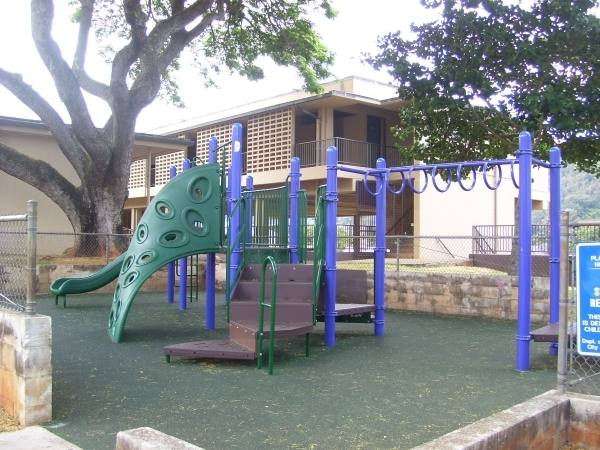
    Puunui Park: the steel bars I used to climb on have been
    replaced by this pretty and non-hazardous play structure.
    Proprioception: the unconscious perception of movement and spatial orientation arising from stimuli within the body itself.

    Proprioceptive activities like tree climbing or balancing on a beam can "dramatically improve cognitive skill."
    According to a press release from the [University of North Florida], the results demonstrated remarkable cognitive gains: “After two hours, participants were tested again, and researchers found that their working memory capacity had increased by 50 percent, a dramatic improvement.”
    As a kid I used to climb jungle gyms nearly every day, and my memory stayed pretty sound during my full-time working years. (Now, not so much.)

    Today one rarely sees traditional jungle gyms at playgrounds, even with mandatory thick padding. Children today are much safer, but in general they take much longer to learn how to be adults, n'est-ce pas?

    Thursday, January 01, 2015

    A Resolution That I'll be Sure to Keep

    à votre santé!
    Having received the gifts of Bacchus this holiday season, I needed to purge the liquor cabinet. Neither we nor visitors are fans of the hard stuff, and some of the bottles had not been touched for decades. Well, it's time to do one's duty: I resolve to take 1-2 shots every night until the bottles are empty.

    As you, dear reader, are undoubtedly aware, alcohol taken in moderation can have health benefits. Here are seven:
    1. It Can Lower Your Risk Of Cardiovascular Disease
    2. It Can Lengthen Your Life
    3. It Can Improve Your Libido
    4. It Helps Prevent Against the Common Cold
    5. It Can Decrease Chances Of Developing Dementia
    6. It Can Reduce The Risk Of Gallstones
    7. It Lowers The Chance Of Diabetes
    More on item #5: contrary to what we've been told since we were children, alcohol (in moderation) can help brain function:
    researchers at University of Texas Medical Branch at Galveston found that light alcohol consumption could be linked to better episodic memory—the memory of events. They studied adults over age 60 with no indication of dementia, and saw that moderate drinking was associated with larger hippocampal brain volume—the area of the brain responsible for the consolidation of short- and long-term memory.
    I've always wanted to increase my hippocampal brain volume.

    Friday, February 21, 2014

    Remembered Fondly

    New Year's 2008: the TV was still truckin'
    30 years ago we spent $600 (when that was real money) on a 19-inch Toshiba television set. It had an excellent picture and could accept video and audio inputs from four different sources. Weighing a mere 40 pounds, the TV had convenient handles for portability. I hauled it around along with a VCR when I needed to run a tape for a presentation.

    Though long in the tooth, the TV was perfect for our student when he was in San Diego. It wasn't worthwhile to transport it back, however, and was donated to charity.

    Its technology is obsolete and the cost was very high by today's standards (see yesterday's post). If we judge the set by the standards of its time, it performed much better and longer than I had a right to expect. Like many other objects (and people!), I wouldn't want to interact with them now but I do remember them fondly. © 2014 Stephen Yuen

    Monday, January 20, 2014

    The Crowded Attic

    Science explains that problem I've been having:

    Brains of elderly slow because they know so much.

    The Great Detective was over 100 years ahead of his time [bold added]:
    I consider that a man's brain originally is like a little empty attic, and you have to stock it with such furniture as you choose. A fool takes in all the lumber of every sort that he comes across, so that the knowledge which might be useful to him gets crowded out, or at best is jumbled up with a lot of other things, so that he has a difficulty in laying his hands upon it. Now the skillful workman is very careful indeed as to what he takes into his brain-attic. He will have nothing but the tools which may help him in doing his work, but of these he has a large assortment, and all in the most perfect order. It is a mistake to think that that little room has elastic walls and can distend to any extent. Depend upon it there comes a time when for every addition of knowledge you forget something that you knew before. It is of the highest importance, therefore, not to have useless facts elbowing out the useful ones.