The air filter on our Lennox furnace should be changed once a year, but I let it go for 17 months. The blackened filter, probably due to two summers of wildfires, showed that I should have adhered to the schedule.
Looking after our stuff (cars, appliances, landscaping, and heating, hot water, and security systems) has become problematic. Each item by itself is not burdensome, but together they add up.
Maybe downsizing or even renting is in our future. Let someone else shoulder these regular responsibilities.
Showing posts with label Home Repairs. Show all posts
Tuesday, November 19, 2024
Friday, November 17, 2023
Reflections on Replacing a Lock
![]() |
| The old parts are held at the bottom. |
For example, last month the 30-year-old knob on the door to the garage stopped working. The task was to replace the knob and match the key to the deadbolt. The knob was Kwikset, which is the cheapest of the major brands. Home Depot had a $25 knob that would fit the opening but didn't quite match the look of the old knob and deadbolt. And the key would still have to be fitted.
The easiest and most expensive solution would be to summon a locksmith to replace and re-key the part for about $150. Instead, I took the old knob and latch to a locksmith in San Mateo. He had a same-model Kwikset in inventory and adjusted it to fit the old key. The total cost: $80.
I could affect a false frugality and say $70 saved here and there really adds up, but to be perfectly honest I hated spending $70 for being too lazy to take a few minutes to put in a lock. Self-knowledge may not always make one happy, but it can avoid disgruntlement.
Wednesday, June 28, 2023
"Real Estate is Local" Beats Overall Market Trends
![]() |
| Zillow: these Honolulu fixer-uppers are at least $1 million |
Real-estate agents say buyers right now seem in no mood to take on the additional costs and headaches of major renovation projects... It is one reason sellers are receiving an average of three offers now, compared with around six a year ago, according to the National Association of Realtors.We foresaw the drop in demand when we ran the numbers 12 months ago. The overwhelming majority of home buyers must use a mortgage to finance part of their purchase price, and the main factor behind the drop in home prices is the doubling in mortgage rates.
The drop in demand for unrenovated homes is mostly driven by high mortgage rates, buyers and their agents said. Fixer-uppers are always a risky proposition for buyers, but now they are more costly as the rates for home loans and construction loans have both increased, on top of high property prices.
This push higher in rates has widened the gap in sale time between turnkey and non-renovated properties, say agents. For sellers, this means a home in need of repair often sits on the market longer unless they attempt to do more work before listing....
Anything that sits on the market for more than a month is usually either overpriced or in need of significant repairs or updates, said Taylor Marr, Redfin’s deputy chief economist. Homes stay on the market for a median of 27 days, up from 19 days a year ago, according to Redfin.
“Most home buyers right now simply don’t have enough money left over to invest in major repairs or remodeling,” said Marr.
Repair costs are usually paid from the buyer's cash reserves, because the original mortgagor won't lend on a future uptick in value. If the buyer is fortunate to obtain a home improvement loan, that rate is likely higher than the mortgage rate and in any event the loan must be repaid quickly. That's why, in general, prices are dropping more on old homes in need of repair than on homes in general.
That said, we are personally aware of at least four fixer-uppers in Hawaii. All the homes require repairs to such an extent where two may be torn down. Yet demand remains strong and prices on these old homes seem to be at or above 2021 levels, when interest rates were much lower.
When deciding what to do with a specific property, be aware of what's going on nationally but it's more important to remember that all real estate is local.
Tuesday, April 11, 2023
The Problem Cascade
The remote control on the garage door opener needed a new battery. I had picked up a dozen of the wafer-like 2032's on sale last year and, applauding myself for foresight, slipped one in.
Its green light signalled that it was working, but the remote control wouldn't open the door. Following instructions on the Internet for a similar garage door opener, I futzed with the "learn" feature to restore the pairing.
Not only did the remote still not work, but the built-in remotes on two cars stopped working, too, because I had erased all the pairings.
A three-minute battery replacement has resulted in a cascade of problems that will require several hours to research and execute the exact instructions for each remote.
If you live long enough you'll encounter problem cascades: erasing important files when performing computer maintenance, collapsing a bathroom sink while replacing a faucet, replacing a faucet (on a different occasion) and causing a leak that required shutting down the water to the house and calling in professional help.
In the scheme of things the current problems are minor ones. There was no swearing, just some sighing, and I know what I'll be doing Wednesday morning.
Its green light signalled that it was working, but the remote control wouldn't open the door. Following instructions on the Internet for a similar garage door opener, I futzed with the "learn" feature to restore the pairing.
Not only did the remote still not work, but the built-in remotes on two cars stopped working, too, because I had erased all the pairings.
A three-minute battery replacement has resulted in a cascade of problems that will require several hours to research and execute the exact instructions for each remote.
If you live long enough you'll encounter problem cascades: erasing important files when performing computer maintenance, collapsing a bathroom sink while replacing a faucet, replacing a faucet (on a different occasion) and causing a leak that required shutting down the water to the house and calling in professional help.
In the scheme of things the current problems are minor ones. There was no swearing, just some sighing, and I know what I'll be doing Wednesday morning.
Tuesday, December 13, 2022
The Endeavor Was a Partial Success
Yesterday's post described how our tankless water heater had stopped working because the thermal fuse had been triggered. (The fuse is a single-use wire that had to be replaced and is marked by the red arrow in the picture.)
The heater itself is a marvel of compactness compared to a conventional 50-gallon tank. However the design is not conducive to an easy repair. Replacing the fuse, a $20 part, requires the removal of the entire internal apparatus. Several plumbers quoted over $1,000 for the job.
Even if the fuse was replaced successfully, there was a distinct possibility that the heat exchanger was damaged. That was an $800 part (the brass box in the upper half of the picture), and we were quoted $3,000 to replace both the thermal fuse and heat exchanger.
Some helpful contractors suggested that I simply buy a new heater at a cost of $4,000-$5,000, depending on the model. The life expectancy of a tankless water heater is 15-20 years, and even if we were to repair our 14-year-old appliance we might have to replace it anyway in 3-5 years.
Not liking the choices I was given, and sensing that I was being ripped off by plumbers who view all Peninsula homeowners as rich patsies, I decided to take a shot at fixing the thermal fuse myself. Even if I ended up paying someone $thousands, I could see little harm in trying.
To make a long story short, dear reader, the endeavor was a partial success. I overnighted the part from the manufacturer and took apart the water heater. The work was much more involved than DIY Internet videos and instruction manuals imply. There were dozens of connectors, screws, and subassemblies that had to be marked and sorted as they were taken out. Eventually I was able to remove the old fuse and wrap the new one around the heat exchanger. When I put everything back, the unit wouldn't start; even the error-message panel was blank. It was time to call in a professional.
I contacted a large San Jose contractor recommended by the manufacturer. The technician came the following morning. Before disassembling the unit, he decided to see if what I had done had some value. He rechecked all the connections and tightened some that were loose. He plugged in the heater, and it turned on! Hot water was back.
The technician suggested that the issue was probably a grounding wire that I had not secured properly. I was happy to pay his invoice of $275; his fee for a fuse replacement would have been $1,150. I tipped him and sent him on his way.
Meanwhile, I won't forget to scale the pipes.
The heater itself is a marvel of compactness compared to a conventional 50-gallon tank. However the design is not conducive to an easy repair. Replacing the fuse, a $20 part, requires the removal of the entire internal apparatus. Several plumbers quoted over $1,000 for the job.
Even if the fuse was replaced successfully, there was a distinct possibility that the heat exchanger was damaged. That was an $800 part (the brass box in the upper half of the picture), and we were quoted $3,000 to replace both the thermal fuse and heat exchanger.
Some helpful contractors suggested that I simply buy a new heater at a cost of $4,000-$5,000, depending on the model. The life expectancy of a tankless water heater is 15-20 years, and even if we were to repair our 14-year-old appliance we might have to replace it anyway in 3-5 years.
Not liking the choices I was given, and sensing that I was being ripped off by plumbers who view all Peninsula homeowners as rich patsies, I decided to take a shot at fixing the thermal fuse myself. Even if I ended up paying someone $thousands, I could see little harm in trying.
To make a long story short, dear reader, the endeavor was a partial success. I overnighted the part from the manufacturer and took apart the water heater. The work was much more involved than DIY Internet videos and instruction manuals imply. There were dozens of connectors, screws, and subassemblies that had to be marked and sorted as they were taken out. Eventually I was able to remove the old fuse and wrap the new one around the heat exchanger. When I put everything back, the unit wouldn't start; even the error-message panel was blank. It was time to call in a professional.
I contacted a large San Jose contractor recommended by the manufacturer. The technician came the following morning. Before disassembling the unit, he decided to see if what I had done had some value. He rechecked all the connections and tightened some that were loose. He plugged in the heater, and it turned on! Hot water was back.
The technician suggested that the issue was probably a grounding wire that I had not secured properly. I was happy to pay his invoice of $275; his fee for a fuse replacement would have been $1,150. I tipped him and sent him on his way.
Meanwhile, I won't forget to scale the pipes.
Monday, December 12, 2022
Wishful Thinking
![]() |
| 2 gals. vinegar recirculated for 1 hour |
Our 14-year-old tankless water heater flashed an unfamiliar message--error code 14--that meant that the thermal fuse had been triggered due to an overheated heat exchanger (HE). The problem was likely caused by scale build-up in the pipes.
I spent a moment being mad at myself for believing the plumber who told me three years ago that annual flushing with vinegar was unnecessary; Foster City didn't have hard water and we wouldn't have scale. Before I called a repairman to replace the thermal fuse (expensive) and/or the heat exchanger (very expensive), it couldn't hurt to flush the water heater.
Two hours later--et voilĂ !--there was no error code 14, the water heater fired up, and hot water poured from the spigot. We had lucked out. Maybe the thermal fuse was still intact. Maybe it was merely emitting a warning signal. (This is a textbook example of wishful thinking, dear reader.)
Three days later error code 14 came on and stayed on. No amount of flushing or rebooting would activate the water heater.
To be continued....
Wednesday, November 23, 2022
A Happier Trip
| MacBook Air battery had to be done immediately |
The habit started in college during my freshman year, when I flew home for the first winter break with the suitcase half-filled with books. My school was on the semester system, which pushed final exams to January.
High-school friends whose colleges were on the quarter system had already completed their finals and had a more fun-filled vacation than I did.
Having cracked open the books on only a couple of occasions that first Christmas, I learned something useful: only bring work that I was absolutely sure I would spend time on. Leave behind anything that could possibly wait.
Speaking of things that couldn't wait, the replacement laptop battery failed disappointingly after one year (the expectation was three). I gave a moment's thought about trying to wangle a free or discounted replacement from the manufacturer, then opted for the speed and simplicity of ordering another one for $45. It arrived the day before departure, when there were a dozen more important things left to do.
And so it was that I spent my first night in Hawaii taking apart the 2014 MacBook Air, putting in the new battery, and screwing it back to together. The battery could run the computer for four hours, and we're good for another year.
Another lesson: getting it done sooner makes for a happier trip
Thursday, September 08, 2022
Beaten by the Heat
| In the process of emptying out. |
Our 19-year-old Samsung refrigerator failed on Monday night. After spending Tuesday taking out the back panel, looking at the coils and fan, we reluctantly concluded it was the compressor. A search of the Internet revealed that the part was not available anywhere.
While we’re looking for a new refrigerator, we are dumping all the spoiled food and preserving what we can in the garage fridge.
We didn't need much of a push to forego cooking this week because of the 100-degree weather. Now circumstances have made the choice obvious.
"To beat the heat, go out to eat." That's better.
Wednesday, August 31, 2022
Springs Not Eternal
On Monday evening there was a loud metallic crash that came from somewhere in the house. We looked at every bookcase and closet shelf. I also walked the perimeter, checking storage containers and trash cans. The satellite dish was intact.
A couple of hours later the mystery was solved. A loud crunching sound came from the garage door as we tried to open it. Disengaging the door from the motor, we could close the door manually only with great effort from two people.
One of the springs had snapped (picture).
Brian, the man who installed the door 21 years ago, had retired, so on Tuesday morning I called Bill's Garage Door Service (Brian knew Bill and had recommended him). I described the type of door and the likely problem. The lady on the phone said that a "technician" would stop by shortly.
The GDI Garage Doors van pulled up and a young man stepped out. Yes, Bill had retired and sold his business. Keith said it would cost $500 to replace the springs. I should also "keep an eye on" one of the cables, which was slightly frayed.
How much to replace the cables? $95. OK, do it. No offense, but I don't want to see you again next year.
Keith went about his business with alacrity. He brought out special tools that enabled him to replace the springs and cables. I couldn't have done the job myself even if I had months to do it.
After the parts were installed, Keith repeatedly opened and closed the garage door, continually making adjustments. He apologized for his "OCD" and said he wanted to get it right. When he was done, two hours after he arrived, the door moved more quietly and smoothly than it had in years.
The final bill was $629, about 50% above what Brian or Bill would have charged in 2016. It was worth every penny.
A couple of hours later the mystery was solved. A loud crunching sound came from the garage door as we tried to open it. Disengaging the door from the motor, we could close the door manually only with great effort from two people.
One of the springs had snapped (picture).
Brian, the man who installed the door 21 years ago, had retired, so on Tuesday morning I called Bill's Garage Door Service (Brian knew Bill and had recommended him). I described the type of door and the likely problem. The lady on the phone said that a "technician" would stop by shortly.
The GDI Garage Doors van pulled up and a young man stepped out. Yes, Bill had retired and sold his business. Keith said it would cost $500 to replace the springs. I should also "keep an eye on" one of the cables, which was slightly frayed.
How much to replace the cables? $95. OK, do it. No offense, but I don't want to see you again next year.
Keith went about his business with alacrity. He brought out special tools that enabled him to replace the springs and cables. I couldn't have done the job myself even if I had months to do it.
After the parts were installed, Keith repeatedly opened and closed the garage door, continually making adjustments. He apologized for his "OCD" and said he wanted to get it right. When he was done, two hours after he arrived, the door moved more quietly and smoothly than it had in years.
The final bill was $629, about 50% above what Brian or Bill would have charged in 2016. It was worth every penny.
Tuesday, July 05, 2022
Function Over Form
| It works, and there are no leaks. |
So I spent this holiday weekend installing a new faucet. (I actually consumed more time hacksawing off the old one.)
Gone was the desire to look at fancy fixtures. Easiness of installation and repair was the priority; in the future cartridge replacement will be done from the top of the sink.
| Beauty lies in simplicity, not shininess. |
I'll spend more for quality and beauty, but in the future the form of a mechanism will take a distant backseat to function.
Saturday, January 08, 2022
Education is Everywhere, If You Just Look For It
Many of the conveniences of middle-class life are taken for granted, like in-house washers and dryers.
After the old Kenmore dryer failed 10 days ago, I expected to pay $500 for a basic model at Home Depot, Costco, or Best Buy; $700+ would be the all-in replacement cost after delivery, installation, sales tax, and removal of the old dryer.
YouTube showed that repairs were easy--even allowing that it would take me ten times as long as the professionals in the videos--so it couldn't hurt to try to diagnose the problem and attempt a fix (the parts would probably cost less than $50).
I had to promise the household CEO that I wouldn't dither; going to the laundromat was not only inconvenient but in the coronavirus era could be hazardous to one's health because of proximity to others in a warm, humid environment. If the task could not be done in a week, we would buy a new dryer.
After opening the bottom panel and unscrewing the lint cover for the first and only time in 13 years, the likely source of the problem became apparent: lint was jamming the air flow throughout.
Wearing a dustmask, I scooped out handfuls of lint, then used a brush and vacuum cleaner. The dryer had been working harder for at least a year, and the longer drying time finally burnt out one of the circuits.
Pulling out the metal housing for the heating element, I checked for a break on the three devices ("test for continuity" is the technical term) that were most likely to fail: the fuse, thermostat, and heating element.
It was the heating element. Ordering a kit for all three parts for $34 from Amazon, I replaced the heating element and kept the thermostat and fuse if either of them blows.
I'll spare you the details of putting everything back together and cleaning out more lint, dear reader. Suffice it to say that the dryer is working again, more efficiently than it has in a long time, and should be good for 2-3 years.
Comments: I did derive satisfaction from:
The motor both tumbles the drum and sucks the hot moist air out of the drum and expels it through the exhaust. The drum in turn sucks in outside air that has passed over the heating element. The features (tumbling, drum, timer, moisture sensing, varying the heat, etc.) that we see in current dryers were all invented before 1960.
Frankly, I am in awe of the engineers and inventors that created wonders, both big and small, in 20th century America.
After the old Kenmore dryer failed 10 days ago, I expected to pay $500 for a basic model at Home Depot, Costco, or Best Buy; $700+ would be the all-in replacement cost after delivery, installation, sales tax, and removal of the old dryer.
YouTube showed that repairs were easy--even allowing that it would take me ten times as long as the professionals in the videos--so it couldn't hurt to try to diagnose the problem and attempt a fix (the parts would probably cost less than $50).
I had to promise the household CEO that I wouldn't dither; going to the laundromat was not only inconvenient but in the coronavirus era could be hazardous to one's health because of proximity to others in a warm, humid environment. If the task could not be done in a week, we would buy a new dryer.
| Lint obstructed air flow from the clothes drum |
Wearing a dustmask, I scooped out handfuls of lint, then used a brush and vacuum cleaner. The dryer had been working harder for at least a year, and the longer drying time finally burnt out one of the circuits.
Pulling out the metal housing for the heating element, I checked for a break on the three devices ("test for continuity" is the technical term) that were most likely to fail: the fuse, thermostat, and heating element.
| Testing for continuity |
It was the heating element. Ordering a kit for all three parts for $34 from Amazon, I replaced the heating element and kept the thermostat and fuse if either of them blows.
I'll spare you the details of putting everything back together and cleaning out more lint, dear reader. Suffice it to say that the dryer is working again, more efficiently than it has in a long time, and should be good for 2-3 years.
Comments: I did derive satisfaction from:
1) not having to spend $500-$700 on a new dryer;But the most satisfaction arose from learning how the dryer worked. It's both simple and ingenious. Discreet writers call it a negative pressure system, but your humble blogger prefers simpler language.
2) not having to send the old one to the landfill or recycling plant;
3) being able to fix it myself.
| Heating element + small parts |
Frankly, I am in awe of the engineers and inventors that created wonders, both big and small, in 20th century America.
Friday, January 07, 2022
Around the Neighborhood
Walking around the neighborhood is not only good for my health, it also serves as a source of inspiration for landscaping, color schemes, and home improvements.
As we do with people we admire, we look for characteristics that we can adopt to improve ourselves and perhaps our social standing.
Sometimes we come across sights that make us grateful for what we have already...
As we do with people we admire, we look for characteristics that we can adopt to improve ourselves and perhaps our social standing.
Sometimes we come across sights that make us grateful for what we have already...
Thursday, December 30, 2021
A Lot of Trouble to Replace
| Bent out of shape: I did that without help. |
Our 20-year-old dryer was irredeemably broken, and the new dryers at the time were too wide and cost at least $500, not including tax, installation, and hauling the old one out. On Craigslist the ideal replacement miraculously appeared. It was narrow enough, and the door hinge was at the bottom which was a "try-for" specification from the household CEO.
The seller, a lady in Palo Alto, had bought a new laundry pair and thought she could find a use for her old dryer but had given up trying. Her Kenmore had been sitting on the back patio for a year, covered with a tarpaulin. Before taking it, I asked her to plug it in to prove that it worked. It did.
The dryer easily fit in the 11-year-old Dodge Grand Caravan. (I always use an old car--for different reasons, of course--when I have to negotiate a purchase, do charity work, or go to crime-ridden areas like San Francisco.) The used dryer worked like a champ, and the garbage haulers took the old dryer on one of the two annual bulk-disposal days.
[Note: I forgot that I had blogged about the purchase in 2009. Most of the details are still clear in my memory. I'm not that far gone....yet.]
This week the dryer that had served us for 13 years finally failed. The drum turns but doesn't heat; the problem was likely due to one of three parts, said the Internet, each of which costs less than $50. But first the bottom cover plate has to be opened. It had never been removed by myself, nor likely the original owner, too, so I'm using brute strength and WD-40 against the rusty metal. So I can't even get to step 2: testing the continuity on the three parts to see which of them is busted. So I'll be spending a bit more time, probably through New Year's weekend, working the problem before giving up.
Fortunately for me the household CEO did not act disappointed though I bent the bottom plate out of shape. She knows that the hired help doesn't respond well to criticism and will be a lot of trouble to replace.
Monday, October 18, 2021
Annoyances Ahead
A 43-year-old house, 54-year-old car, and 7-year-old laptop computer have something in common: they all have parts that are breaking down.
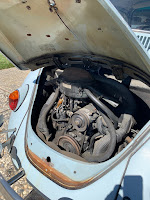
Last week the faucet was dripping (I couldn't let it go with water rationing on the horizon), the VW Bug wouldn't run because of a fuel-line and electrical issue, and the MacBook battery was totally kaput (it would shut down immediately if the power cord were disconnected).
Fixing these annoyances doesn't require a SpaceX scientist, but it doesn't help matters that the repair guy himself has parts that are giving him problems.
It should be a challenging week.
Last week the faucet was dripping (I couldn't let it go with water rationing on the horizon), the VW Bug wouldn't run because of a fuel-line and electrical issue, and the MacBook battery was totally kaput (it would shut down immediately if the power cord were disconnected).
Fixing these annoyances doesn't require a SpaceX scientist, but it doesn't help matters that the repair guy himself has parts that are giving him problems.
It should be a challenging week.
Monday, December 28, 2020
Time Spent
The 30-year-old magazine rack had fallen apart. Its plastic screws and inserts (bottom of first photo) had loosened and cracked, leaving the hardwood pieces in a disconnected jumble.
We looked online for a new one. New racks don't cost much--$20 to $50--and are made of steel wire or plastic. But there were no hardwood racks for $100 or less. (Why not spend more? Who reads magazines?)
A trip to the Home Depot fastener section didn't turn up parts that fit, so I ordered inserts, washers, and bolts (second photo) that cost a total of $31 from Amazon.
My woodworking acquaintances will sneer at the trouble in putting the pieces together.
The metal inserts wouldn't stay in the holes where the old plastic inserts were seated.
First I tried merely pushing them, but they moved with the slightest turn of the screw. Next I set the inserts with Elmer's Glue, basically the same product we used in shop class nearly (cough) 60 years ago; no luck, they still wouldn't hold after two days of drying.
Finally, I drilled the holes a quarter-inch deeper, and after some hard pushing and turning achieved success (bottom photo).
Why am I recounting this tale of a trifling repair?
A rational person might argue that there is no justification for spending $31 in materials and laboring six hours over four days to produce a used item whose market value was, say, $25.
On the other hand, monetary cost-benefit analysis is the wrong perspective from which to view activities that give one pleasure. For example some people happily garden or look after their children while others are only too glad to pay someone else to assume these "burdens."
I am at an age where I should more carefully evaluate how I spend my time.
Fixing broken magazine racks wasn't on the list, yet the task did give me some pleasure after all, and I'm glad that I did it.
Do you ever wonder whether Warren Buffett does the dishes or whether Bill Gates changes a light bulb? It wouldn't surprise me if they did.
We looked online for a new one. New racks don't cost much--$20 to $50--and are made of steel wire or plastic. But there were no hardwood racks for $100 or less. (Why not spend more? Who reads magazines?)
A trip to the Home Depot fastener section didn't turn up parts that fit, so I ordered inserts, washers, and bolts (second photo) that cost a total of $31 from Amazon.
My woodworking acquaintances will sneer at the trouble in putting the pieces together.
The metal inserts wouldn't stay in the holes where the old plastic inserts were seated.
First I tried merely pushing them, but they moved with the slightest turn of the screw. Next I set the inserts with Elmer's Glue, basically the same product we used in shop class nearly (cough) 60 years ago; no luck, they still wouldn't hold after two days of drying.
Finally, I drilled the holes a quarter-inch deeper, and after some hard pushing and turning achieved success (bottom photo).
Why am I recounting this tale of a trifling repair?
A rational person might argue that there is no justification for spending $31 in materials and laboring six hours over four days to produce a used item whose market value was, say, $25.
On the other hand, monetary cost-benefit analysis is the wrong perspective from which to view activities that give one pleasure. For example some people happily garden or look after their children while others are only too glad to pay someone else to assume these "burdens."
I am at an age where I should more carefully evaluate how I spend my time.
Fixing broken magazine racks wasn't on the list, yet the task did give me some pleasure after all, and I'm glad that I did it.
Do you ever wonder whether Warren Buffett does the dishes or whether Bill Gates changes a light bulb? It wouldn't surprise me if they did.
Saturday, November 21, 2020
Deferred Gratification: One Key to Happiness
My lifelong cheapness frugality, besides helping augment the retirement nest egg, has another benefit, as noted in 2013 when the 35-year-old furnace was replaced.
Even small items like electrical outlets (pictured) are much improved. The replacement to a 30-year part that had become loose had more secure grounding screws, an LED power-detection light, and USB-A and USB-C slots to charge cellphones and tablets.
Today's wisdom: there is happiness in being able to fix things oneself and, when replacement is finally necessary, happiness in marveling at how the new one is so much better. (Note: this does NOT apply to relationships.)
technology is advancing at such a rapid rate that the replacement unit, even one with just average features, is leaps and bounds ahead of the unit that it replaced. The new system is cleaner, quieter, and much more energy efficient. It has an electronic ignition, i.e., no pilot light.We've encountered the replacement-is-so-much-better-than-the-original phenomenon when we junked our 18-year-old unfixable car in favor of a hybrid.
Even small items like electrical outlets (pictured) are much improved. The replacement to a 30-year part that had become loose had more secure grounding screws, an LED power-detection light, and USB-A and USB-C slots to charge cellphones and tablets.
Today's wisdom: there is happiness in being able to fix things oneself and, when replacement is finally necessary, happiness in marveling at how the new one is so much better. (Note: this does NOT apply to relationships.)
Labels:
Apple,
Auto,
Electricity,
Home Repairs,
iPhone,
Technology,
Toyota
Monday, November 16, 2020
Out with the Old, In with the SKU
The latch on the door to the garage got stuck. No amount of WD-40 would loosen it because the problem was a spring that had lost its springiness.
After disassembling the doorknob, I took the part to Home Depot.
There were shelves upon shelves of new locksets but nowhere a spare latch to be found.
The old-timers who used to work at Home Depot would have walked the customer to the spot and fished for the part out of a box.
Instead, that morning, there was only a kid, barely out of high school, who was restocking the shelves. He was proficient at scanning numbers on boxes, looking up their location on a hand-held device, then putting the box on the proper shelf.
He didn't need to know anything about hardware; he could be filling up the spaces with cans of soup or cotton socks.
I showed him the latch. He asked, "What's the "skew"?" (Yes, I know he meant SKU.)
Largely successful in eliminating sarcasm--the kid didn't deserve it--I replied, "The latch is over 20 years old. I don't think it had a 'skew.' It's a latch for a Kwikset lock."
He struggled, furiously typing on his device.
I pulled up the Home Depot app on the iPhone, searched for Kwikset, and scrolled down to the SKU (pictured) in 20 seconds. He re-entered the numbers and found the item at location L-something, hidden behind some boxes on the floor. I found a new latch for $8, so the expedition was a success.
I did give a passing thought to the old-timers. They would know what to do with the part after taking it home, but that knowledge is unnecessary to the functioning of 21st-century retail stores. The kid's job is safer, but I felt sorry for him, too. The robots are coming.
After disassembling the doorknob, I took the part to Home Depot.
There were shelves upon shelves of new locksets but nowhere a spare latch to be found.
The old-timers who used to work at Home Depot would have walked the customer to the spot and fished for the part out of a box.
Instead, that morning, there was only a kid, barely out of high school, who was restocking the shelves. He was proficient at scanning numbers on boxes, looking up their location on a hand-held device, then putting the box on the proper shelf.
He didn't need to know anything about hardware; he could be filling up the spaces with cans of soup or cotton socks.
I showed him the latch. He asked, "What's the "skew"?" (Yes, I know he meant SKU.)
Largely successful in eliminating sarcasm--the kid didn't deserve it--I replied, "The latch is over 20 years old. I don't think it had a 'skew.' It's a latch for a Kwikset lock."
He struggled, furiously typing on his device.
I pulled up the Home Depot app on the iPhone, searched for Kwikset, and scrolled down to the SKU (pictured) in 20 seconds. He re-entered the numbers and found the item at location L-something, hidden behind some boxes on the floor. I found a new latch for $8, so the expedition was a success.
I did give a passing thought to the old-timers. They would know what to do with the part after taking it home, but that knowledge is unnecessary to the functioning of 21st-century retail stores. The kid's job is safer, but I felt sorry for him, too. The robots are coming.
Tuesday, January 29, 2019
Guess That's Why They're the Expert
![]() |
| Sewer backup: one of the least disgusting photos on the Web. |
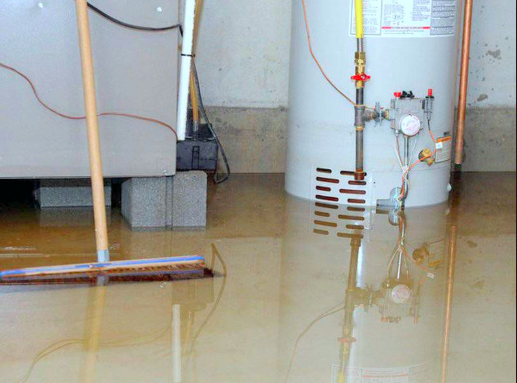
1. A foul stench coming from drains.Foul stenches, slow-draining washing machines, and toilet backups mean that a sewer backup may be coming. Brilliant. That's why they're the professionals.
2. Slow draining bathtubs or laundry lines.
3. If the use of other fixtures associated with your main line lead to water backup in places such as toilets or showers.
Tuesday, December 04, 2018
Guy, Feeling Better
Another thing that I had to do before going on the trip was to descale the tankless water heater.
The task was simple enough---running a vinegar solution through the pipes--but it did involve buying a couple of gallons of vinegar, taking the pump out of storage, and remembering which valves to turn off and which to turn on.
The latter was the most difficult step, as the pump strained furiously without result until I opened a drain and the vinegar circulated through the heater and back into the bucket.
Even after watching YouTube videos (that don't match the situation exactly), it's not easy working out how to do something after three years.
After letting the pump run for an hour, I disconnected the hoses, rinsed off everything, and made sure the hot water was coming through various faucets--yes, the flow was stronger.
Maybe I'll do this again next year, like I was supposed to. Doing things with pumps, hoses, and wrenches--dare I say it in this day and age--makes this CIS male feel better.
The task was simple enough---running a vinegar solution through the pipes--but it did involve buying a couple of gallons of vinegar, taking the pump out of storage, and remembering which valves to turn off and which to turn on.
The latter was the most difficult step, as the pump strained furiously without result until I opened a drain and the vinegar circulated through the heater and back into the bucket.
Even after watching YouTube videos (that don't match the situation exactly), it's not easy working out how to do something after three years.
After letting the pump run for an hour, I disconnected the hoses, rinsed off everything, and made sure the hot water was coming through various faucets--yes, the flow was stronger.
Maybe I'll do this again next year, like I was supposed to. Doing things with pumps, hoses, and wrenches--dare I say it in this day and age--makes this CIS male feel better.
Monday, December 03, 2018
Unfinished Business
![]() |
| Old filter and fading UV lights |
The furnace filter, which should be replaced annually, was overdue for a change because of the smoke from the Camp Fire that began on November 8th.
The kit ($179 from Amazon) included ultraviolet light bulbs and a catalyst screen that killed germs as the air passed through the apparatus.
![]() |
| Clear filter, clear conscience. |
Before one starts a journey, one should take care of unfinished business.
Subscribe to:
Posts (Atom)