Showing posts with label Audio. Show all posts

Wednesday, July 30, 2025

You Have My Full Attention...Really

The case easily fits in the palm of your hand
I received a pair of AirPods Pro 2 for Father's Day. They emit good-to-great sound, have noise cancellation features, and function well as an accessory for hands-free telephone calls. But their greatest utility to me is as backup hearing aids. The AirPods amplify all sounds and serve adequately for those who, like me. have moderate hearing loss. Were it not for social offensiveness, I would feel comfortable wearing them all the time.
Hi. Excuse me. Hey. Do I have your attention?

I can’t tell because your AirPods are in.

Human communication was awkward enough before AirPods and their non-Apple brethren became so ubiquitous, but at least some pockets of life seemed off-limits. Not anymore...

Joseph Montes, a 55-year-old information-security manager who lives near Boca Raton, Fla., keeps his AirPods in all day. “They’re always off, but if someone calls, I can answer,” he said.

The devices are such a constant that when he visited the doctor recently, Montes didn’t understand why the nurse was giving him “dagger eyes.” He finally got the hint when the doctor came in. Montes sheepishly pulled one AirPod out of his ear. “I’m a man, I’m stupid,” he said.
IMHO, there are easy solutions for users to defuse disapproval. For example, a blinking LED could signal that the AirPods wearer is listening to a signal from his iPhone, and if the light is off he can give you his full attention. Or he could wear his hair long to cover the offending ear buds.

Finally, retirees like myself can accentuate our age. People give us a lot more leeway because elders are not expected to observe niceties; younger folk are just grateful that we appear to understand what they are saying and can carry on a conversation. To my fellow boomers, just practice giving others a blank look and wear those AirPods proudly.

Thursday, December 15, 2022

Muddled TV Dialogue: More Solutions

The sound customization menu (right) on our Sony Bravia
As we noted last month, television viewers who are not hearing-impaired are turning on closed-captioning:
But your TV is just one of the culprits. The rest of the problem lies within virtually every other step of the audio process, from a studio’s production choices to the device used to watch the content.
In addition to closed captioning and turning up the volume on all sound, newer TVs can amplify speech. On the Sony purchased this year I adjusted the "Voice zoom" from 0 to 4 (picture top).
Go to Settings > Display & Sound > Sound > Sound mode > Dialogue. On the company’s Bravia TVs, there is also Voice Zoom, which lets you adjust how much you would like the dialogue to stand out. Open Settings > Display & Sound > Sound > Sound customization > Voice Zoom.
The WSJ lists buying headphones, investing in speakers, and/or the aforementioned boosting dialogue feature as solutions to unclear speech. As in many aspects of life, tech caused the problem and is providing the solution.

Saturday, November 26, 2022

The Audio Doesn't Equal the Video.

The hearing aids that I got in 2018 have been very helpful.

Every day speech with real people is comfortably decipherable--by the way, have you noticed that old people frequently mumble? that's a subject for another day--but for television I often still must turn on closed captioning. More people with normal hearing are also using the feature.
“If you have people talking or shouting during the adventure scenes, the explode-y sounds are way higher than the dialogue,” said Melanie Brooks, a 43-year-old professional musician in Boston. Catching some of the lines in her favorite fantasy and adventure TV series is hard without captions, she added.

People tend to blame their flat-screen TVs for bad sound. The tube TVs of decades past had front-facing speakers that sent audio toward you, while new, super-thin models have speakers that are behind the screen or point downward, bouncing sound away from you. But your TV is just one of the culprits.

The rest of the problem lies within virtually every other step of the audio process, from a studio’s production choices to the device used to watch the content, said Richard Nevens, senior director of audio-hardware product management at Avid Technology, which specializes in audio- and video-editing tools.
Movie sound technology has outstripped the capabilities of the speakers on home devices, including TV's.

It's a relief that I don't have to upgrade my hearing equipment.

Meanwhile, I'll be setting closed captioning to "on."

Saturday, November 20, 2021

Before It Was Cool

iPhone + factory headphones
Inexpensive, old-fashioned, hard-wired headphones are cool:
Fashionable young celebrities including Bella Hadid, Lily-Rose Depp and ZoĆ« Kravitz have been photographed strutting around town with blatantly corded headphones...Apple corded headphones go for just $19, and those from other brands can cost even less. For disorganized types, corded headphones are easier to keep track of and needn’t be charged. Plus, some folks have vague, pseudo-scientific objections to “radiation” that they associate with wireless pods.
I've had wireless pods fall out of my ear on the street and in bathrooms, and what happened next prevented me from wearing them again...'nuff said about that. The corded buds also drop out but don't reach the ground.

And there's no worrying about bluetooth radiation, which scientists say is harmless, but scientists have been known to change their minds.

I switched off the AirPods when the airlines were adamant about turning off wireless transmissions from all devices. Not having to worry about earpieces running out of juice during a five-hour flight is an under-appreciated benefit of wired headphones, and I continued to use them even after AirPods were permitted to be used during flights.

Choosing what best works for you, and not trying to catch up with a trend, makes for a happier life.

Friday, December 21, 2018

Sounds Like a Racket

I've been wearing hearing aids for a week. I'd like to say that it's been a revelation, because I can listen to the sounds of nature again, or an orchestra's full range. And I don't have to turn up the TV volume and irritate others in the household.

But it's been a modest let-down. I can hear the seatbelt rubbing against the upholstery and the crackling of cellophane, prevalent this time of year. Water flowing through the pipes and heated air forced through the ducts are much louder. At commercial establishments the decibel level of the Muzak is sometimes painful, and I have to turn off the equipment.

I am remembering a childhood that wasn't so great, when I had to cover my ears at the airport or when a marching band passed by.

The technology is more advanced than I had expected. The inserts are small, light, and pick up the frequencies that I cannot hear. The 36-hour battery life is impressive. The remote control doubles as a bluetooth intermediary between the hearing aids and the iPhone, obviating the need for the AirPods (Apple's wireless earbuds).

The cost of $3,000--most of which is not reimbursable by insurance--is quite steep in the world of consumer electronics, though I understand it's about half the cost that people paid a few years ago for old technology.

Well, hearing aids are preserving neural cells, except that no one told me that they are not in the brain's pleasure centers.

Wednesday, September 13, 2017

A Sound That Didn't Last

Ampex sign, next to  Stanford's new Outpatient Center.
As a teen visiting the Bay Area circa 1970, I recognized only a few company names on the signs dotting Highway 101. One of them was Ampex, which built the best reel-to-reel tape machines. My high school had a generous audio-visual budget, and as a member of the A-V club (nerd alert!) I got to play with equipment that I could never personally afford.

Ampex continued to be a leader in high-end audio equipment until the advent of the digital era, about 20 years later. Today the company is all but forgotten, its once-gleaming sign a weather-beaten curiosity.

Monday, May 16, 2016

Not So Fast

(Image from computerweekly.com)
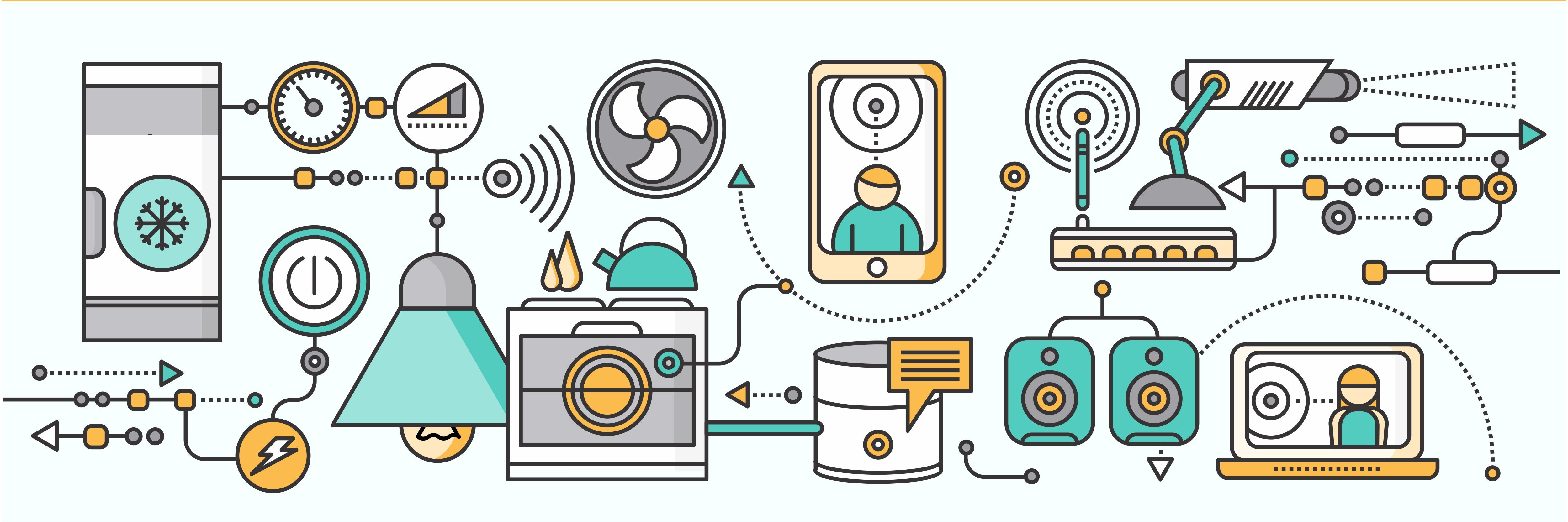
When we're introduced to the Internet of Things ("the network of physical objects—devices, vehicles, buildings and other items—embedded with electronics, software, sensors, and network connectivity that enables these objects to collect and exchange data"), it's hard to restrain our imagination: [bold added]
Let’s look at one example. In 2007, a bridge collapsed in Minnesota, killing many people, because of steel plates that were inadequate to handle the bridge’s load. When we rebuild bridges, we can use smart cement: cement equipped with sensors to monitor stresses, cracks, and warpages. This is cement that alerts us to fix problems before they cause a catastrophe. And these technologies aren’t limited to the bridge’s structure.

If there’s ice on the bridge, the same sensors in the concrete will detect it and communicate the information via the wireless internet to your car. Once your car knows there’s a hazard ahead, it will instruct the driver to slow down, and if the driver doesn’t, then the car will slow down for him.
Formerly-inanimate objects communicating and acting independently will likely lead to great benefits--and risks--but something more mundane than the loss of human control is impeding the march of progress: tech companies' desire to keep their technologies and customers to themselves.
The IoT, as it’s called—made up of a gaggle of gadgets such as the Nest home thermostat from Alphabet, Apple ’s Apple Watch, and the humble Fitbit step trackers—doesn’t really constitute an Internet, not in the sense any dictionary would frame the term.

The Internet is a means to connect lots of disparate computer networks so that they can communicate. It brings things together, which is its great power. The IoT, in its present form, is a jumble of electronic devices that don’t really connect anything. They’re just dead ends.
Someday the tenders of separate gardens will break down their walls, but that time isn't now. (Hooray?)

Monday, March 21, 2016

English Digs

Emma Thompson won the Best Actress Oscar
in 1992 for Howards End.
Actress Emma Thompson, on reading for the audiobook of Henry James' The Turn of the Screw: [bold added]
I consider Henry James the most extraordinary writer (well, I almost prefer Edith Wharton, but don’t tell anyone I said that). I know his work very well, and I love it. The Turn of the Screw is extraordinary—the idea of these children knowing, in a ghastly way, stuff they shouldn’t know is so terribly good...

Interviewer: How do you use your voice to evoke a book’s atmosphere?

I think the writing does that for you. It gives you so many clues as to how it should be read.

Interviewer: Well, it does when you’re talking about a brilliant author.

Absolutely. I don’t know what you do if you’re reading Dan Brown aloud. I really don’t.
Bazinga! The Da Vinci Code author Dan Brown must have felt that one across the Atlantic.

Thursday, August 15, 2013

The Hearing Test

First the eyes, then the teeth, and now the ears. This summer I'm having my head examined.

Not so pristine: above the 20db line
is good, below it is bad.
The otolaryngologist (now there's a mouthful) inspected the ear canals and pronounced them "pristine," a word never before associated with my physical self. I was ready for the hearing test.

The audiologist shouted, "Hello! How are you! I'm Dr. Morgan!" Unlike other people, audiologists show politeness by yelling. As he saw that I understood, he lowered the volume.

The doctor ran a series of tests, including press-the-button-when-you-hear-the-tone and repeat-the-word-that-I'm-whispering (audiologists use more scientific-sounding terms). The findings: I have mild-to-moderate hearing loss, worse at the higher frequencies. The advice: hearing aids should be considered if my hearing worsens. The prognosis: further deterioration is a possibility, but a trend can't be drawn from a single measurement. Come back in a year and do it again.

One more thought: using context and experience the brain is always racing to fill in the video and audio blank spots in the sensory world. These blank spots crop up more frequently as we age, and we are often unaware that we are compensating. I'm not going to take action now because everything seems to be okay......what could go wrong? © 2013 Stephen Yuen

Through the glass silently.