Showing posts with label Literature. Show all posts

Sunday, August 24, 2025

Bargaining Doesn't Work Here

I have a good friend who has been trying to convert me to his form of Christianity for 52 years. In his words, he wants me to repent of my sins and welcome Jesus Christ into my heart as my personal Savior.

During the Sacrament of Holy Communion Episcopalians ask forgiveness of their sins and repeat the tenets of faith in the Nicene Creed. Although these are consistent with his faith, that's not good enough for my friend.

To be fair, he is well aware that he and I each have chronic illnesses that will shorten our lives, and he is anxious for me to use his methods for the sake of my immortal soul. (Pascal's Wager comes to mind, i.e., give your all to saving a soul in this world because the reward of salvation is infinite.)

Leo Tolstoy (Zuma/WSJ)
This line of reasoning makes me increasingly uncomfortable, i.e., perform a set of actions in order to get into heaven. Konstantin Levin, the co-protagonist of Tolstoy's “Anna Karenina,” rejects this transactional philosophy. [bold added]
Levin realizes that our fundamental knowledge of right and wrong isn’t derived from theory but is simply “given.” “I and all men have one firm, incontestable knowledge, and that knowledge cannot be explained by reason—it is outside it, and has no causes and can have no effects.”

In saying goodness has no causes, Levin means that why we have come to think certain things are good—say, the way some evolutionary biologists explain altruism as good for group survival—is a different question. What is good is good regardless of why we’re able to think so. By the same token, “effects” are beside the point because to do something good to be rewarded, in this life or the next, would simply be an economic bargain, like saving for retirement.
Do good as much as you can when you can, and expect nothing in return.
For whoever desires to save his life will lose it, but whoever loses his life for My sake will find it.----Matthew 16:25

Saturday, March 15, 2025

The Ides of March

The Ides of March (March 15) was marked on the calendar centuries before Pi Day (March 14). According to Grok:
The Ides of
(Image from Getty.edu)
March is a date on the Roman calendar that corresponds to March 15th. In the Roman system, the "Ides" marked the middle of the month and were originally tied to the full moon. For March, May, July, and October, the Ides fell on the 15th; for other months, it was the 13th.

Historically, the Ides of March is most famous for the assassination of Julius Caesar in 44 BC. A group of Roman senators, led by Brutus and Cassius, stabbed Caesar to death at a Senate meeting, fearing his growing power threatened the Republic. The event was later dramatized by Shakespeare in Julius Caesar, where a soothsayer warns, "Beware the Ides of March."

Today, it’s often referenced as a symbol of betrayal or a turning point. Since it’s March 15, 2025, right now, you’re living through it—hopefully with less drama than Caesar! Anything specific you’re curious about regarding it?
Julius Caesar was the first Shakespeare play I read. At first I was disappointed that the play was really about Brutus, who was one of the assassins of the famous conqueror. Then we delved into the play, stewarded by our very capable 7th-grade English teacher. To this day I remember "et tu, Brute", "the evil that men do lives after them, the good is oft interred with their bones" and of course "beware the Ides of March."

Were it not for Shakespeare, I doubt anyone would know--or care--about "Ides" (the middle of a month).

Thursday, June 16, 2022

Bloomsday

(Garfield Center)
Happy Bloomsday!
The day is named after Leopold Bloom, the central character in Ulysses. The novel follows the life and thoughts of Leopold Bloom and a host of other characters – real and fictional – from 8am on 16 June 1904 through to the early hours of the following morning.

Celebrations often include dressing up like characters from the book and in clothes that would have been the style of the era. One of the hallmark fancy dress items of Bloomsday is the straw boater hat. Celebrations come in many different forms like readings, performances and visiting the places and establishments that are referenced in the book.

The Bloomsday Breakfast is another common celebration, which involves eating the same breakfast as Leopold Bloom consumes on the morning of 16 June. This includes liver and kidneys alongside the typical ingredients of an Irish fried breakfast.
James Joyce (1882-1941) has been hailed as one of the greatest writers of the 20th century, and Ulysses is his greatest novel. It was required reading in high school English and college literature; in both cases many weeks were spent deconstructing its meaning.

Ulysses was heavy going for your humble blogger, who had difficulty appreciating stream-of-consciousness writing. However, one benefit of slogging through Ulysses was an early realization that I wasn't cut out to be a liberal arts major. I wasn't interested in chasing down obscure allusions and mapping out similarities to the Odyssey.

It was much later in life that I read Dubliners and Portrait of the Artist as a Young Man. Both were written in a more conventional narrative style, and the short stories and novel are, IMHO, more readable. Now that I have the time, maybe I'll give Ulysses--and Leopold Bloom--another shot.

Tuesday, January 04, 2022

Don't Ignore That Sinking Feeling

Ishmael had misgivings about Ahab before they met.
One reason it's difficult to "see something, say something."
when a man suspects any wrong, it sometimes happens that if he be already involved in the matter, he insensibly strives to cover up his suspicions even from himself. And much this way it was with me. I said nothing, and tried to think nothing.
             -------Moby Dick, Ch 20

The modern world distracts us from thinking about or doing what is right, which is usually quite difficult or it would have been done long ago.

Wednesday, March 03, 2021

A Time Gone By

I've slowly been making my way through the pile of books on the nightstand and have gotten to Jack Kerouac's On the Road (1957), which I bought in Portland 2½ years ago. Jack Kerouac's writing is consistent with the language and style of half a century ago, and one easily gets a sense of how rapidly cultural references are changing. It's unlikely that younger, educated readers will understand all four of the highlighted terms below (I didn't know "pulled wrists").
I went to the cold-water flat with the boys, and Dean came to the door in his shorts. Marylou was jumping off the couch; Dean had dispatched the occupant of the apartment to the kitchen, probably to make coffee, while he proceeded with his love-problems, for to him sex was the one and only holy and important thing in life, although he had to sweat and curse to make a living and so on.

You saw that in the way he stood bobbing his head, always looking down, nodding, like a young boxer to instructions, to make you think he was listening to every word, throwing in a thousand “Yeses” and “That’s rights.” My first impression of Dean was of a young Gene Autry—trim, thin-hipped, blue-eyed, with a real Oklahoma accent—a sideburned hero of the snowy West. In fact he’d just been working on a ranch, Ed Wall’s in Colorado, before marrying Marylou and coming East. Marylou was a pretty blonde with immense ringlets of hair like a sea of golden tresses; she sat there on the edge of the couch with her hands hanging in her lap and her smoky blue country eyes fixed in a wide stare because she was in an evil gray New York pad that she’d heard about back West, and waiting like a longbodied emaciated Modigliani surrealist woman in a serious room. But, outside of being a sweet little girl, she was awfully dumb and capable of doing horrible things. That night we all drank beer and pulled wrists and talked till dawn, and in the morning, while we sat around dumbly smoking butts from ashtrays in the gray light of a gloomy day, Dean got up nervously, paced around, thinking, and decided the thing to do was to have Marylou make breakfast and sweep the floor. “In other words we’ve got to get on the ball, darling, what I’m saying, otherwise it’ll be fluctuating and lack of true knowledge or crystallization of our plans.” Then I went away.
cold-water flat: early-to-mid 20th-century apartments had running water, but real luxury was having water heaters and separate pipes for hot water. Perhaps the last cold-water flat in New York City was being rented for $28 per month in 2018.

Gene Autry (1907-1998): popular Oklahoma singer, movie star, TV actor and producer, and owner of the California Angels, Gene Autry "is the only entertainer to have all five stars on the Hollywood Walk of Fame, one each for Radio, Recording, Motion Pictures, Television, and Live Theatre/performance."

Seated Nude (1918)
longbodied emaciated Modigliani surrealist woman: Amedeo Modigliani was "a painter and sculptor known for his simplified and elongated forms." Like Vincent Van Gogh, Modigliani (1884-1920) died destitute and was not highly regarded in his lifetime; one of his paintings sold for $157 million in 2018.

pulled wrists: arm-wrestling.

His prose has a kinetic energy, and I do admire his descriptions, so I'll read a few pages of Jack Kerouac every day.

Thursday, September 10, 2020

Pride and Prejudice: Getting Unstuck

In June I described why I found the novel Pride and Prejudice to be heavy going:
I find English manners in the 19th century to be stupefying, when women can only meet the male object of their desire by being properly introduced through a mutual acquaintance, they spend chapters discussing how they can manipulate the mutual acquaintance, woman and man have the meeting where a few words are spoken, then the women discuss for chapters what the words meant. Arrggh.
Though Jane Austen's prose wasn't difficult, the various story lines moved at a glacial pace. Finally I got unstuck by watching the 2005 movie, which by necessity had to dispense with wordy nuance and even some minor characters in order to do justice to the major plot lines within the two-hour running time.

One example: a pivotal point in the book, about halfway through, is the letter that Mr. Darcy writes to Elizabeth Bennett. One chapter is a recitation of the text of the letter, and the next chapter is devoted to Elizabeth's thoughts about it. Just one minute of the film is spent on both, as the letter is reduced to a few bullet points while the actress Keira Knightley's facial expressions communicate her reaction to each revelation.

Once I knew where the novel was going, I resumed reading. With the impetus of finding-out-what-happens removed, I could better appreciate the descriptions of early 19th century England, the obsession with class and wealth in a world where learned but unmarried women had few property rights and could easily fall into a life of desperate poverty, and the interior monologues of the Bennett women (Jane Austen's narrator wasn't privy to the thoughts of the male characters).

The younger me would have refused to see the movie or read the Cliff's Notes version in order experience the novel as the writer intended. The older me is more interested in finishing things, and not necessarily in the best way possible. When the clock is running out, you use the tools at your disposal to get unstuck.

Thursday, June 06, 2019

Book Club Advice

Its membership has turned over somewhat, but Barbara Lane's book club is still going strong after 32 years. What's the secret to its longevity? Excerpts:
Organizer of another book club.
  • First and foremost: You have to talk about the book....Once we sit down at the table, we talk about the book. And only the book...Once all agree we’ve exhausted the discussion and the book for the next meeting is chosen, we’re free to report on our own fascinating personal and professional lives and, more importantly, gossip.
  • The choice of book is another area where book clubs run into trouble...At the end of the evening’s book discussion, the host brings a pile of books (real books that can be passed around) to the table. He/she is supposed to read into the book a bit, 50 pages or so, to find out if it’s worthy of our attention.
  • a book club of more than 10 means fighting to get a word in.
  • There are intentionally no spouses.
  • Barbara Lane's advice is born out of hard-won experience that coincides with other small associations (not books) in which your humble blogger has participated. Long may her book club flourish.

    Here are the 258 titles that her book club has read.

    Monday, May 06, 2019

    Oh, the Humanities

    (WSJ illustration by Loris Lara)
    American poet and literary critic Adam Kirsch advises:

    Stop Worrying About the ‘Death’ of the Humanities.

    These worries apparently "stem" from the decline in the number of humanities majors and the concomitant rise in enrollment in Science, Technology, Engineering, and Mathematics.

    Mr. Kirsch's argument is that the university is the wrong place to gauge the health of, and interest in, the humanities.
    The real action takes place outside the classroom, in theaters, concert halls, art galleries and libraries, or simply in the living rooms where people read and think. Being a successful literature or history or art major requires different skills than the ones needed to make these things a part of one’s actual inner life. Students are judged by what they can readily articulate, but in life, it is what we don’t know how to express that draws us to read, think, listen to music or look at art.

    When the university comes to be seen as the sole custodian of the humanities, both the humanities and the university suffer. Most scholarship in the humanities is directed solely to other scholars and has little or no effect on the culture at large...

    Certainly there is a hunger in the U.S. for engagement with ideas and culture that isn’t mediated by universities. The Center for Fiction recently opened a beautiful new headquarters in Brooklyn, where it houses readings, workshops and a massive library; the Poetry Foundation does the same for verse in its home in Chicago. The NEA’s Big Read program, which encourages cities and communities to read and discuss a chosen book, has attracted almost five million people to its events since its launch in 2005. And the past decade has seen the emergence of several important intellectual journals, from Jacobin on the left to American Affairs on the right, which keep alive the tradition of the independent “little magazine.”

    But the habit of seeing universities as the main or even sole custodians of humanistic culture isn’t just inaccurate; it is bad for universities themselves. When we consider the university the only place where society can explicitly formulate its visions of truth, beauty and justice, it’s no wonder that campuses become fierce ideological battlegrounds—for students, faculty and outside observers alike.
    The History and Political Thought reading
    list
    hasn't changed much (click to enlarge)
    When humanities courses are not "ideological battlegrounds", they can make for a rewarding educational experience.

    Your humble blogger, a social sciences major, regards his freshman acceptance into a coordinated humanities program to be the best decision he made in college. Philosophy, Art, History, and Literature had parallel curricula, all starting with the ancient Greeks and ending in the 19th century (e.g, Nietzsche, Impressionism, Metternich--Literature was the exception because the professor insisted on covering Waiting for Godot).

    Being in a rush to graduate in less than four years, I exited the program in favor of courses that imparted more useful knowledge.

    Only later did I come to understand that what is useful is not necessarily important.

    Thursday, May 19, 2016

    Without Swiping

    Twitter-compliant summaries by John Atkinson
    Before everything written before 1950 was declared irrelevant, we had to read the Great Books. My adolescent mind couldn't fathom why they were Great in the first place. Why, for example, did I have to plow through nearly a thousand pages to get to the climactic battle with the whale? Or to suffer through a like number of pages that chronicled the descent of an unlikeable loser in An American Tragedy?

    I often snuck peeks at Cliff's Notes or even a Classics Illustrated comic, not to escape reading the masterworks, but just to find out what was going on in plain English, without all the fancy accoutrements, adornments, and allusions. These venerable study aids, which were once regarded as superficial, are now "in depth" because they are too lengthy for a blog post.

    Cartoonist John Atkinson has the right idea with his two- or three-line summaries, all of which can be read on a smartphone without swiping. He still has too many complete sentences, though. Gotta fix that, John.

    Friday, July 11, 2014

    "There are Too Many Novels, and Too Many People Writing Them"

    Writer Javier Marías lists seven good reasons not to write novels:
  • There are too many novels and too many people writing them.
  • Because anyone...can write a novel, it is an activity that lacks merit and mystery.
  • Writing a novel certainly won’t make you rich.
  • The novel is no guarantee of fame.
  • The novel does not bring immortality.
  • Writing novels does not flatter the ego, even momentarily.
  • Other: suffering, isolation, sacrifice of a normal life, etc.
  • In other words, writing a novel is a highly inefficient means of achieving worldly ends such as riches and fame.

    Even those who scribble occasionally (cough)---though much, much less than professional writers and novelists---soon come to the realization that their limited talents make writing, like playing music or sports, an activity to be enjoyed for its own sake. For true writers, however, an audience of one is all they need.

    Monday, April 21, 2014

    Fiction vs. Journalism

    Gabriel García Márquez on the difference between fiction and journalism:
    I don’t think there is any difference. The sources are the same, the material is the same, the resources and the language are the same. The Journal of the Plague Year by Daniel Defoe is a great novel and Hiroshima is a great work of journalism.

    In journalism just one fact that is false prejudices the entire work. In contrast, in fiction one single fact that is true gives legitimacy to the entire work.
    "Gabo," who died last week at the age of 87, was called "the most important writer in Spanish of the 20th century". He won the 1982 Nobel Prize in Literature. R.I.P.

    Sunday, November 03, 2013

    21st Century Dispute

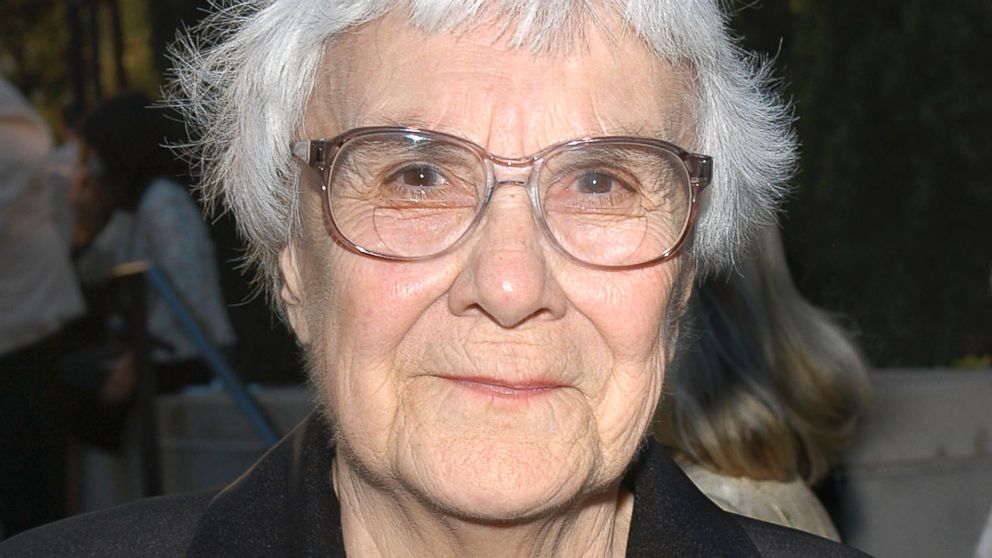
    Harper Lee then (biography.com)
    At one time everyone read the book, and many saw the movie with Gregory Peck, but now To Kill a Mockingbird (1960), which is about a trial of a black man in the pre-Civil Rights south, seems like ancient history. Its celebrated author, Harper Lee, has remained out of the limelight for over 40 years.

    In a very 21st-century dispute Harper Lee is now suing the Monroeville Courthouse Museum for trademark infringement:
    Ms. Lee claims the museum pulled in $500,000 in 2011, partly by selling unlicensed "Mockingbird"-related merchandise, ranging from T-shirts to tote bags to packages of "Mockingbird Lemonade Mix." The suit asks for unspecified damages and for all of the allegedly infringing merchandise to be destroyed.
    and now (ABC news)
    Harper Lee's main motivation doesn't seem to be money:
    According to court papers filed earlier this year in an unrelated suit, she has made millions of dollars from sales of her only book, which continues to be read by legions of middle and high schoolers across the country.
    Let's hope that the lawsuit is resolved amicably, and Harper Lee gets rid of whatever is really troubling her. At 87, anger should not be one's companion.

    Wednesday, June 19, 2013

    Simply Waiting

    A country road. A tree. Evening.

    With this simple stage instruction "the most significant English language play of the 20th century" premiered a little over 60 years ago. Waiting for Godot is about two tramps who spend the day waiting for a man named Godot, who--spoiler alert!--never comes. Vladimir and Estragon talk, a few characters enter and leave the scene, they talk some more, they engage in humdrum activities (trying on boots, eating a carrot), and the play ends, the strong implication being that they'll be waiting for Godot tomorrow.

    The action and plot development are minimal, and today's ADD audience would be checking their smartphones in a minute. But that's precisely the point: in our effort to avoid the bleakness of existence ("They give birth astride of a grave, the light gleams an instant, then it's night once more") we create distractions. We may natter on about meaning and purpose, but we all end up in the same place.

    Nathan Lane and John Goodman, 2009 Broadway production.
    (NY Times)
    In English courses of the Sixties and Seventies Waiting for Godot was required reading. Your humble high school student exasperatedly kept looking for a storyline, conflict, and resolution, before realizing that traditional dramatic structures weren't present. The meaning was that there was no meaning. (Wow, that's heavy, man.)

    Whether one agrees with the playwright's vision of existence, one can appreciate his yearning for simplicity: one scene on a stage devoid of embellishment, a few characters with no flashy costuming, and a couple of hand-held props. Cleanse your body, mind, and surroundings, say the wise men of religion or psychiatry. Even if Godot doesn't come, at least we'll have cleaned up the clutter. © 2013 Stephen Yuen