Showing posts with label Monetary Policy. Show all posts

Thursday, September 25, 2025

The Safer Haven

We've talked about how bad the stagflation was during the late '70's and early '80's, but don't take it from me. Here's what Federal Reserve history has to say: [bold added]
The economy was already in weak shape coming into the downturn, as a recession in 1980 had left unemployment at about 7.5 percent. Both the 1980 and 1981-82 recessions were triggered by tight monetary policy in an effort to fight mounting inflation. During the 1960s and 1970s, economists and policymakers believed that they could lower unemployment through higher inflation, a tradeoff known as the Phillips Curve. In the 1970s, the Fed pursued what economists would call "stop-go" monetary policy, which alternated between fighting high unemployment and high inflation. During the "go" periods, the Fed lowered interest rates to loosen the money supply and target lower unemployment. During the "stop" periods, when inflation mounted, the Fed would raise interest rates to reduce inflationary pressure. However, the Phillips Curve tradeoff proved unstable in the long-run, as inflation and unemployment increased together in the mid-1970s. While unemployment trended down slightly by the end of the decade, inflation continued to rise, reaching 11 percent in June 1979 (Federal Reserve Bank of St. Louis).
(WSJ graph)
In 1971 Richard Nixon canceled the convertibility of dollars to gold under the Bretton Woods system, which had been in place since 1944. The delinking of the dollar from gold and the combination of inflation and unemployment unprecedented since the Great Depression made it a period of maximum economic uncertainty. The gold price spiked from the $35/oz. under Bretton Woods to a high of $850 by the end of the decade.

The gold market is spiking again. In fact it Hasn’t Rallied This Much Since 1979. [bold added]
A modern-day gold rush is stretching from Costco store aisles to underground vaults in London to the flickering screens of Wall Street. Old jewelry now glimmers with potential dollar signs.

Gold’s value has ballooned by 40% this year, putting it on track for a greater annual price jump than during the depths of the Covid-19 pandemic or 2007-09 recession, according to Dow Jones Market Data. Futures for the precious metal haven’t surged so much in a year since 1979, when a global energy crisis fueled an inflationary shock that thrashed the world’s economy.

Costco 1 oz. buffalo gold piece
These days, it isn’t a financial meltdown that is drawing people to one of the original market refuges. The recent run-up to record prices—reaching $3,682.20 a troy ounce on Monday—instead stems in part from the White House, with investors big and small rushing to shield themselves from an uncertain outlook for the U.S. economy and its role in the world.
A lot has changed in the past 50 years. What hasn't changed over the centuries is that people flee to gold in troubled times.

Monday, October 03, 2022

Scratching for Yield

This happens every time interest rates rise; it's just that the increases have been so sharp that the effect is noticeable to everyone, not just Wall Street and corporate treasurers.

Interest Rates Are Rising Everywhere—Except Your Savings Account [bold added]
The interest on my $45,900 money market fund rose
from .16% to .25% between August and September.
Sheer laziness was the reason I didn't do better.
Mortgage rates doubled this year to nearly 7%, and it has become more expensive to get a car loan or carry a credit-card balance. Yet the interest on savings accounts barely budged. In March 2020, the average annual yield on a standard savings account was 0.1%, according to Bankrate.com. It fell to a pandemic low of 0.06% after Americans’ personal saving rate peaked, and is now up to a wan 0.14%.

...[banks] still paying out meager interest can count on customer inertia: We fail to take advantage of better deals, because switching banks seems like a headache.
One reason savers haven't shopped around is inertia; another is the "headache" of switching. A third reason, IMHO, is that we've gotten used to making $thousands on the stock market, and scratching around for $hundreds in interest doesn't seem to be worth the trouble.

The great reset isn't just about re-evaluating priorities; it's about recognizing how hard it is to make a buck, working hard for it, and shopping around, both to lower household expenses and to raise the interest on one's savings.

By the way, I have not yet seized the opportunity to invest in the almost too-good-to-be-true yield (9.62%) on I-bonds. There is a $10,000 limit on an I-bond account, so under the old perspective it wasn't worth the trouble. Now that I'm scratching for yield, it is.

Thursday, May 05, 2022

Sinking on Cinco de Mayo

WSJ graphic: the peak was yesterday's close
As of 10 a.m. PDT the stock market has given back all yesterday's gains (which were posted about below):
“The market yesterday was a relief rally,” said Seema Shah, chief strategist at Principal Global Investors. By Thursday, she said, the realities of a more challenging environment for stocks were starting to settle in.
Using a cliché--with expletives if you desire--is warranted: what goes up must come down, the market giveth and the market taketh away, etc.

Before Chairman Powell spoke yesterday, the outlook was gloomy but IMHO not apocalyptic. We're just back to where it was.

Wednesday, May 04, 2022

Stock Market: Hold, but Buy Antacids

Gloom on 4/29, more declines on 5/2, cautious rise on 5/3, snapback on 5/4.
Gloom on Friday
The NASDAQ index closed last Friday, April 29th, with the worst showing of any month since the financial crisis year of 2008:
The broad selloff has erased trillions of dollars in market value from the tech-heavy gauge, with investors souring on shares of everything from software and semiconductor companies to social-media giants.

The Nasdaq dropped 4.2% Friday, bringing its losses for the month to more than 13%, its worst showing since October 2008. The index is down 21% in 2022, its worst start to a year on record.
The explanations were high inflation, the raising of interest rates by the Federal Reserve to cool off the economy, the COVID-19 lockdown in China, a possible expansion of the war in Ukraine, and lowered corporate outlooks.

Warren Buffett prepared to speak to Berkshire
shareholders this Saturday. (WSJ photo)
Buffett: Buying Opportunities
Though the gloom was palpable over the weekend, experienced hands began to see buying opportunities. Of course, none are more experienced and successful as Warren Buffett:
As recently as February, Warren Buffett lamented he wasn’t finding much out there that was worth buying.

That is no longer the case.

After a yearslong deal drought, Mr. Buffett’s Berkshire Hathaway Inc. BRK.B 2.45% is opening up the spending spigot again. It forged an $11.6 billion deal to buy insurer Alleghany Corp. Y -0.26% , poised to be Berkshire’s biggest acquisition in six years. It bought millions of shares of HP Inc. HPQ 3.88% and Occidental Petroleum Corp. OXY 3.93% And it dramatically ramped up its stake in Chevron Corp. CVX 3.14% , making the energy company one of Berkshire’s top four stock investments.

...While he finds speculative bets “obscene,” the pickup in volatility across the markets has had one good effect, he said: It has allowed Berkshire to find undervalued businesses to invest in again following a period of relative quiet.
Wednesday Snapback
Though the Federal Reserve raised the Federal Funds rate by 50 basis points, the market had been expecting worse. As soon as Chairman Jay Powell said that a 75-bp increase was off the table, the stock market took off:
Major indexes were at first little changed Wednesday after the Fed announced it would raise interest rates by half a percentage point and begin to shrink its $9 trillion asset portfolio next month. Investors had widely expected both decisions heading into the conclusion of the central bank’s policy meeting.

What caught some by surprise was Mr. Powell saying the Fed wasn’t “actively considering” raising interest rates by 0.75 percentage point at a future meeting. Federal-funds futures, which traders use to track interest-rate expectations, had previously shown the market pricing in a 95% chance of the Fed making such a move in June.

Stocks soared after Mr. Powell’s remarks, with the Dow Jones Industrial Average finishing up 932.27 points, or 2.8%, to 34061.06, marking its biggest one-day gain since November 2020. The S&P 500 jumped 124.69 points, or 3%, to 4300.17 for its best day since May 2020, while the Nasdaq Composite added 401.10 points, or 3.2%, to 12964.86.
There's always a possibility of negative surprises, but on balance I don't think apocalyptic scenarios are likely. I am holding on to my portfolio and am neither a buyer or a seller.

Saturday, February 19, 2022

Inflation: Everywhere You Look

Through most of the past 40 years there have been periods where it appeared that 1970's-style inflation was back. Each time, thankfully, the tide subsided.

But how long could we keep pushing our luck? Was everything we thought we knew about government debt and the printing of paper money wrong? (Hint: no)

At the beginning of the COVID-19 emergency two years ago we were alarmed:
Now the Fed is buying corporate debt--even some risky pieces that pension funds won't touch--and the debt of state and local governments. It has crossed a line and can't go back. ("Why are you letting [State name] go bankrupt?")

Eventually the tidal wave of government debt and paper money will cause an inflation that will dwarf that of the 1970's. Thankfully, with a life expectancy of perhaps 20 years, I won't have to suffer through much of it.
I was thinking about a ribeye roast for Super Bowl
weekend but I couldn't get a 2nd mortgage in time.
Well, we were wrong, not about inflation but that it's years off in the future. It's here now, and it's everywhere. [bold added]
inflation is increasingly widespread across the U.S. economy. Economist Mickey Levy of Berenberg has scrutinized data for more than 200 individual goods and services for which the government tracks prices. An increasing number of individual items are subject to higher rates of inflation, he warned on these [WSJ] pages in December.

His update based on last week’s data suggests the problem is growing worse. Some 73% of the items saw annual price rises of 3% or higher in January, and some 55% of items saw inflation of 5% or higher. Keep in mind the Federal Reserve’s inflation target is 2%.

This is the pattern that typified the inflation of the 1970s. The oil crisis was the “supply-chain disruption” of its day—the go-to, single-item political excuse for inflation. The OPEC cartel was blamed. But the oil-price surge was a response to monetary policy blunders that let inflation loose in the late 1960s and then fed it across the 1970s.,,

The lesson of the 1970s is that once inflation appears, it needs to be corralled with urgency, or it will become embedded and increasingly hard to rein in. We are long past the point where the Fed should have been tightening policy, and the task will be more painful now because of the delay. The evidence of the inflation mistake is everywhere you look.
In the late '70's and early '80's inflation was licked through a change in the political party that ran government, a change in Federal Reserve policy, and a lot of economic pain. Given the quality of our political leadership, a repeat of the '70's and '80's is the optimistic outcome.

Tuesday, December 14, 2021

A Time for Hunkering Down

In February your humble blogger, admittedly sensitized by the experience of the 1970's, saw the warning signs:
Today's gargantuan deficits in the $trillions and near-zero interest rates have not resulted in inflation...yet; but now may finally be the time when history repeats.
Speaking of the 1970's, the approaching train wreck had grown more apparent by May:
The economy is warm if not hot, the Administration is proposing $trillions in additional spending, and the Federal Reserve is promising to keep rates low...It is possible that the economy will not experience inflation if high government spending on the wrong things (unemployment insurance extensions that keep workers home), high taxes, and high regulation results in stagnation. But an economic boom and low inflation? No way...and I hope my pessimism is wrong.
Policy mistakes are now obvious in December, and the economy is experiencing the highest inflation in 39 years: [bold added]
U.S. inflation reached a nearly four-decade high in November, as strong consumer demand collided with pandemic-related supply constraints.

The Labor Department said the consumer-price index—which measures what consumers pay for goods and services—rose 6.8% in November from the same month a year ago. That was the fastest pace since 1982 and the sixth straight month in which inflation topped 5%.
Inflation: no more semi-annual sales of Spam
and prices are up by 8%
We're just going to have to hunker down as best we can while the Federal Reserve slows the growth of the money supply by tapering its bond purchases.

Meanwhile, I'm glad I stocked up on Spam when it was on sale before COVID-19.

Saturday, October 16, 2021

Inflation: Making Do With Less

At Costco Peanut M&M's crept to $12,50
over the past year, then Boom! $19.99 but
"marked down" to $15.99. C'mon, man!
Eighteen (18) months ago this humble chronicler saw the warning signs of inflation:
Now the Fed is buying corporate debt--even some risky pieces that pension funds won't touch--and the debt of state and local governments. It has crossed a line and can't go back. ("Why are you letting [State name] go bankrupt?")

Eventually the tidal wave of government debt and paper money will cause an inflation that will dwarf that of the 1970's. Thankfully, with a life expectancy of perhaps 20 years, I won't have to suffer through much of it.
Five (5) months ago a repeat of the 1970's seemed inevitable, though the experts resisted that conclusion:
The economy is warm if not hot, the Administration is proposing $trillions in additional spending, and the Federal Reserve is promising to keep rates low.
Now everyone sees it.

One bright spot: liquor prices are about the same,
and there is plentiful supply.
WSJ, 10/13: Accelerating Inflation Spreads Through the Economy
U.S. inflation accelerated last month and remained at its highest rate in over a decade, with price increases from pandemic-related labor and materials shortages rippling through the economy.

The Labor Department said last month’s consumer-price index, which measures what consumers pay for goods and services, rose by 5.4% from a year earlier, in unadjusted terms.
WaPo, 10/15: Uncomfortable inflation is here, and it’s changing the economy
News this week that U.S. inflation is running at a 13-year high of 5.4 percent confirmed what many Americans already know as they juggle their budgets: Food, energy and shelter costs are all rising rapidly, adding to the strain Americans were already dealing with from the higher costs of hard-to-find goods such as cars, dishwashers and washing machines...

Workers are demanding pay increases because they can see their wages aren’t buying as much with so many everyday necessities costing more, including rent. That leads companies to hike prices more, then workers turn around and demand another pay raise. Economists call this phenomenon a “wage-price spiral.”
The evidence is especially noticeable in the items we buy weekly. Where I shop, prices for beef and gasoline are more than 50% higher than in 2019.

I don't drive much these days, and I've learned more chicken and pork recipes. Like the 1970's, we're making do with less.

Wednesday, October 06, 2021

The Ultimate Example

I still believe that eventually President Biden, Speaker
Pelosi, and Majority Leader Schumer will do the right thing.
The Wall Street Journal opinion page sheds a little more light on the process of budget reconciliation . [bold added]
The parliamentarian has already said that Democrats can use reconciliation to raise the debt limit, so why won’t they do it? As it happens, Mr. Biden gave that game away when he was asked Monday why Democrats aren’t using reconciliation.

“There is a process” that “would require literally up to hundreds of votes,” Mr. Biden explained. “It’s unlimited number of votes having nothing directly to do with the debt limit; it could be everything from Ethiopia to anything else that has nothing to do with the debt limit. And it’s fraught with all kinds of potential danger for a miscalculation, and it would have to happen twice.”

In other words, Mr. Biden admits that Democrats could raise the limit via reconciliation, but then they’d also have to take difficult votes on many issues on the Senate floor. Some of those votes might be unpopular. Mr. Biden is admitting that the reason is political—that Democrats want Republicans to spare them from having to take those tough votes.
Republicans have been hinting (actually some have been shouting) that President Biden is out-of-touch and even senile. From the above quote he doesn't sound senile to me. His handlers should let him speak more--I like this truthful Joe.

But back to the issue at hand: the editorial does communicate more information about Democrats and Republicans' respective motivations and the what of budget reconciliation ("difficult votes on many issues"). Just why these votes have to be taken through this still-mystifying procedure is not something that has been explained clearly to John or Jane Q. Public.

It's often been lamented that nothing works in Washington, and if these inside-the-Beltway rules crash the U.S. dollar and the world's financial system, the American people will view this as the ultimate example of dysfunctional government.

If you thought Donald Trump was bad, wait till you see what comes next.

Thursday, September 30, 2021

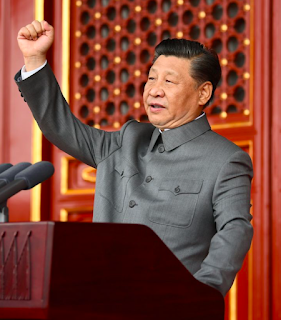
The Xi Jinping Put: Still Operational

It appears that President Xi has allowed
Evergrande to live a while longer (WSJ).
A good part of the stock market swoon in September has been due to the possible insolvency of China Evergrande Group, one of the world's largest real estate companies.
How big is Evergrande?
Evergrande had nearly $78 billion in revenue last year and hundreds of projects in more than 200 Chinese cities. For years it used borrowed money and presold apartments to aggressively amass land and develop projects. Along the way the company paid out billions of dollars in dividends to shareholders, including the equivalent of more than $5 billion over the past three years to founder, top shareholder and Chairman Hui Ka Yan.

Why is Evergrande facing a crisis?
Problems started to emerge last year when pandemic lockdowns hurt property sales for months, and they snowballed into concerns about a cash crunch last fall. Meanwhile, China’s efforts to crack down on borrowing by real-estate developers via limits known as the “three red lines” kept the company from taking on new debt. Cash is so short the company this summer started paying some suppliers with unfinished apartments instead of money. Its struggles sparked protests at its headquarters in Shenzhen.

How much does Evergrande owe?
The company had the equivalent of around $88 billion in outstanding debt at the end of June, about 42% coming due in less than a year. Its total debt burden is the most of any publicly traded real-estate management or development company globally, according to S&P Global Market Intelligence. Research firm Capital Economics estimates Evergrande also has sold an estimated 1.4 million apartments, worth $200 billion, that it hasn’t yet completed.
In past years investors outside China wouldn't have been too worried about the collapse of an Evergrande because of the belief that the Chinese government would back the debt obligations of large Chinese companies. (This is the Chinese version of the Fed put, a market understanding based on past Fed behavior, that the U.S. government would stop losses from becoming too deep and widespread and possibly jeopardize the entire financial system.)

In the latter half of the month there have been signs that the "Xi put" is operational, with some steps being taken to shore up Evergrande which nevertheless did miss debt payments in September.

The U.S. stock markets continued to drop in late September because of higher interest rates (the cause of the drop in late 2018), supply shortages, and inflation. The Chinese economic slowdown is part of the reason for pessimism, but at least for now a financial crisis is off the table.

Some investors have seized on these government signals as an opportunity to bargain-hunt Chinese bonds and stocks. Too soon and too rich for my blood.

Wednesday, July 14, 2021

Inflation Fears Spreading

Though Hawaiians are used to high prices, even they're noticing the increases.
In February I was concerned enough about inflation to shift some of the portfolio into traditional hedges like real estate and precious metals.

By May the alarm bells were ringing loudly as the Administration's trillion-dollar deficit spending plans took shape, despite signs of recovery, while at the same time the Federal Reserve committed to keeping interest rates low. (The Fed will buy up government debt and release cash into the economy; this combination of actions is what people mean when they say that the government can spend away because it can "print money.")

Now awareness of inflation is hitting Main Street. Consumers see it everywhere in car, food, gas, and housing prices.
U.S. inflation continued to accelerate in June at the fastest pace in 13 years as the recovery from the pandemic gained steam and consumer demand drove up prices for autos, airline fares and other items.

The Labor Department said last month’s consumer-price index increased 5.4% from a year ago, the highest 12-month rate since August 2008. The so-called core price index, which excludes the often volatile categories of food and energy, rose 4.5% from a year before.
The Fed still holds that the spike is temporary, and to be sure, there are influential voices that hold to the rosy view. As for me, I'm pessimistic but I hope I'm wrong.

Regardless, millions see their pocketbooks being hurt now, and inflation is going to be a hot topic for the 2022 elections.

Friday, July 09, 2021

Inflation: the Transitory Story

We didn't buy it at $15 a lb. Look at it now.
We have previously voiced our fear that 1970's-style inflation is back. At the ground level we consumers see the evidence all around us: rising prices at the pump, grocery stores, and the real estate listings in our neighborhood.

The Treasury and Federal Reserve still insist that the price spike is transitory, and we cannot unequivocally say they're wrong.

Economists still have some authority with your humble blogger and aren't completely Democratic-Party cheerleaders like the other social sciences. So I'll listen to them though they may take the Administration's side.

On the side of transitory inflation is Prof. Alan Blinder, former Fed Vice Chair:
If you’re worried about a return to the double-digit inflation of the 1970s and ’80s, relax. There is a lot of angst these days as a result of the stunning 5% inflation rate (for the year ending May 2021) in the last consumer-price index release. We haven’t seen a reading that high in 13 years, but the huge supply shocks of the double-digit days aren’t present, and the Federal Reserve won’t let inflation soar. It is certainly possible, however, that inflation will linger above the Fed’s 2% target for a while...

Much of this year’s inflationary surge can be traced to two transitory factors: bounceback from the anomalous negative inflation readings of early 2020 and bottlenecks as the economy reopens unevenly.

...there are three counterarguments [to the high-inflation argument].

First, this worry reflects Phillips curve thinking, which hypothesizes that low unemployment rates make the inflation rate rise. But inflation wasn’t rising before the pandemic despite a 3.5% unemployment rate.

Second, the bond market isn’t buying the argument. Inflation forecasts embedded in bond yields remain consistent with the Fed’s low target.

Third, much of the extreme fiscal stimulus that has been driving spending is transitory. Most pandemic relief spending will be ending soon, and I don’t think Congress will approve much more spending this year that isn’t paid for.
At the heart of the inflation story, like many other important issues of the day, is the battle between our fears (derived from past experience) and hopes (the professionals know what they're doing). Well, once in a while the experts are right.

Meanwhile, as we said in May, it would be wise to hedge your bets:
shift some investments into real estate, gold, art, or more stable foreign currencies that can keep up with dollar inflation. (I would recommend cryptocurrencies, but I don't understand them well enough.) Get out of bonds and low-growth dividend paying stocks. If you have variable-rate loans, convert them to long-term fixed-rate debt.
Good luck.

Saturday, June 12, 2021

Inflation: I Hope They Know What They're Doing

March, 2021: Brisket $3.69/lb
The headline story in Friday's WSJ comes as no surprise. On our weekly shopping trips we've been noticing substantial increases in the price of food, and it's a good thing that we don't drive much any more because Bay Area gas is almost $4 per gallon. As noted in an earlier post, we've been having flashbacks to the 1970's. [bold added]
The Labor Department said last month’s increase in the consumer-price index was the largest since August 2008, when the reading rose 5.4%. The core-price index, which excludes the often-volatile categories of food and energy, jumped 3.8% in May from the year before—the largest increase for that reading since June 1992.
May, 2021: Brisket $4.49/lb


Consumers are seeing higher prices for many of their purchases, particularly big-ticket items such as vehicles. Prices for used cars and trucks leapt 7.3% from the previous month, driving one-third of the rise in the overall index. The indexes for furniture, airline fares and apparel also rose sharply in May.
To be sure, a portion of these price hikes represents a springing back of demand from the lockdown economy of one year ago. A comparison with pre-COVID 2019 is less alarming:
June, 2021: Brisket $5.49/lb
The annual inflation measurements are being boosted by comparisons with figures from last year during pandemic-related lockdowns, when prices plummeted because of collapsing demand for many goods and services. This so-called base effect is expected to push up inflation readings significantly in May and June, dwindling into the fall.

Compared with two years ago, overall prices rose a more muted 2.5% in May.
Policy-makers are currently behaving as if the inflation spike is temporary.

Despite his fears, your humble blogger hasn't seen convincing evidence that they're mistaken. Like last year, when our worries were about a different subject, we're forced to trust that the experts know what they're doing. And it worked so well the last time....

Wednesday, May 12, 2021

Inflation Confirmed

How inflation can change behavior: we intended to return
this leased car next March but are seriously considering
exercising our fixed price option to buy it.
Just last Saturday we voiced our fears about a return of '70's inflation:
The economy is warm if not hot, the Administration is proposing $trillions in additional spending, and the Federal Reserve is promising to keep rates low.
I hoped I was wrong, but today's CPI data confirms that inflation is back, at least for this year. [bold added]
The Labor Department reported its consumer-price index jumped 4.2% in April from a year earlier, up from 2.6% for the year ended in March. Consumer prices increased a seasonally adjusted 0.8% in April from March. The index measures what consumers pay for goods and services, including clothes, groceries, restaurant meals, recreational activities and vehicles.

Higher prices for used autos surged 10% in April compared with the prior month—the largest monthly increase on record. That accounted for more than a third of the increase, the Labor Department said.

U.S. stocks fell after the inflation data was released, extending pressure on financial markets. Investors are concerned that rising prices could prompt the Federal Reserve to move on interest rates sooner than expected.

Policy makers are watching April’s reading to gauge the extent of what many expect to be a monthslong rise in prices, after a year of anemic overall inflation as the pandemic curbed consumer spending. Whether an upswing in prices proves temporary is a key question for financial markets and the U.S. recovery, as the Biden administration, Congress and the Fed continue to support the economy with fiscal- and monetary-policy measures.

The so-called core price index, which excludes the often-volatile categories of food and energy, climbed 3% in April from a year before.
The Treasury and the Federal Reserve are behaving as if the surge in prices is temporary, while many stock market participants worry that it will be long-lived, as evidenced by the sell-off today.

There are numerous reasons why inflation and higher interest rates are bad for the market. Here are just a few: companies pay higher materials, labor, and interest costs, decreasing their profits; investors switch out of equities into bonds, which are safer and return cash in the form of interest; valuation models lower the value of future dividends due to higher discount rates.

In this environment I think it's crazy for the Federal Government to be considering a multi-trillion dollar infrastructure program when the economy is already struggling with higher raw materials costs and labor shortages. If there are people who are left behind and still can't find jobs in this hotter economy, go ahead and help them, but limit the additional spending to these transfer payments, please.

Saturday, May 08, 2021

That '70's Show

My grandfather was a dad in his thirties during the Great Depression. Like many who lived through that period, he was extremely conservative in his finances and refused to take on debt (he did a home mortgage on his one-and-only house during the 1920's, before the Depression).

We baby boomers had a similar chastening experience during the "stagflation" of the 1970's. Many economists of the time argued that the U.S. could not pay for both the Vietnam War and the Great Society ("guns versus butter") without a massive increase in taxes. At the time the Federal Reserve couldn't "print money" willy-nilly, that is, buy unlimited amounts of Treasury debt, because the quantity of dollars was constrained by the amount of gold held at Fort Knox.

Richard Nixon caved to the intense pressure to de-link the dollar from gold ("go off the gold standard") in 1971. The money supply could now increase more freely, and all the bad things we hear about the 1970's---runaway inflation, a stagnant economy, fixed-income retirees losing ground (by the way, California property taxes at the time increased by double-digit percentages along with home prices, giving rise to 1978's Proposition 13 that capped property tax increases at 3%/year), gas shortages, wage and price controls, "windfall profits" taxes on oil companies--are an indelible memory for those of us who lived through that period.

Ronald Reagan and Paul Volcker (London Times)
Inflation was finally whipped, albeit painfully, by Fed Chair Paul Volcker during the early 1980's by limiting the growth in the money supply, almost as if we were back on the gold standard again. Treasury rates rose to 15% or higher, and consumer and mortgage interest rates followed, before getting back to normal a couple of years later.

As a boomer now living off of savings, I have no desire to experience another round of 1970's-like inflation, and I certainly don't want to live through another "cure."

To be fair, there have been several instances after the Volcker era when the money supply rose dramatically, usually in response to a financial crisis, and inflation did not occur. Many economists have convinced themselves that the world has changed, and that we can "control" inflation.

Perhaps because I entered the workforce and paid bills during the 1970's I give more weight to 40-year-old negative experiences than latter-day economists, but I believe big inflation is coming.

The economy is warm if not hot, the Administration is proposing $trillions in additional spending, and the Federal Reserve is promising to keep rates low. [bold added]
The Fed has kept interest rates near zero for the past year and signaled rates won’t change for at least two more years. It is buying hundreds of billions of dollars of bonds. As a result, the 10-year Treasury bond yield is well below inflation—that is, real yields are deeply negative —for only the second time in 40 years.
If we are going to reprise the 1970's, shift some investments into real estate, gold, art, or more stable foreign currencies that can keep up with dollar inflation. (I would recommend cryptocurrencies, but I don't understand them well enough.) Get out of bonds and low-growth dividend paying stocks. If you have variable-rate loans, convert them to long-term fixed-rate debt.

It is possible that the economy will not experience inflation if high government spending on the wrong things (unemployment insurance extensions that keep workers home), high taxes, and high regulation results in stagnation. But an economic boom and low inflation? No way...and I hope my pessimism is wrong.

Thursday, March 18, 2021

The Apotheosis of the 21st Century

Rickrolling meets monetary policy meets deepfake technology.

Monday, February 01, 2021

It's Been Fun Playing, But I Will Pick Up My Marbles

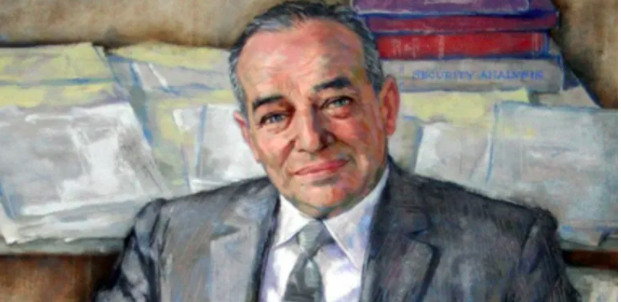
Benjamin Graham (1894-1976), the
father of fundamental analysis
Investing in stocks, your humble blogger first turns to fundamental analysis, which tries to determine the "intrinsic value" of securities both from a projection of earnings and dividends as well as the fair value of assets and liabilities on the balance sheet. Yes, it's hard work and as boring as it sounds, but some of the most successful investors in history have used FA to determine when to buy or sell a stock.

More often than not, however, emotions rule markets, such as the Reddit frenzy that has driven Gamestop, AMC, and other heavily shorted names to prices that cannot be rationalized under even the most optimistic scenarios.
Thousands of members of WallStreetBets, a forum at the online community reddit.com, have been leading the swarm of amateur individual traders buying stocks that hedge funds and other institutional investors were betting against.

Moving in sync and en masse, such traders can drive a stock way up or down even if each trader commits only a few dollars. Professionals, on the other hand, are legally restricted from colluding and incur much higher brokerage costs.

These new mobs of amateur traders resemble swarms of animals that often coalesce in the wild. You may have seen videos of an immense school of fish flashing in unison through the sea or a murmuration of starlings forming a vast swirling vortex in the sky.

These swarms shift direction in swift, coordinated bursts to find prey and evade predators.
Even multi-billion-dollar hedge funds can be overwhelmed by the "swarm," so if an individual wants to participate on either side of the trade on one of these targeted stocks, it had better be with money that he can afford to lose.

Silver (Reuter's image)
The heavily shorted Reddit stocks have been well publicized, and to this bemused investor it is impossible to know whether they will go up or down from their present levels, However, one tidbit caught my eye last week: the price of silver was being discussed on the message boards, and precious-metal stocks had only risen modestly so far.

Those of us who lived through the rampant inflation of the 1970's are dwindling in number. We old-timers remember the "guns vs. butter" debate from the 1960's, when fiscal conservatives argued that the United States could not both prosecute the Vietnam War and implement Great Society social spending programs. The rampant inflation of the 1970's seemed to prove the fiscal conservatives correct.

The Federal Reserve under Paul Volcker wrung inflation out of the economy by forcing Treasury rates to the mid-teens and triggering a severe recession, and the lessons of that period have influenced generations of economic policy makers. Today's gargantuan deficits in the $trillions and near-zero interest rates have not resulted in inflation...yet; but now may finally be the time when history repeats.

The above is a long way of saying that I have started to shift my retirement portfolio into hard assets like real estate, precious metals, and related stocks as a hedge against inflation. So, back to Reddit targets: the fact that thousands of individual investors were beginning to look at silver accelerated this investor's decision to buy some poor-man's gold.

On Friday I purchased some Hecla Mining (HL) at $5.80, a stock that I had owned in the past, as a way of playing the silver market. As of this writing, HL is trading at $7.19, a 24% increase over cost.

There's been some chatter that the big-money funds have disguised themselves online as individual investors and are planting information to drive up the price of silver and silver stocks. It's been fun for a day, and I'll ride it a little longer before getting out.

Wednesday, September 23, 2020

Diamonds + Bitcoin = Diamond Coins


Five months ago we viewed the Federal Reserve's unprecedented commitment to support the entire economy as the beginning of a multi-year cycle of inflation.
Now the Fed is buying corporate debt--even some risky pieces that pension funds won't touch--and the debt of state and local governments. It has crossed a line and can't go back. ("Why are you letting [State name] go bankrupt?") Eventually the tidal wave of government debt and paper money will cause an inflation that will dwarf that of the 1970's.
We already see the signs in rising prices of bitcoin and gold (see above graphs)

(Image from tokenpost)
Now there's a move to resurrect diamonds as a store of value: [bold added]
Here’s how the new market would work: Diamond Standard plans to sell 5,000 coins each worth $5,000. The company will then use an automated process to bid on millions of diamonds and adjust its bids until it can buy a sample of about 50,000 to 60,000. That bidding process will include many big diamond vendors, creating the first global diamond exchange.

The geological information about the diamonds purchased by the company will be put in a public database. From there, a computer program will select a comparable distribution of 11 or 12 to go into each coin.

The vendors must comply with know-your-customer and anti-money-laundering requirements in a process supervised by the Gemological Institute of America to ensure no conflict diamonds used to finance wars are involved. Diamond Standard is also regulated by the Bermuda Monetary Authority and audited by Deloitte LLP.

The GIA will then grade each diamond and assemble the coins before delivering them to customers in mid-October. Each coin also carries a computer chip that makes it a digital asset using blockchain—the technology that supports the digital currency bitcoin—letting holders buy and sell on digital exchanges. Those trades will dictate the price of coins after the initial offering. The top of the plastic coins is transparent to display the diamonds.
I admire the entrepreneurs for trying to use 21st-century technology to solve the diamond market's twin problems of questionable provenance and synthetic manufacturing. As a money-like asset instead of jewelry, diamonds like gold will experience much greater demand ($1.2 trillion?!? per the WSJ article).

As for your humble blogger, if I were looking for inflation protection I would invest in real estate. If it all goes south at least I could live in it.

Thursday, April 09, 2020

Unprecedented Debt + Encouragement to Borrow More


(Note: the above 75-year debt chart shows debt as a percentage of U.S. GDP and is from the Wall Street Journal)

Even before the coronavirus-induced recession, United States consumers, businesses, and state and local governments had borrowed at unprecedented levels.

The conventional worry is that paying back the debt will be a drag on the recovery: [bold added]
The debt surge is set to shape how governments and the private sector function long after the virus is tamed. Among other things, it could be a weight on the expansion that follows.

Many economists believe low interest rates will help the nation manage the soaring debt load. At the same time, they say high levels of private sector debt could lead to a period of thrift, slowing the recovery if businesses and individuals try to rebuild their savings by holding back on investment and spending.
But these are unconventional times. Paying back the debt is a future concern. The problem is making more loans now to keep businesses alive.

In normal recessions businesses tap their lines of credit. If they reach their limit, banks will be nervous about lending more. The unavailability of credit flushes weaker players out of the system and primes the economy for recovery.

However, all sectors of the economy are struggling. Some of the biggest employer names--who were doing fine a few months ago--will collapse without funds to keep them going, The "normal recession" model of weeding out the weaker companies won't work if entire sectors--for example, the airlines--are gone.

Because prudent lenders won't make loans or purchase debt in this environment the Federal Reserve has become the lender of last resort for the entire economy, not just the banking sector.
On Thursday, the central bank expanded those efforts and further unveiled a new generation of lending facilities to prevent a liquidity crunch from turning into a solvency crisis for American businesses, states and cities.

The Fed said it would offer through banks four-year loans in which payments can be deferred for one year to businesses with up to 10,000 employees or revenues of less than $2.5 billion. Loans through this Main Street Lending Program, which will initially fund up to $600 billion in loans, will be subject to restrictions on stock buybacks, dividends and executive compensation. Firms that have received separate forgivable loans for payroll costs from the Small Business Administration will be eligible to seek Main Street loans as well.

To ease funding strains for cities and states seeing large revenue drops and rising expenses from simultaneous economic and health crises, the Fed said it would purchase up to $500 billion in short-term debt directly from U.S. states, the District of Columbia, U.S. counties with at least two million residents, and U.S. cities with at least one million residents.
Your humble blogger was taught in Paleozoic-Era economics courses that the Federal Reserve only participated in capital markets by buying and selling Treasury Bills. In succeeding crises the Fed bought long-term Treasuries and bank debt.

Now the Fed is buying corporate debt--even some risky pieces that pension funds won't touch--and the debt of state and local governments. It has crossed a line and can't go back. ("Why are you letting [State name] go bankrupt?")

Eventually the tidal wave of government debt and paper money will cause an inflation that will dwarf that of the 1970's. Thankfully, with a life expectancy of perhaps 20 years, I won't have to suffer through much of it.

Thursday, January 24, 2019

Still Going Strong

"YES": the 3 leading currencies (Dreamstime graphic)
In 2011 Standard & Poor's downgraded the U.S. credit rating from AAA to AA+. The rating agency cited government debt (then $11.4 trillion) and mismanagement of fiscal policy. Not following suit, Moody's and Fitch, the other two major rating agencies, maintained their triple-A rating on U.S. Debt

7½ years later, outstanding government debt has nearly doubled. Citing this as his reason, Starbucks chairman Howard Shultz is running for President: "I think the greatest threat domestically to the country is this $21 trillion debt hanging over the cloud of America and future generations."

Meanwhile, S&P, Moody's, and Fitch have not changed their respective ratings on U.S. debt since 2011.

But what does the rest of the world think? WSJ -- Dominant Dollar Bests Challengers:
after a drawn-out crisis in the eurozone, and a more recent slowdown in China, the dollar’s international pre-eminence looks safer than ever. Concerns that a U.S. administration with an America First platform would diminish the dollar’s global role haven’t been borne out, either.
U.S. debt may be risky, but the dollar is still on top because currencies, which are an imperfect proxy for national strength, are graded on a curve.
International use of the euro, once the dollar’s clearest challenger, has diminished since the eurozone sovereign-debt crisis raised the specter of default on debts previously believed safe. The euro’s share of global reserves shrank to 20.5% in the third quarter of 2018 from 28% in 2009...

But to make the yuan an international force, economists and investors have long maintained, Beijing must permit freer movement of money across its borders.

Instead, facing a flood of capital outflows in 2015-16, it clamped down on investment outside of China.
You can't replace something with nothing, and the dollar is more something than its rivals.

Tuesday, July 26, 2016

America is Still Great Golden

A Foster City Big Mac is $3.99
For thirty (30) years the Economist has been tracking the Big Mac index "as a lighthearted guide to whether currencies are at their 'correct' level". Using McDonald's flagship burger as a universal symbol of value, the current BMI shows that
In America, a Big Mac costs $5.04 on average. In Hong Kong, by comparison, the same burger costs the equivalent of $2.50 or so....In Hong Kong, where the Big Mac costs 19.20 Hong Kong dollars, that hypothetical exchange rate would be 3.81 Hong Kong dollars [blogger's note: HK$ 19.20 divided by US $5.04] to the greenback. The real, market exchange rate is much weaker: it takes 7.75 Hong Kong dollars to buy one of the American sort. According to the Big Mac index, then, the Hong Kong dollar is heavily undervalued—by more than half.
This anomaly is what keeps arbitrageurs in business; they could take US$ 5.04, convert it at 7.75 to HK$ 39.06, and get two Big Macs in Hong Kong for the price of one in the U.S. There might even be enough left over for a small order of fries.

Even more interesting is that China now has the world's largest economy as measured by "patty purchasing power."
If a country spent its entire annual income on Big Macs, how many burgers could it buy? America’s GDP is forecast to be over $18.5 trillion this year, according to the IMF. That translates into almost 3.7 trillion burgers at a little over five bucks apiece....China’s GDP will be a little over 73 trillion yuan this year, says the IMF, or less than $11.4 trillion. But in China, a Big Mac costs only 18.6 yuan. So its GDP is equivalent to over 3.9 trillion burgers, over 5% more than the American total.
Of course, I had to verify such an astounding revelation with my own eyes and went to the Foster City McDonald's, where the Big Mac costs $3.99. At that price---and we're in one of the priciest areas in the country---the U.S. can buy 4.6 trillion burgers. Whew! China still has to ketchup.