Showing posts with label Poverty. Show all posts

Monday, July 24, 2023

Cooler Than It Ever Was

(WSJ illustration)
Nearly 30 years my junior and living a third of a world away, writer Aatish Taseer and I were deprived of air-conditioning during our respective childhoods. As adults we both appreciate AC and can't get enough of it:
I remember seeing a car air-conditioner for the first time....After years of long car journeys, in which a hot desert wind called the Loo blew through open windows, leaving us desiccated as pieces of smoked ham, it felt almost sinful to be cool in a car...

There is something magical about the effect of air conditioning in a hot country, letting those who can afford it enjoy the dignity of going about their day without being made wretched by the heat.
When I visit Hawaii I stay at my parents' now-air-conditioned house and use their air-conditioned car. Having a place to cool off after a sun-filled, sweaty day of activity makes for a pleasant vacation indeed.

Tuesday, January 11, 2022

The Dollar-and-a-Quarter Store

After paying for the take-out lunch, I wandered into the Dollar Tree next door to while away the next 15 minutes. I hadn't been there for several years and was surprised to see that they finally breached the one-dollar price point. Dollar Tree had raised the price of everything to $1.25:
Dollar Tree Inc. is raising prices for good, the company announced on Tuesday, moving its price point higher by a quarter from the eponymous dollar...

The company said the higher price point is a permanent move, and not the result of “short-term or transitory market conditions.” Moreover, the $1.25 price point allows the company to offer a wider range of merchandise, including items that had been discontinued at the $1 level.
I picked up two packages of five 9x12 mailing envelopes. The total was $2.50 for 10, a bargain.

The shelves aren't chained or locked.
The checkout lines, with everyone masked and distanced, were busy. The customers chatted with the cashiers; they seemed like regulars.

I didn't notice any of the chained and locked shelves that are ubiquitous in San Francisco stores. The paucity of security measures probably was due to the Redwood City crime rate being lower and the low per-item value of goods for sale. It wouldn't be worth the time to steal a shelf of anything, then list it on eBay.

Though you are probably not in its demographic, dear reader, Dollar Tree's business model meets the needs of millions, and Dollar Tree is not saddled with the high marketing and security costs that plague upscale establishments. May it thrive another 35 years.

Saturday, March 13, 2021

Was the Tent Included?

City homeless encampment on Gough (Chron photo)
Headline: S.F. pays $61,000 a year for one tent in a site to shelter the homeless. Why?
San Francisco is paying $16.1 million to shelter homeless people in 262 tents placed in empty lots around the city where they also get services and food — a steep price tag that amounts to more than $61,000 per tent per year...

The annual cost of one spot in one site is 2½ times the median rent for a one-bedroom apartment in San Francisco.
The arithmetic: a 1 BR apartment rents for $2,033 per month while the monthly cost of a tent site is $5,083.

The Chronicle article cites four reasons for the high costs:
  • hastily built encampments;
  • failure to send contracts out for bid;
  • hooking up water and electricity;
  • round-the-clock security.

    We are not overly condemnatory of the immense sums that were spent during the first year of the coronavirus pandemic when lives and livelihoods were endangered. Undoubtedly, there was waste, profligacy, and profiteering in addition to courage, self-sacrifice, and severe financial hardship.

    Now that normalcy is returning, $61,000 per tent per year is not "normal," is not sustainable, and is precisely the wrong message to be sending to those who need to get off the couch and go back to work.
  • Sunday, December 01, 2019

    Stewardship Isn't Easy

    'Tis the season for giving, but J.K. Rowling says, Don't Give Your Time or Money to Orphanages [bold added]
    (Time photo)
    [Western volunteers and donors] brought foreign money into the country and we do know that some orphanages are set up literally to exploit children. The children are the bait for foreign donations and a volunteer experience, and the money is going into the pockets of the people running the orphanages....

    I suppose I would say there are three big things that people can do watching this.

    The first is and I’m sure by now very obvious, don’t volunteer in orphanages. Don’t give your time to propping up a system that we know does real, serious harm.

    And then there’s the financial aspect. If you have money to give when you are travelling, put it into local businesses because that helps communities. That’s something real you can do when travelling. Don’t go and visit orphanages.

    If you want to support charities or projects, just do a bit of due diligence and make sure you’re dealing with the root causes here: look at poverty and building community services and so on.

    The last thing I’d say, and what we would love to see as an organisation, is to see businesses amending their social responsibility policies. We’d love to see those corporate policies changed to make sure they’re not supporting so-called orphanages or child institutions. That is something hugely powerful that everyone can do.
    Comments:
    1) Westerners, and Americans especially, are suckers for good sob-stories, more so now that there are visuals. (By the way, me too.) Just use the same level of due-diligence that you would use for your investments.
    2) Actually, more due-diligence because there is no SEC regulating charities. With U.S. non-profits there's some limited oversight by the IRS, but assume there's none with overseas organizations.
    3) J.K. Rowling argues that capitalism is the best way to pull people out of poverty ("put it into local businesses"). Of course, identifying these local businesses can't be easy either.
    4) Giving away one's wealth should require as much effort as earning and saving it, that is, if one cares about how the donations are used. Stewardship isn't easy.

    Sunday, November 24, 2019

    Something to Do With It

    It was coincidental but thematically appropriate that our high school seniors spoke from the pulpit on Thanksgiving Sunday.

    Landon talked about his lifelong battle with food allergies and his gratitude for the support from his family and doctors. He recounted how he was able to help a friend who had an anaphylactic shock while away on a trip.

    Lydia first spoke about the little things she was grateful for--the paper to write her speech!--and then moved on to weightier matters, like how gratitude for her life led to her multi-year commitment to alleviating destitution in Latin America.

    Young people experience emotional highs and lows, but when they are raised with an attitude of gratitude there's much less chance that bitterness and resentment will dominate their waking moments. I am sure that growing up in the church had something to do with it.

    Monday, January 08, 2018

    Friday, December 01, 2017

    Only One Night for Me

    After a dinner of spaghetti, green beans, and chicken, the kids grabbed the hula hoops and raced around the room. The cooks remembered a time when children should be seen and not heard when the grownups are talking, but those days are gone forever.

    On the bright side, social interaction, even the raucous kind, was welcome.

    It was refreshing to see children---strangers---from different families playing together sans electronic devices.

    Liv, Lorie, and Leda relax after doing the dishes.
    This week was our turn to make dinner for Home and Hope, a network of 30 Peninsula churches and synagogues who provide temporary shelter for displaced families.

    It was also a chance for people from different circumstances to spend a few hours together. We swapped stories about the places we grew up and how we came to live in the most beautiful place on earth. We talked about our childhood and parents.

    The volunteers left around 8, and Hank and I rolled out our sleeping bags. I didn't sleep comfortably, but, unlike our new friends, the lack of comfort will only last one night.

    Tuesday, September 05, 2017

    Moral Hazard

    News item: Hawaii is considering
    a universal basic income, the notion that everyone should be able to receive a stream of income to live on, regardless of their employment or economic status.
    It's a good thing I renewed my State ID....

    You can reach me here.

    Thursday, April 20, 2017

    21st Century Imperialism

    Matla Coal-Fired Power Station, South Africa
    The quickest means to African development is through the use of coal-fired power plants: [bold added]
    African nations have an estimated 35 billion tons of recoverable coal reserves that could supply the continent’s current needs for more than a century.
    Solar power has several drawbacks:
    Unreliability: “People think of this continent as jungle and sunshine, but we have a long rainy season in the tropics, more like a monsoon, and there’s no sun for days,” [Engineer John] Owusu said. “That makes it hard to rely on something like solar. Wind turbines make more sense, but you still need batteries to store the power.”

    Theft: "on a continent where a third of the population lives under the official U.N. poverty line, solar power users need to hire armed guards to prevent the coveted panels from being stolen."
    Your humble blogger believes that each country gets to decide what energy path is best for itself. When rich, white societies try to keep poor black countries impoverished, that used to be called racism and imperialism.

    Monday, November 28, 2016

    It Was All My Doing

    As we observed on Thanksgiving Day, average Americans are now by some measures richer than the richest man in the world of 100 years ago.

    But how does middle-class America compare to the rest of the world today? It doesn't take that much to be counted in the wealthiest 10% of the world's population. according to The Economist:
    If you had $71,560 or more, you would be in the top tenth. If you were lucky enough to own over $744,400 you could count yourself a member of the global 1% that voters everywhere are rebelling against.
    NASDAQ graphic from 2015
    Here on the SF Peninsula, one could get to $744,000 just by buying a middle-class house in a middle-class suburb 20 years ago and making the debt payments. The mortgage is likely to be under $200,000 by now, and the home can sell for over $1 million.

    Persistence, and the good fortune of living close to companies worth $3 trillion, that's all one needs to be in the 1%.

    Sunday, August 14, 2016

    At Least I Gave


    The piles of bottles and cans gave us pause. No problem, said the man at the recycling center, the machine is fixed and I'm going to crush them later.

    An all-time record for me,
    and yes, I showed ID
    The wizened Asian man pushed in front of us. He had two baskets of cans. The recycling man weighed, bagged, and moved the cans to the back. The payment was $35, which under new procedures required the WAM to show an ID (to deter recyclables thieves who make repeat visits). The WAM acted like he didn't understand English, much less the request, so I showed him my driver's license, helpfully. Big mistake.

    The recycling man returned the bags to the WAM, who increased his pleas both to him and to me. The WAM didn't have a car and would have to take the cans back on his bicycle.

    Meanwhile, a line had gathered, and bystanders were shouting "He needs your ID!" as if decibel level raises understanding. The WAM refused to move or take back the cans. We were 40 minutes into what should have been a 10-minute process.

    I had seen the wizened Asian man before in downtown San Mateo, 5 miles away. From the volume of cans, I knew he had stolen them from recycling bins in Foster City. It was impossible that he understood no English or that he didn't have some form of ID on him to receive social services.

    I knew we were all being played. We were at a crossroads. In a few minutes the police would be called, or....

    Signs of a hard life were rife, from the clothes he wore to his leathered face (he was probably younger than I) to his beat-up bicycle. I opened my wallet and bought his cans for $40. Xiè xie nǐ, he repeated over and over, bowing and scraping. Please, stop doing that, your gratitude is mostly phony.

    Adding his cans to my meager recyclables yielded a personal record payment of $52.71.

    Well, I didn't do as St. Paul advised,
    Each one must give as he has decided in his heart, not reluctantly or under compulsion, for God loves a cheerful giver,
    but at least I gave.

    Monday, June 27, 2016

    San Francisco's "Unsolvable" Problem

    Diane Feinstein was the first mayor
    to confront the problem (Chron--1986)
    This week the Chronicle runs a landmark series of articles on San Francisco's homeless problem. Despite many millions of dollars spent and the attention of six mayors, the headline reads:
    "SF homeless problem looks the same as it did 20 years ago."

    The limitations aren't just financial. Estimates of San Francisco's homeless population run between 7,000 and 10,000, of which about a third are mentally ill. [bold added]
    SF Chronicle--they tried and failed:
    Mayors Agnos, Jordan, Brown and
    Newsom. Will Ed Lee succeed?
    The city would need hundreds of new psychiatric-care beds to get them off the sidewalks — the current inventory of fewer than 1,000 is not nearly enough. But even if it created those beds, getting people into them is difficult. Unless they are judged a danger to themselves or others, the mentally ill can’t be forced into care.
    As someone who has encountered the homeless in off-and-on charity work over two decades, your humble blogger has the glimmer of appreciation for how intractable the problem is. Keeping above water in our rapidly changing society is difficult enough, but for those who are mentally ill, disabled, and/or engaged in substance abuse, getting a job and getting off the streets is usually out of the question.

    Turning one's life around requires an unwavering commitment that would have probably forestalled homelessness in the first place.

    "Mayor Willie Brown...ultimately — and famously — declared the homeless problem unsolvable."

    Monday, May 02, 2016

    Hans Eide (1934-2016)

    Hans came to our church frequently to talk about the school.
    On trips to Southeast Asia Hans Eide had witnessed the plight of children who were too poor even to attend public school in rural Cambodia. After soliciting donations from the Rotary Club in San Mateo and working tirelessly to set up the facilities, Hans opened the Cambodia Academy of Mongkol Borei in 2004.

    Free of charge to its students, the Academy provides food, transportation, books, uniforms, and English-language teaching. There is a long waiting list for open slots, and its graduates are equipped to find jobs in the cities that are visited by international tourists and business people.

    At his memorial service last night, friends and relatives spoke of the hard-nosed entrepreneur who bought and sold businesses and the traveler who would negotiate for an hour to pay a lower price on a $40 shirt. But I only knew Hans Eide as the driven advocate, the then-70-year-old Foster City resident who gave the rest of his life to improving the lives of hundreds of some of the poorest children in the world. R.I.P.

    Sunday, August 02, 2015

    Teach a Man to Fish

    In 2007 we visited Heifer International's demonstration
    farm (now closed) near Modesto.
    Heifer International is one of our favorite charities. For the expenditure of a few hundred dollars a donor can buy a farm animal such as a goat or a water buffalo for a family in the Third World. Per Heifer's website:
    our approach is more than just giving them a handout....Our animals provide partners with both food and reliable income, as agricultural products such as milk, eggs and honey can be traded or sold at market.

    The core of our model is Passing on the Gift. This means families share the training they receive, and pass on the first female offspring of their livestock to another family. This extends the impact of the original gift, allowing a once impoverished family to become donors and full participants in improving their communities.
    One of the thorniest problems in philanthropy is finding "investments" that lift people out of poverty permanently without making them dependent on continued funding. It turns out that a modification to Heifer's approach has been supported by MIT researchers Abhijit Banerjee and Esther Duflo, who found [bold added]
    an anti-poverty strategy that works consistently, based on a seven-year, six-country study of more than 10,000 poor households. The secret, the economists argue, is to hand out assets, followed by several months of cash transfers, followed by as much as two years of training and encouragement. That formula seems to have made a lasting difference to the lives of the very poorest in countries as different as Ghana, Pakistan and Peru.
    The short-term cash transfers help the recipients resist the temptation to consume the farm animals they have been given.
    Perhaps most important, when the researchers went back and surveyed households a year after the programme had ended, they found that people were still working, earning and eating more.
    The good can be made better.

    Friday, January 30, 2015

    Stimulus and Response

    Sampling from Twitter #breadbags
    Iowa Senator Joni Ernst's response to President Obama's State of the Union Address last week was derided on social media for this one passage:
    You see, growing up, I had only one good pair of shoes. So on rainy school days, my mom would slip plastic bread bags over them to keep them dry.
    Like Pavlov's canines, Democratic partisans responded with mockery of her tale of poverty past (though she wasn't ashamed back then: "But I was never embarrassed. Because the school bus would be filled with rows and rows of young Iowans with bread bags slipped over their feet.")

    WSJ columnist Peggy Noonan on this sad but predictable response:
    Response on the left to Ernst and the bread bags was snobbish, superior and dumb to the point of embarrassing. First, they couldn’t believe it—no one wears bread bags on their shoes in a storm, how absurd, she must be developmentally challenged. Then they denigrated what she said, putting pictures on Twitter of themselves wearing bread bags on their feet, accompanied by comments that had all the whiff of the upper class speaking of the quaint ways of the help.
    Angry, superior, all-knowing, yes, in 2016 let's put them in charge for another eight years.

    Thursday, November 20, 2014

    Leapfrogging the Staircase

    The problems of the hard-core homeless are many, inter-related and very expensive to fix. Current solutions experience a high rate of failure [bold added]:
    Most of the long-term homeless are mentally ill, alcoholic or drug-addicted, often all three. The standard way to help them has long been the “staircase” approach: requiring them to quit drink and drugs before shepherding them through emergency shelters and temporary lodging until they are deemed ready to be housed. But many refuse to sign up. Those who do often fall off the wagon. Typically, fewer than half make it all the way to a (usually subsidised) permanent home.
    A new, controversial solution has shown a much higher success rate:
    Pathways to Housing gave rough sleepers furnished flats in poor districts. Medical care, treatment for addiction and help in learning to cook, pay bills and so on were offered, but not required. After five years 88% remained housed.
    Leapfrogging "rough sleepers" into permanent housing seems to motivate them to stay off the streets. And it saves the taxpayers money:
    Denver, Colorado, reckons each of its 300 “heaviest utilisers” costs taxpayers $37,000 a year and that putting them straight into housing with intensive support from social workers would cost less than half as much. Calgary, the first Canadian city to use a housing-first approach, saw average annual savings of more than $30,000 per person from housing its most acute cases.
    Of course, the principal objection is not economic but moral. The homeless whose behavior is the worst get the biggest reward, i.e., free housing with no conditions.

    We just have to get past our middle-class morality!

    Saturday, January 18, 2014

    Second Life

    (Guardian photo)
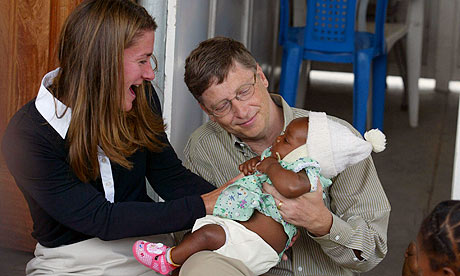
    Bill and Melinda Gates predict that by 2035 "there will be almost no poor countries left in the world." [bold added]
    a few unhappy countries will be held back by war, political realities (such as North Korea) or geography (such as landlocked states in central Africa). But every country in South America, Asia and Central America (except perhaps Haiti) and most in coastal Africa will have become middle-income nations. More than 70% of countries will have a higher per-person income than China does today.
    If prosperity does become universal within a couple of decades, the 21st century will mark perhaps the greatest turning point in human history. And if his charitable works in no small part help to bring about that result, Bill Gates may well be known to future historians as a philanthropist who used to run a computer business. © 2014 Stephen Yuen

    Sunday, March 10, 2013

    Falling Behind

    The Bay Area is home to one of the planet's greatest concentrations of private wealth, which is expanding as the market races to new highs. Yet there are significant numbers of people who not only have not participated in the boom but are also falling behind.
    The Silicon Valley is adding jobs faster than it has in more than a decade as the tech industry roars back. Stocks are soaring and fortunes are once again on the rise.

    But a bleaker record is also being set this year: Food stamp participation just hit a 10-year high, homelessness rose 20 percent in two years, and the average income for Hispanics, who make up one in four Silicon Valley residents, fell to a new low of about $19,000 a year— capping a steady 14 percent drop over the past five years [snip]

    Simply put, while the ultra-rich are getting even richer, record numbers of Silicon Valley residents are slipping into poverty.
    Other reports echo the bifurcation [bold added]:
    New census data shows that 15.9 percent of Silicon Valley residents rank in the richest 5 percent of the country - bringing home at least $191,469. That makes the region No. 2 nationwide for wealth concentration.

    Median income in Silicon Valley hit an 11-year low during 2011, falling to $84,724, according to a report released last week by local economic think tank Joint Venture Silicon Valley.
    An income of $84,724 may seem like a lot of money to many Americans, but it barely allows a family to purchase a home at the Bay Area's median price of $550,000. Of course, the median measure means that some families receive less--in some cases considerably less--income than the median. With shelter so expensive it's no surprise that homelessness is the most visible manifestation of poverty.

    Your humble observer, for what it's worth, has opinions on why the local wealthy do not donate (no, it's not because they're greedy). Their possible thoughts, based on anecdotal observation:

    The government is handling the problem. Many who are in a position to donate assume, mistakenly, that because their taxes are so high that government is taking care of basic human needs. Because they do not personally deal with government at the social-services ground level, they do not see how inefficient and wasteful government can be. That experience can truly be shocking to those who are used to functioning at Internet speed.

    I want to save the world. Solar energy, Third World communicable disease, climate change, etc. are causes more important than collecting clothes or referring a family of four to a free clinic.

    I can't find a smaller local charity that I trust. Most are too busy for due diligence, e.g., to make sure that dollars aren't being wasted on directors' salaries, marketing, political lobbying, or non-essential activities. It's far safer to write a check to big-name charities with a national or even international mission; the downside is that few of the funds are recycled back to the Bay Area. © 2013 Stephen Yuen

    Tuesday, February 05, 2013

    At Least It Went Up

    A Blackbaud survey of 3,144 non-profits found that charitable giving was up a modest 1.7% in 2012. Overall, the sluggish economy takes the blame; however, subdividing the picture suggests a more complex story:


    Faith-based and small charities showed the greatest growth, while international affairs had the greatest decline. One explanation is proximity:
    donors increasingly want to give locally—say to a park or an arts council or a hospital. With causes like that, the need for giving and the impact of giving can be more visible than at large, national organizations.
    About half of our family's regular annual donations go to the neighborhood church, which in turn participates in several local social-services programs where we can see the results.

    International relief organizations have difficulty overcoming the obstacle of distance and the notion that their bureaucracies take too much off the top. Monies spent in the Third World do go a lot further than in the First World if the funds can just get to the right people, but another set of the "right people" have to be running the aid organizations. It is possible to find some worthy candidates, but few of us have the time to do the research.

    At least overall giving went up. A negative result would not have been surprising. © 2013 Stephen Yuen

    Tuesday, September 18, 2012

    What Does It Mean to be Poor?

    Business writer Megan McArdle reflects on the question by examining whether poverty is measured by consumption or by income [bold added].
    When you look at what people are consuming, you don't see the gross material deprivation that really used to characterize being poor, like lack of hot water, regularly having no food in the house, shivering yourself to sleep in the cold, or wearing patched (or worse, unpatched) clothes. Younger poor people quite frequently have things that older non-poor people consider nonessential luxuries, like cable or satellite television, expensive sneakers, and high-end cellular phones.
    Every middle-class person knows someone who is technically "poor" as measured by income, but who drives a better car, wears nicer clothes, or has a more exciting night life than one's own. It's tempting to subscribe to the viewpoint that success or failure in life is their own fault:
    ...poor people are not so much lacking in money, as lacking in the self-discipline to spend their money wisely. This view is reinforced by the fact that a lot of immigrants do arrive here with even less than the native poor, often don't qualify for supplemental benefits that cushion the deprivation of the native poor, and nonetheless after a generation or two end up quite prosperous.
    And yet we also know hard-working individuals of character who have fallen on hard times through no "fault" of their own. The catalyst that began the descent could be a divorce, the loss of a job, caring for a sick parent, the death of a breadwinner, or poor health. It seems impossible to craft a wise poverty program that will address each of the "eight million stories in the naked city".

    Megan McArdle thinks that people often remain poor because they are trapped in bad neighborhoods:
    People with impulse control problems, mental illness, drug and alcohol addictions, are very, very disproportionately likely to end up poor.....So even though these people remain a minority in poor neighborhoods, poor neighborhoods nonetheless have a lot more of them than more affluent communities...

    More importantly, poor people have to put up with it, because they have a limited number of other neighborhoods to choose from, most of which have the same constellation of problems. If a gang moves into a middle class neighborhood and starts terrorizing the residents, either the cops take care of it, or the middle class people move. If it happens in a poor neighborhood, well, where are you going to go?
    It's hard to see how we will ever have enough resources to make most bad neighborhoods safe, especially given local government budget constraints.

    One more thought: poverty is more about the future than the present. When I was going to graduate school, debts exceeded my assets, and I had no income. Yet no one then would have thought to call me poor. Roll that same financial profile forward 40 years however, when productive years are largely in the past, and that would be a snapshot of an impoverished person by anyone's definition.

    So here's what we're left with. Poverty is more about personal behavior, secure neighborhoods, values, and probable futures. If those all are aligned, money will take care of itself. © 2012 Stephen Yuen