Showing posts with label Science. Show all posts

Thursday, May 15, 2025

Rice: A Few More Precautions

Rice safety graph from Healthy Babies Bright Future
Twelve years ago we switched back to white rice because brown rice was found to have higher levels of arsenic. Additional research has now shown that the safest rice is uncooked white rice grown in California [bold added]
The type of rice and how it’s grown and processed can impact levels of arsenic and other heavy metals, experts say. Brown and wild rice often contain the highest levels because the milling process used to create white rice removes the outer layers of the hull, where heavy metals are concentrated.

Lab testing found purchased samples of US-grown brown rice contained 151 parts per billion of heavy metals — 129 of that due to arsenic. Arborio rice grown in Italy, which is typically used to make risotto, and white rice grown in the Southeast US (often labeled as simply “USA”) were almost as high in total heavy metals as brown rice, the report said.

Arborio rice from Italy contained 101 parts per billion of arsenic — total heavy metal load in the purchased samples was 142 parts per billion. White rice grown in the US contained 95 parts per billion of arsenic, with a total heavy metal count of 118 parts per billion.

Basmati rice from India, jasmine rice from Thailand and California-grown sushi and Calrose rice (a form of sushi rice) were at or below the 100 parts per billion levels set by the FDA for arsenic in infant rice cereals. However, the Indian basmati and Italian Arborio varieties contained the highest average levels of cadmium.

The California-grown rice had the lowest overall heavy metal content — 65 parts per billion, with 55 parts per billion from arsenic — making it an excellent choice to reduce overall exposure, [Jane] Houlihan said.

Consumers should be wary, however, of precooked rice, including instant (one-minute and five-minute rice), parboiled (10-minute rice), and ready-to-heat-and-eat packaged rice, she said.

“Studies have shown the processing used to create instant rice can create additional toxins, and the ready-to-heat products are cooked inside the plastic containers, potentially releasing toxic chemicals,” Jane Houlihan said.
The report also says that arsenic and heavy metals can be reduced by soaking rice for at least half an hour, not just rinsing it. This step requires just a little more planning, and we'll start doing it immediately.

Saturday, April 19, 2025

A Small Step for Science

(Image from Cleveland Clinic)
Your humble blogger volunteered to be part of a medical study. However, in order to qualify I had to submit to a series of tests, not only to establish a baseline for future comparison but also to see if I met certain minimum health requirements.

Earlier this week I had difficulty passing the electrocardiogram (ECG). The "QT interval" was stuck between 475 and 480 when it had to be under 470. No matter what the technician and I tried, i.e., relaxing and slowing breathing, raising or lowering my back, removing the iPhone and Apple Watch, nothing worked. (On the previous day the reading was 494, and they gave me an injection of potassium and magnesium in order to remedy a shortage that can raise the QT interval.)

The Mayo Clinic: [bold added]
  • On an ECG, there are five waves. They use the letters P, Q, R, S and T.
  • Waves Q through T show the heart signaling in the heart's lower chambers.
  • The time between the start of the Q wave and the end of the T wave is called the QT interval. This is how long it takes for the heart to squeeze and refill with blood before it beats again. If the interval takes longer than usual to happen, it's called a prolonged QT interval.
  • (GE image)
    GE Healthcare:
    Just as there are many ways to correct the QT for heart rate, there have been numerous attempts to establish the upper limit of "normal" for a corrected QT interval.

    Women have a slightly longer QT interval than men. This figure shows the 99% upper limit of normal of the QTc for men (470 msec) and women (480 msec).
    Speaking of prolonging, this story has gone on long enough. Just as we were ready to concede defeat, I thought of my hearing aids, which were too small for the technician to notice and which, in any case, were not on her checklist of forbidden ECG items.

    Upon their removal the QT interval fell all the way down to 446, well below the cutoff. Even before the study has begun, I'm already contributing to the advancement of science.

    Wednesday, November 13, 2024

    Two Became One

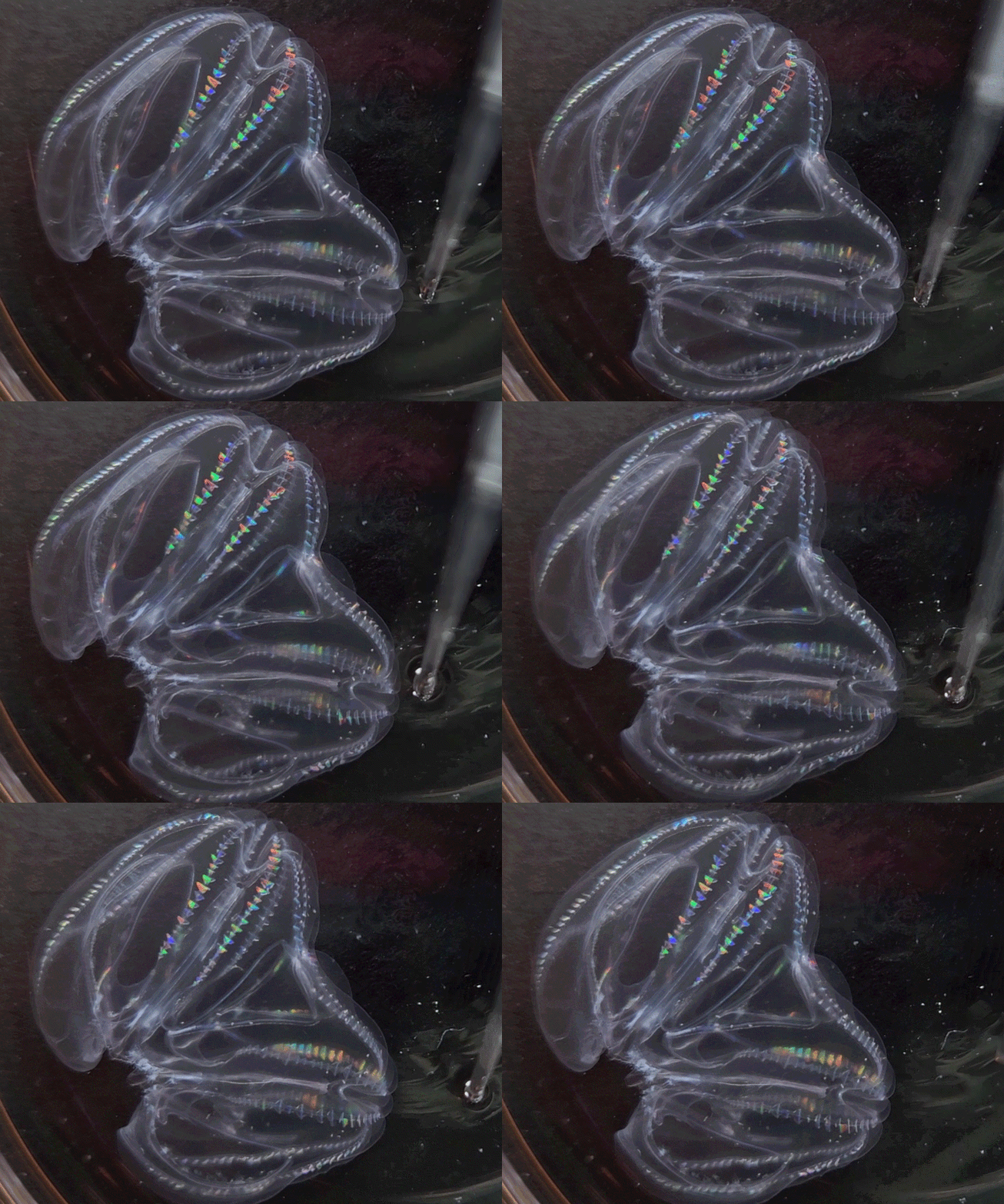
    Synchronized contractions when poked (Nature gif)
    Two comb jellies merged into a single organism in a Massachusetts lab:
    In a strange episode in the animal kingdom, a captive marine animal merged with another of its kind to become a single individual.

    The organisms that merged are comb jellies, translucent invertebrates that resemble jellyfish but belong to a different group of marine animals called ctenophores. They grow to about 4 inches long by 2 inches wide, eat plankton and are found throughout the northern and southern Atlantic Ocean.

    Marine scientists discovered the merger when one comb jelly went missing from a laboratory tank, while another appeared unusually large. After taking a closer look, the researchers found that the big one was two individuals now sharing digestive and nervous systems...

    The researchers fed the combined comb jellies fluorescent brine shrimp and watched as the bits of food made their way through their shared digestive system.

    [Postdoctoral researcher Kei] Jokura speculated that the animals—also known as sea walnuts—sustained minor injuries in the tank, which activated the merger process. To prove this, he and colleagues put 10 pairs of injured comb jellies near each other. Nine of the 10 pairs successfully fused together.

    “In just about two hours, their muscle contractions became synchronous in functional fusion,” he said. “It was remarkable and incredible.”
    This discovery has possible implications for human health. Just as in the case of anglerfish sexual parasitism, the sea creatures lose the sense of self that distinguishes foreign tissue from their own. Overcoming this normally valuable protective mechanism is crucial to prevent rejection in transplant surgery.

    Wednesday, September 25, 2024

    It's An Honor, Really

    P. kamalaharrisae (Balukjian photo)
    Researcher Brad Balukjian of the California Academy of Sciences is an admirer of Kamala Harris and has named a bug after her:
    Across the tree of life, approximately 18,000 new species are described by taxonomists every year. One of the perks of the work is getting to name them. My colleagues and I can have a lot of fun with it — there’s a genus of spiders named for the band ABBA and a wasp named after Jackie Chan.

    Today, one of my naming decisions makes its official debut: a bright green, red, and yellow plant bug will now be known as Pseudoloxops kamalaharrisae.

    Yes, I named a bug after our vice-president and yes, it is meant as a massive compliment.

    Harris’ six-legged namesake is part of a remarkable radiation of closely related plant bugs endemic to the islands of Tahiti, where I did my Ph.D. research over a decade ago. Plant bugs are a type of true bug; although we colloquially call anything small and scurrying a “bug,” it’s actually a technical term, referring to insects in the suborder Heteroptera, which have mouths like a straw. While some plant bugs are agricultural pests, P. kamalaharrisae and its cousins hang out on brightly colored flowers all day slurping plant slushees and hoping to avoid detection by birds.
    Brad Balukjian named the bug after Vice President Harris to honor her support of climate change policies (MAGA - "Making America Green Again").

    Now she's even with Donald Trump, who has a blind amphibian bearing his name:
    Dermophis donaldtrumpi (Abel Batista / Rainforest Trust)
    The Dermophis donaldtrumpi, which was discovered in Panama, was named by the head of a company that had bid $25,000 (£19,800) at auction for the privilege.

    The company said it wanted to raise awareness about climate change.

    "[Dermophis donaldtrumpi] is particularly susceptible to the impacts of climate change and is therefore in danger of becoming extinct as a direct result of its namesake's climate policies," said EnviroBuild co-founder Aidan Bell in a statement.

    The small, blind, creature is a type of caecilian that primarily lives underground, and Mr Bell drew an unflattering comparison between its behaviour and Mr Trump's.

    "Burrowing [his] head underground helps Donald Trump when avoiding scientific consensus on anthropomorphic climate change," he wrote.
    Politics infests everything, even the naming of newly discovered species.

    Thursday, September 12, 2024

    Literally Unsettled Science

    "What caused an odd cascade of vibrations to ripple across the globe for nine days?" [bold added]
    Using classified seafloor maps from the Danish military, a global network of seismic sensors used to detect earthquakes, drone video of debris washed high up on a remote rock face in eastern Greenland and other evidence, researchers finally pieced together the strange sequence of events.

    It started when seismic sensors at monitoring stations around the world detected a signal in September 2023 that looked nothing like the squiggles made by earthquakes. This signal oscillated at 90-second intervals and continued for days. Most seismic events weaken quickly...

    [Geologic scientist Kristian] Svennevig assembled an earth-science detective squad of 68 experts who, with seismic recordings, satellite images, field measurements, drone video and computer simulations, reconstructed what happened. The evidence revealed that 33 million cubic yards of rock and ice—the volume of 10,000 Olympic-size swimming pools—had plunged into the Dickson Fjord in eastern Greenland, triggering a tsunami.

    The massive wave crested at 650 feet above the water’s surface, throwing debris onto a nearby rock face. It settled down to 25 feet, but over the next nine days, it sloshed from one side of the fjord to the other, striking the sides with enough force to move the walls, creating the seismic signal that propagated around the planet, Svennevig said.

    The landslide was caused by a melting glacier below the mountaintop, according to the study, and Svennevig said scientists are reconsidering the kinds of natural disasters that are now possible in a warming Arctic environment.
    Before and after photos of the landslide site. Søren Rysgaard; Danish Army/Joint Arctic Command
    The continental crust ranges between 22 and 40 miles, and the oceanic crust from 4 to 6 miles. The troposphere, where life resides, is 7 miles above the crust, and the stratosphere is 31 miles above. Despite the advances in environmental science, it took a year to determine that the 9 days of powerful vibrations were caused by a landslide in Greenland. Our knowledge of the 50 miles of crust and atmosphere is demonstrably incomplete. Just imagine how much we don't know about our home planet, which has a diameter of nearly 8,000 miles.

    Tuesday, July 30, 2024

    Mixed Up Tape

    (WSJ illustration)
    My late father-in-law would often call any one of his four daughters by another daughter's name. Otherwise as sharp as a tack, he would make this mistake frequently, so we were left with a bunch of implausible explanations: his daughters were not important to him, he was expressing his disappointment that he didn't have a son, they looked alike, etc.

    Modern neuroscience has another explanation. [bold added]
    Names are especially hard for the brain to learn and recall, according to Samantha Deffler, a cognitive psychologist at York College of Pennsylvania. Most people recall faces more easily, and common nouns roll off the tongue more readily as well.

    In an iconic experiment from the 1980s, participants were shown a series of portraits and told each person’s name and occupation. In a twist, words such as “cook” and “baker” were presented as occupations to some participants and as names—“Mr. Cook,” “Mr. Baker”—to others. In what came to be known as the “Baker/baker paradox,” participants recalled the jobs better than the names.

    The brain remembers information by linking new bits of data with existing information of similar meaning or context. That makes proper nouns, which are arbitrary “nonsense words,” harder to learn, said Neil Mulligan, a cognitive psychologist who studies memory at the University of North Carolina at Chapel Hill.

    Though it occurs nearly instantaneously, recalling a name is a multistep endeavor. A memory cue—perhaps a child’s backpack left on the couch—triggers a search for the child’s name. The memory system offers up multiple potential responses, then rejects all but the correct answer.

    The ability to reject wrong responses gets worse with age, which is one possible reason older adults more frequently mix up names, Mulligan said.
    Now that I'm in my 70's, I'm finding it increasingly difficult to remember names. What's also worrisome is that I had communicated regularly with some of these forgotten ones only two or three years ago.

    I wish I could tell my father-in-law that I'm beginning to understand what he went through.

    Friday, June 07, 2024

    The Working of the Musk Mind: a Materials Science Example

    Carbon fiber is stronger and lighter than steel, as even laypeople know from numerous advertisements.

    Princeton Professor Adam Burrows asks Elon Musk why SpaceX rocket engines are built with stainless steel instead of carbon fiber. As Elon Musk walks him through the decision, it becomes clear why he chose steel, especially when one considers that safe re-entry and re-usability are primary goals. Below is a nine-minute video from Twitter/X:


    Perhaps as important as his technical knowledge, experimentation and even acceptance of failure (within reason) are key components of Elon Musk's success.

    Elon Musk thought at the outset that SpaceX would probably use carbon fiber. As it tested carbon fiber, stainless steel, and aluminum, it found that steel's strength increased at the extremely cold temperatures (-297.3°F / -182.96°C) necessary to contain the liquid oxygen in the fuel mix. Lining a carbon-fiber engine to secure it against cold is complicated compared to steel, and even if that problem is solved, carbon-fiber would only be as strong as stainless steel.

    Steel also held up better than fiber and aluminum at high re-entry temperatures and required a thinner (lower weight) heat shield. The fact that stainless steel is much easier to work with and is much cheaper than other materials are added bonuses.

    In most large organizations everyone is afraid of making a mistake that could cost them their jobs. His willingness to fail--and thereby learn--and his power to call the shots are why Elon Musk's companies are far ahead of their competition.

    Saturday, May 25, 2024

    Anglerfish: Two Become One

    Male anglerfish fuses with larger female (scitechdaily)
    We can't avoid lingering on the sensational aspect of anglerfish reproduction before getting serious: [bold added]
    These anglerfishes, called ceratioids, reproduce through sexual parasitism, in which the tiny males attach to their much larger female counterparts to mate. In some species, the males bite the females and then release once the mating process is complete. In others, the male permanently fuses to the female. In a process called obligate parasitism, the male’s head dissolves into the female and their circulatory systems merge. He transforms into a permanent sperm-producing sexual organ.
    The theory is that it is so difficult to find a mate at the bottom of the ocean that the male latches onto the female and becomes a "permanent sperm-producing sexual organ." (Insert jokes here.)

    Somehow the female's immune system does not reject the male's foreign tissue, as it would in every other species. Despite her absence of protective "killer T" cells, the female is able to stave off infection by other means. Research into the anglerfish mechanisms could have profound implications for human health, where foreign tissue rejection is a major problem for transplant surgery.
    “Better understanding how deep-sea anglerfishes lost adaptive immunity could one day contribute to advances in medical procedures, such as organ transplants and skin grafting, where suppressing immunity is crucially important,” [Yale Professor Thomas Near] said. “It’s an interesting area for future medical research.”
    The science is interesting and important, but my takeaway is that the next time your friend says he's lost his mind over a woman, tell him that's nothing compared to the male anglerfish.

    Tuesday, May 14, 2024

    Another Sign that Global Warming Alarmism Has Peaked

    If an extinction-level asteroid headed towards earth, politics would be set aside. If it meant that the U.S. and China had to share their most advanced technology to save the planet, cybersecurity, intellectual property, and job protecting concerns would vanish, or at least tabled for the future, if the human race were to have a future.

    By their behavior we know that no government's leaders truly believe that global warming poses an existential threat to humanity. "Net-zero" emissions by 2050 cannot be fulfilled by anyone in power today, so it's a hollow promise meant to satisfy noisy activists, who call anyone who questions their data and conclusions as "deniers" who do not "follow the science." So let's look at the science. [bold added]
    When politicians tell us we must “follow the science” toward extreme climate policies, they are really trying to shut down the discussion of enormous, unsustainable costs. We shouldn’t let them.

    Climate change is a real problem but isn’t the imminent existential crisis of which the media and activist politicians breathlessly warn. They run headlines and give speeches about extreme weather events, though the United Nations’ panel of climate scientists hasn’t been able to document evidence of most of them worsening. The data show that climate-related deaths from droughts, storms, floods and fires have declined by more than 97% over the last century, from nearly 500,000 annually to fewer than 15,000 in the 2020s. That’s a real human cost but far from cataclysmic. More people die in traffic accidents in an average week...

    The world still gets four-fifths of its energy from fossil fuels, because renewable sources rarely provide good alternatives. Half the world’s population entirely depends on food grown with synthetic fertilizer produced almost entirely by natural gas. If we rapidly ceased using fossil fuels, four billion people would suddenly be without food. Add the billions of people dependent on fossil-fuel heating in the winter, along with our dependence on fossil fuels for steel, cement, plastics and transportation, and it is no wonder that one recent estimate by economist Neil Record showed an abrupt end to fossil fuel use would cause six billion deaths in less than a year.

    Few politicians advocate solutions this extreme, but many use activist paranoia about global extinction to justify proposals with only marginally more sensible timelines. Rather than knocking speed limits down to zero in one blow, they plan to force them to a crawl across several decades. It’s still a destructive idea. Politicians suppress discussion by grandstanding about the existential threat climate change poses. Weigh the actual costs of the proposals, and it becomes obvious that they’re preposterous.
    (image from ptc.com)
    The latest evidence that President Biden doesn't really believe in the threat posed by fossil fuels is his imposition of a 100% tariff on Chinese electric vehicles earlier today. (For that matter, former President Trump said he would make the tariff 200%, but at least the latter never claimed that global warming was going to destroy the world.)

    One of the biggest obstacles to Americans' acceptance of EVs is the sticker price, and Chinese EVs cost less that $15,000 in China. Despite generalized worries about low reliability and shoddy workmanship of Chinese-made products, a report from the Beijing Car Show indicates those fears are unwarranted. President Biden, in order to get re-elected, is pandering to the American Auto industry and its workers by eliminating competitors who could save the world--if he really believed the world was in danger.

    Saturday, April 13, 2024

    Brain Trends: the Science isn't Settled

    (Quora image)
    Last September we posted about how the human brain has shrunk by the size of a lime since the end of the last ice age about 12,000 years ago. Scientists even hypothesized the reason:
    Traniello said the inspiration for applying this idea to why human brains may have shrunk came from “ultrasocial” insects such as ants. Ants form highly cooperative societies in which division of labor has favored smaller-brained individuals due to an advanced level of social organization.

    The researchers suggested that perhaps our need to maintain a large brain—to keep track of information about food, social relationships, predators and our environment—has also relaxed in the past few millennia because we could store information externally in other members of our social circles, towns and groups.
    The increased offloading of storage and other tasks to the cloud means that our personal computers and cellphones don't need to have as much memory. The brain analogy: no longer do we have to memorize phone numbers, recipes, and addresses, nor do we have to know how to hunt, fish, and farm in order to survive. If we need it, the information is available on the internet. (Isaac Asimov envisioned a future where all knowledge is stored in an Encyclopedia Galactica.)

    But what are we to make from this week's headline?

    (Image from bigthink)
    Our brains are getting bigger — and that could lower the risk of dementia
    Human brains are gradually getting bigger, decade by decade, potentially lowering people’s risk of developing age-related dementia, according to a recent study published by Alzheimer’s researchers at UC Davis Health.

    People born in the 1970s have more brain volume and more brain surface area than people born in the 1930s, according to the study, published March 25 in JAMA Neurology...

    The reasons brains are getting larger are believed to be linked to improvements in the early childhood environment at the population level, including better prenatal care, nutrition, health care and education...

    Researchers found that brain volume and surface area grew gradually but consistently in people who were born in each subsequent decade between the 1930s and 1970s. People born in the 1970s had 6.6% more average brain volume than those born in the 1930s — 1,321 milliliters compared with 1,234 milliliters, the analysis found. And people born in the 1970s had nearly 15% more average brain surface area — 2,104 square centimeters compared with 2,056 square centimeters.
    There are scenarios where both studies could be true, for example, brains have been shrinking over millennia, but they have been growing over the past century. If I haven't lost so many brain cells, I might be able to think of more of them.

    Monday, March 04, 2024

    Living Fossils

    Alligator gar (Yale News)
    No, this isn't a post about politics.

    "Living fossils," (Darwin's term) specifically the gars, have little species diversity and have evolved so slowly that their genome is nearly the same as gars during the age of the dinosaurs. Importantly, understanding gars' cellular mechanisms could lead to a cure for cancer (!).
    The researchers speculate that gars have an unusually strong DNA repair apparatus, allowing them to correct somatic and germline mutations — alterations to DNA that occur before and after conception — more efficiently than most other vertebrates.

    If confirmed, these findings could have profound implications for human health, said [Prof. Thomas J.] Near, the Bingham Oceanographic Curator of Ichthyology at the Yale Peabody Museum.

    “Most cancers are somatic mutations that represent failures of an individual’s DNA repair mechanisms,” he said. “If further study proves that gar DNA repair mechanisms are extremely efficient, and discovers what makes them so, we could start thinking about potential applications to human health.”
    Another Eureka moment in science, this time from a species that is little changed from its ancestors a hundred million years ago.

    Thursday, January 25, 2024

    Ovarian Tissue Freezing

    Oocyte and ovarian tissue cryopreservation (Science Direct)
    Most of us have heard about egg retrieval, in which egg cells are extracted from the ovaries. The cells can be fertilized in a lab in the process known as in-vitro fertilization (IVF). They can also be frozen ("oocyte cryopreservation") for future use to extend a woman's childbearing years past menopause.

    It now turns out that menopause can be delayed--and fertility retained--through ovarian tissue freezing: [bold added]
    [Yale School of Medicine (YSM), Kutluk Oktay, MD, PhD], who developed and performed the world’s first ovarian transplant procedure with cryopreserved tissue for a patient with a medical indication in 1999, sees a future in which healthy women could use this process of freezing tens of thousands of eggs within the ovarian tissue to stave off menopause for as long as several decades—or even prevent its onset altogether.

    “For the first time in medical history, we have the ability to potentially delay or eliminate menopause,” said Oktay, who is also an adjunct professor of obstetrics, gynecology & reproductive sciences at YSM.
    Deciding how much ovarian tissue to extract and freeze is complicated:
    The more tissue a surgeon removes, the longer the procedure can potentially delay menopause. However, the removal of too much tissue can lead to early menopause. “This model gives us the optimum amount of tissue to harvest for a person of a given age,” said Oktay.
    In addition to extending fertility, delaying menopause may confer health benefits:
    Studies show that women who experience menopause later may live longer and have a lower risk for a range of conditions, including cardiovascular disease, dementia, retinal disease, depression, and bone loss. However, uncertainty remains over whether later menopause actually reduces those health risks. Oktay hypothesizes that those risks also may be mitigated in healthy women who delay menopause via ovarian tissue cryopreservation.

    If risk for such chronic diseases is reduced in healthy women who undergo this procedure, it could be a significant benefit. However, Taylor said that “additional research is needed to determine long-term benefits as well as risks.”
    Much more work needs to be done to perfect the model calculations and test their applicability to real world decisions. However, it does appear that the technology will soon exist to extend a woman's fertility--and her life span--by decades, with ramifications that are difficult to imagine.

    Tuesday, November 28, 2023

    The Advantage of Being a Night Owl

    The nocturnal sturgeon survived, while the
    dinosaurs did not (NYNHP image)
    Evolutionary biologists, by using computer modeling, genetics, and datasets that weren't available until recently, theorize that nocturnal behavior helped species avoid extinction.
    Researchers already knew that many nocturnal mammals survived the mass extinction that followed an asteroid strike 66 million years ago, whereas the dinosaurs, which were largely diurnal, did not (except for birds). The new study extends that pattern to other catastrophes and other species, including aquatic ones.
    But how did researchers know that species that lived millions of years ago were nocturnal (fossils provide very little information)?
    Maxwell Shafer, an evolutionary biologist at the University of Toronto, and his colleagues at the University of Basel focused on living fish, which represent half of all vertebrates. They combed the literature to determine the day-night behaviors of almost 4000 bony fish species and 135 cartilaginous ones, such as sharks, and plotted these behaviors on a fish tree of life. Then they carried out many computer simulations of possible day-night activity patterns in the ancestors of modern fish, until they came across the one that best reproduced the day-night patterns of today’s species.
    The nocturnal "advantage" may also apply to mammals:
    Previous studies had suggested early mammals were nocturnal to avoid dinosaurs. After those predators disappeared, mammals switched to being active during the day. Amphibians and other land vertebrates also tended to be nocturnal throughout much of their evolution, according to other studies, but more and more have become diurnal. Shafer’s team proposes that for all vertebrates, nocturnality was a survival advantage during catastrophes.
    Our family is a mixture of night owls and early birds. It's comforting to know that some of us have an improved shot at surviving an extinction-level event.

    Thursday, August 31, 2023

    P or Not P

    Dr. Nirao Shah
    Stanford researchers have found the specific cells in the brains of male mice that activate sexual desire. They were able to manipulate desire through the application of a protein called "Substance P."
    [Nirao] Shah and his team found buried in mice brains, a bit above the roof of the mouth, tiny neural connections that are tasked with processing information from the outside world.

    They tell a male mouse whether another mouse is female, and feeling flirty.

    If so, this good news is relayed to an adjacent set of brain cells, located on the same circuit. Then a small protein, called Substance P, issues a call to action — like a Marvin Gaye groove.

    The team focused on a set of genetically distinct neurons in the amygdala that do something special: They secrete a small and slow-acting peptide dubbed Substance P.

    Then the scientists watched a different set of neurons in the preoptic hypothalamus that had receptors for this Substance P. Those two groups of neurons work together, like lock and key.

    When Substance P binds to these receptors, it gradually sensitizes the neurons so they become increasingly active...

    Normally, male mice are slow to warm up, taking 10 to 15 minutes before mounting. Afterwards, they take a five-day break before regaining interest.

    But when the researchers directly infused Substance P into mice brains, the animals turned into love junkies.

    Rather than waiting to mate, the mice were ready instantaneously. They even fell in love with lab equipment, mounting plastic tubes adorned with the tail end of a toy mouse bought on Amazon.

    They could also become prim, proper and prudish. When researchers silenced the neurons and switched off the circuit, dialing down production of Substance P, the mice lost desire.
    We're years away from determining if there's a similar mechanism in the brains of human males and whether the human version of Substance P can be administered (or turned off) safely. If that can be achieved, the control of man's biggest sex organ, the brain, is around the corner.

    Tuesday, August 22, 2023

    Scientific Grounds Are Not Yet Settled

    LA pilot Luis Rios likes to be grounded
    Mainlanders are finally catching up to what Hawaii residents have always known:

    Stand Outside Barefoot for Better Health [bold added]
    Grounding is what proponents call the process of connecting to the earth’s natural electric charge, often by physically touching it or connecting to the grounding system built into most U.S. homes.

    The wellness practice is gaining, well, ground, among alternative-health fans, who claim it cures headaches, helps them sleep and reduces inflammation. Some go basic by simply standing barefoot in their yards. Others try more complicated, do-it-yourself approaches to maximize time spent grounding—even while indoors.

    Luis Rios, a pilot based in Los Angeles, says grounding, also known as earthing, helps ease joint pain in his knees after long flights.
    Skeptics point to perceived health benefits as rooted in the placebo effect, getting away from the screens, and being outdoors communing with nature. But what do these experts know?

    Hawaii has the highest life expectancy of all 50 states. Coincidence? I think not!

    Tuesday, July 11, 2023

    A Lighter Touch

    (from nutritioncpr.com)
    As a kid I read how Louis Pasteur was a hero-scientist who saved many thousands of lives by making milk safe to drink. "Never drink raw milk" was food advice as sound as "never eat wild mushrooms."

    A growing movement that touts its health benefits has caused regulators to lift bans on unpasteurized ("raw") milk:
    Public health authorities and major dairy industry groups oppose the practice, saying such milk can be tainted with dangerous bacteria, including E. coli, salmonella, and listeria. But in state after state, those warnings have been overwhelmed by testimonials from fans of “raw milk,” who contend pasteurized milk is more difficult to digest because the process alters enzymes and kills helpful bacteria.

    Federal experts say there is no proof that pasteurization makes milk less healthful. People on all sides of the issue say the rising interest in raw milk is fueled partly by distrust of public health authorities, which grew during the covid-19 pandemic.
    Many health discussions require the weighing of risks and benefits. For me the benefits of drinking unpasteurized milk aren't compelling, nor are the risks small. (Maybe I'm still influenced by childhood hagiographies of Louis Pasteur.) So raw milk is a hard pass.

    Nevertheless, your humble blogger supports the right of adults to make their own decisions after they've been given the information. I applaud regulators' removal of bans on raw milk but won't drink the stuff myself. Government should have a lighter touch.

    Thursday, July 06, 2023

    Don't Hold Them Back Became Let's Give Them an Advantage

    Katherine Johnson (1918-2020) received
    the Presidential Medal of Freedom.
    The 2016 film Hidden Figures was based on the true story of African-American women mathematicians who were crucial to the success of NASA's early missions. They had to overcome extreme race and sex discrimination, accompanied by condescending attitudes, to be taken seriously.

    By the end of the movie their skill and reputation became so widely known at NASA that John Glenn insisted that the numbers be checked manually by Katherine Johnson, one of the "hidden figures," before his historic flight. She also performs emergency calculations to bring John Glenn home when one of his capsule's heat shields broke loose.

    It's a popular theme in fiction and real life: the talents of a person who is discriminated against are so outstanding that the powers-that-be must call on the person to solve an important problem. Anti-discrimination narratives appeal to both the heart and the head: the former because the victims are treated unfairly and the latter because society's potential is unrealized by holding back skilled people.

    60 years later the pendulum has shifted too far in the other direction. Anti-discrimination has given way to Diversity, Equity, and Inclusion (DEI) quotas. DEI is especially damaging in the technological contest with China: [bold added]
    The Australian Strategic Policy Institute reported this year that China leads the U.S. in research on 37 of 44 critical technologies, including advanced aircraft engines, electric batteries, machine learning and synthetic biology. In a recent essay in Foreign Affairs, Dan Wang, an expert on China’s technology landscape, wrote that “China now rivals Japan, South Korea, and Taiwan in its mastery of the electronics supply chain.” In 2007, the Chinese added less than 4% of the value-added costs of iPhones made in that country. Now it’s more than 25%...

    Given this challenge, you might imagine that America would re-emphasize the principles of objectivity and merit that made it the world’s leading scientific innovator. You would be mistaken.

    Where it once was taken for granted that expanding knowledge was more important than a scientist’s sex or skin color, anyone adhering to that approach in the U.S. now must fend off charges that it is racist, patriarchal, colonial, or a tool of oppression. As a group of 29 scientists and academics contended in a recent paper for the Journal of Controversial Ideas, scientific progress in the West “is being hindered by a new, alarming clash between liberal epistemology and identity-based ideologies.”...

    The U.S. will only find it harder to compete with China if activists and administrators are allowed to bully scientists into caring more about artificial diversity goals than about their work. To quote the 29 authors who stood up for merit, “for science to succeed, it must strive for the non-ideological pursuit of objective truth.”
    In the liberal arts and social sciences, the DEI crowd can advocate for individual revealed truths and personal lived experiences. By contrast, those who work in STEM fields believe that there are objective truths, and the goal of science is to discover these truths. I am 100% sure that the mathematicians who worked for NASA would agree.

    Tuesday, June 20, 2023

    Elemental Thoughts

    Last Saturday's water shutdown in our neighborhood caused us to repair to the Hillsdale shopping center.

    Unlike the emptying Westfield in San Francisco, Hillsdale is one of the Bay Area suburban malls that is experiencing growth and attracting investment.

    The mall is safe enough that parents are comfortable bringing their children. (San Mateo County has a homeless population of about 1,000, and the City and County have improved security recently.) Disney set up a colorful display next to Macy's to advertise the new animated film Elemental.

    The film on the whole has garnered moderately favorable reviews (WSJ: "marvelous imagery"; SF Chronicle: "absolutely gorgeous rendering of a half-baked idea").

    Good special effects, plus a new, creative world of "elemental" tribes: that's enough to make me want to check it out on the Disney+ streaming service when it arrives, perhaps in September.

    Postscript: I'm not sure I would have enjoyed the movie when I was a kid. I liked to keep reality, e.g., real science, separate from fantasy, e.g., cartoons and fairy tales. When I learned that Aristotle, one of the greatest Greek philosophers, declared the basic elements to be fire, air, water, and earth, this fourth grader thought that was pretty dumb. Today I would be kinder--some of the greatest fiction has been spun from premises that are entirely false.

    Wednesday, May 24, 2023

    Astride Two Worlds

    (Chronicle photo)
    In the Chronicle's words California wineries are "obsessed" with 32-year-old geologist Brenna Quigley:
    Over the last few years, her reputation has soared within the wine industry, to the point where it’s a point of pride — and a marketing boon — to be able to say that Brenna Quigley did your vineyard’s geologic analysis. The 32-year-old is inarguably the state’s premiere wine geologist.

    Then again, she might be the only person in California who identifies as a wine geologist. Her success is a testament to the fact that she has single-handedly established a demand for a service that five years ago many wineries likely never considered...

    That ability to bridge geology and wine is what distinguishes Quigley from other vineyard consultants. “I saw that people were speaking two different languages,” Quigley says.

    Wine people had one lexicon, while geologists had another. And among her fellow geologists, she perceived “a slight disrespect for the wine tasting aspect of it,” Quigley says. Concepts held sacrosanct by winemakers, like terroir — the idea that wines are capable of expressing a sense of place — were dismissed by scientists as woo-woo.

    Quigley grew up in the Midwest in a family of geologists: Her father and brothers run a business that explores sites for heavy-metal mining. Quigley left for UC Santa Barbara, initially intending to become a marine biologist. Eventually she relented and switched to the family trade.

    After getting her master’s, Quigley abandoned plans to pursue a PhD. Instead, she worked at wine shops and bartended. She got a job at the Kunin Wines tasting room in downtown Santa Barbara and began to befriend local winemakers. “I called my parents and said, ‘You’re not going to believe it, but these wine people also decorate their houses with rocks,’” she says.

    She soon discovered that many winemakers were eager for basic geology lessons, so that they could communicate about their own vineyards more effectively. “There was this thing people wanted to talk about so badly, but they didn’t have the words to do it,” she says. Wineries started hiring her to help them write blurbs on their websites...

    Quigley elucidated details that even longtime vineyard owners hadn’t been aware of, and she produced the first-ever detailed geologic maps of the county’s wine regions.
    Brenna Quigley bestrides the worlds of geology and oenology, and her time is now.

    Unlike the thousands of young adults who will do almost anything to garner attention on social media, the attention came to her because of her unique talent stack.

    In this build-her-up-and-tear-her-down age, I hope the following doesn't happen:

    1) politically-oriented groups will hold her up as a shining example of a successful STEM woman and ask her to speak out on any number of topics that she has not thought deeply about, thereby provoking a reaction from other politicized groups;

    2) geologists with PhDs, jealous of her popularity, will sniff at the depth of her knowledge ("among her fellow geologists, she perceived 'a slight disrespect for the wine tasting aspect of it.'"). If they're so smart, why aren't they doing it?

    Her Midwest and family roots should see her through. I hope Brenna Quigley continues her success.

    Tuesday, May 23, 2023

    Lab-Grown Meat: Its Time Will Come

    Cultured chicken from Good Meat in Alameda (Chron)
    Plant-based "meat" has been acknowledged, even by people who won't touch it, to produce substantial environmental benefits in the form of much less greenhouse-gas emissions and water and land use.

    Lab-grown meat, on the other hand, currently has little environmental advantage over animal meat. [bold added]
    The cultured meat industry...is probably 25 times more energy intensive than traditional beef in its current form, a new UC Davis study has found. And even when production becomes more widespread, the authors have doubts about its potential climate benefits...

    Cultured meat, also called cultivated or lab-grown meat, is produced in bioreactors with real animal cells but does not require animal slaughter. The main reason it’s energy intensive is that the nutrients and other ingredients required to feed the cells need to be highly purified, a process that is closer to pharmaceutical-grade rather than food-grade production, though companies are working on changing that, said [UC-Davis Professor Edward] Spang.
    Lowering the quality from pharmaceutical- to food-grade will lessen the energy cost, but to be perfectly frank, your humble blogger expects the lab-grown product to be safer than real meat if he's going to go through the trouble of eating it.

    This research may have stymied lab-grown meat for now.

    But the technology will likely have second life as humans live off-Earth and crave something closer to meat than plant product soaked in meat-simulating chemicals. Fission, or even fusion, energy should be plentiful, and it will be prohibitively expensive to transport and breed animals off world for consumption.

    They're having a sale at Spaceway. Let's hop over and pick up a half-dozen tubes of chicken.