Showing posts with label Microsoft. Show all posts

Friday, September 20, 2024

Microsoft Sees the Light

The Three Mile Island meltdown in 1979 single-handedly killed the nuclear power industry in the U.S. After Three Mile Island construction on nuclear power plants halted, and existing plants were decommissioned.

Today nuclear energy is undergoing something of a renaissance. Many green-energy advocates are realizing that ambitious carbon-free energy goals cannot be met by wind and solar power, let alone be "on all the time" when the sun isn't shining and the wind isn't blowing.

Many tech companies, including the largest and most well-known, joined the alternative energy marching band, IMHO, because it was easy to, since their fortunes weren't tied to fossil fuels like legacy manufacturing and transportation companies.

After 2020, as the race to acquire electricity for artificial-intelligence data centers accelerated, the virtue signalling dampened down.

Big Tech needed power, and ESG (environmental, social, governance) projects did nothing to help and even inhibited that objective.

Three Mile Island will be renamed the Crane Clean Energy Center (WSJ)
In a sign that the worm has turned, Three Mile Island, the bĂȘte noire of fission haters, is being revived to power Microsoft's data centers.
A deal between Constellation Energy and Microsoft will restart Pennsylvania’s Three Mile Island, the site of the country’s worst nuclear accident, to help power the tech giant’s growing artificial intelligence ambitions.

Under the agreement, Constellation would revive the plant’s undamaged reactor, which was too costly to run and closed in 2019, and sell the power to Microsoft. The plan signals the gargantuan amount of power needed for data centers for AI, along with the tech industry’s thirst for a carbon-free, round-the-clock electricity source needed to meet climate goals.

Constellation expects to spend around $1.6 billion to restart the reactor by early 2028. Microsoft has signed a 20-year power-purchase agreement with Constellation, the companies said Friday. The deal would help Microsoft pair its 24-7 electricity use with a matching source of nearby clean power generation.
It's nice to know that one of our most successful companies is able to discard green-power fantasies when the virtue-signalling impedes basic objectives.
When I was a child, I spake as a child, I understood as a child, I thought as a child: but when I became a man, I put away childish things.---1 Cor 13:11

Friday, July 19, 2024

More Dependence Means More Vulnerability

The blue screen of death (SFGate)
The Microsoft Windows "blue screen of death" appeared on many thousands of computers worldwide and disrupted operations of a broad swath of major industries, including airlines, banks, and hospitals. The culprit wasn't a hacker but a software update issued by the cybersecurity firm CrowdStrike.
The outage, one of the most momentous in recent memory, crippled computers worldwide and drove home the brittleness of the interlaced global software systems that we rely on.

Triggered by an errant software update from the cybersecurity company CrowdStrike , the disruption spread as most people on the U.S. East Coast were asleep and those in Asia were starting their days.

Over the course of less than 80 minutes before CrowdStrike stopped it, the update sailed into Microsoft Windows-based computers worldwide, turning corporate laptops into unusable bricks and paralyzing operations at restaurants, media companies and other businesses. U.S. 911 call centers were disrupted, Amazon.com employees’ corporate email system went on the fritz, and tens of thousands of global flights were delayed or canceled.

“In my 30-year technical career, this is by far the biggest impact I’ve ever seen,” said B.J. Moore, chief information officer for the Renton, Wash.-based healthcare system Providence, whose hospitals struggled to access patient records, perform surgeries and conduct CT scans.

Fixing the problem involved technical steps that confounded many users who aren’t tech-savvy. Some corporate IT departments were still working to unfreeze computer systems late on Friday. CrowdStrike said the outage isn’t a cyberattack.
Unfortunately, restarting computers and removing the offending software had to be done manually---skills well within the capability of Windows users 30 years ago but unfortunately lacking in the majority of users today. (An analogy is being able to understand the basic workings of an automobile and effecting some minor repairs versus being totally helpless if anything should go wrong with one's car.)
IT teams often can fix problems on employees’ computers using remote-access software—tools that became especially common during the work-from-home boom of the pandemic. But for laptops and other PCs that approach doesn’t work if the machines can’t restart. For those systems, CrowdStrike’s fix had to be done in person—either by a tech-support person on site, or by a regular employee trying to apply the instructions.
Another aspect of resilience is being able to perform one's basic job functions if the computers--which after all were once regarded as just a tool--go down.

Speaking as one who used to close the books, make the payroll, invoice the customers, and pay the bills with an adding machine, a pen, and a typewriter, I am appalled by accountants who lack basic knowledge of the functioning of accounting systems.

Maybe this CrowdStrike incident will be a wake-up call to companies who don't want to risk their existence on the computers always working.

Tuesday, June 18, 2024

NVDA: Now the Top of the Heap

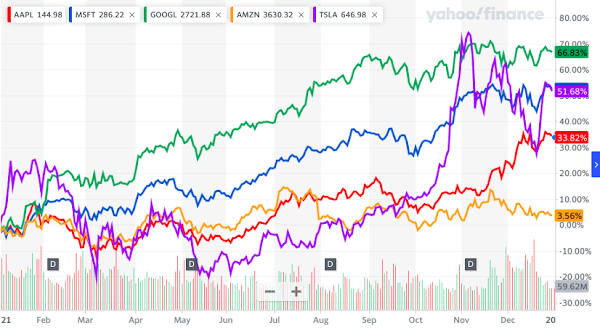
MSFT and AAPL rose 81% and 65%, respectively, while NVDA returned 754% over the last two years.
Today, with no international crises or natural disasters as competition, the headlines again return to Nvidia, which surpassed Microsoft as the most valuable company in the world. [bold added]
Nvidia, a 31-year-old company, became the world’s most valuable firm on Tuesday. The stock closed at $135.58, giving the chip maker a valuation of $3.335 trillion, just above Microsoft at $3.317 trillion. [Blogger's note: Apple closed in third place at $3.286 trillion.]

It marks the first time a company other than Microsoft or Apple has held the title of largest company since February 2019 when Amazon.com briefly topped the list. Nvidia was ranked fifth largest by market valuation a year ago and was ranked 10th largest two years ago. Five years ago, it wasn’t in the top 20 largest companies.
How could so many on Wall Street have been so wrong about Nvidia? One easy explanation: investors had become jaded because the realization of artificial intelligence was always sometime in the future. That is, until the release of ChatGPT in November, 2022, showed everyone how millions could become instantaneously more productive in research and writing reports. Just imagine the possibilties in hundreds of other endeavors. Note from the graph that Nvidia's stock price growth separated itself from Microsoft, Apple, and other tech companies in November, 2022.

Nvidia's limits will eventually be reached when the companies that can buy its chips for multi-million-dollar data centers find that they can't realize a return on their investment. But that moment is years away, especially with everyone jockeying for leadership positions in markets that no one fully understands.

Monday, November 14, 2022

Blandishments of the Bear

The four most valuable companies on the U.S. exchanges--Apple, Microsoft, Alphabet (Google), and Amazon--all enjoyed at least a 6% bump in price last Thursday, when a 7.7% increase in the Consumer Price Index showed that inflation was abating, perhaps moderating future Federal Reserve rate increases.

What gave investors hope was that stock prices continued their rise on Friday, a sign that the bounce may have legs. But your humble blogger has seen--and fallen victim to--"bear traps" before.
A number of investors say they question how long the comeback can last. In previous years, like after the dot-com bubble burst in March 2000, selloffs took many painful months to play out, and the downturn was marked by big swings up and down. That is a cautionary tale for investors hoping that the worst has passed after last week’s stock rally.

“This is typical of a big bear market rally,” said Julien Stouff, founder of hedge-fund firm Stouff Capital. “It is not over.”
My stock portfolio is looking better after one week, but it's still down for the year. I'm not selling, but I'm going to resist the blandishments of the bear by not buying either.

Well, it could have been worse. In my younger, risk-taking days I would have put a sizeable chunk into cryptocurrency. Last week's bankruptcy and hack of a crypto exchange cast such a pall over the industry that it will take a long time to recover, if at all. Over the long haul one can become a successful investor just by preventing disastrous mistakes (mistakes are a given).

Added: The Crypto-Ignorant Person’s Guide To What’s Going On With FTX And Founder Sam Bankman-Fried

Saturday, September 17, 2022

From Space-Age to Dinosaur

In 1975 Daly City was at the end of the line.
BART celebrates its 50th anniversary with cars that are 50 years old: [bold added]
But half a century later, as the agency celebrates its 50th anniversary this month, many of those same silver-and-blue trains are still chugging through the Bay Area. And keeping them running — even in the country’s technology capital — requires a special breed of ingenuity.

BART mechanics rely on Frankensteined laptops operating with Windows 98, train yard scraps and vintage microchips to keep Bay Area commuters on the rails...

When a BART car runs into trouble, Shawn Stange steps back in time. He pops open a circa-2000 IBM Thinkpad running Windows 98 and opens a portal into the train’s brain — the Automated Train Control system — through the DOS computer language.

Much as if he were conducting a vehicle diagnostic test, Stange uses the software as a mechanic’s roadmap. “This stuff was written so long ago. So you have to take Windows 10 and open up a virtual Windows 98 box and then run the (DOS) program to download the log files,” he said. “It’s primitive.”
From the vantage of 2022, BART runs on obsolete software. However, those "primitive" DOS programs must have been an upgrade to the original control system. The Bay Area Rapid Transit system began service in 1972, and the first IBM-PC with PC-DOS didn't arrive until 1981, nine years later.

The repair men who can fix the cars and the electronics all have gray hair, and their specialized skills are applicable to no other transportation systems. It's a safe bet that that knowledge will be gone in the next 50 years, and it's an open question, given the many changes to come in work, commuting, urban development, AI, and alternative energy, whether BART will be around to celebrate its next 50th anniversary.

Monday, January 03, 2022

Breaking the Law of Large Numbers

Six months after Steve Jobs' death in 2011 Apple stock had risen by 50%. The company was valued at $535 billion.

It was around that time that the law of large numbers became a popular term in the financial news. The "law" makes intuitive sense:
any company growing at 20% per year, or 4x-5x the overall U.S. economy, will someday see its growth slow—otherwise it would grow larger than world GDP...

This real world limit on the economy and revenue potential is called in mathematics the “law of large numbers”, and is best applied when projections of future compounding cannot be sustained because they are too high, too far out in the future, or some combination of both.
In 2012 Apple had reached a hard-to-justify valuation of $535 billion, and it was likely that slower future growth in earnings would result in slow appreciation of the stock price. Besides, look what happened to Microsoft. At the peak of the dot-com bubble ten years earlier it too reached $500 billion only to see its valuation cut in half shortly thereafter.

Today's WSJ headline: Apple Becomes First U.S. Company to Reach $3 Trillion Market Value
Apple shares crossed the milestone when they topped $182.856 Monday. The share price has more than tripled since the pandemic lows of March 2020, adding around $2 trillion in market capitalization.
The analysts can cite the reasons for Apple's growth since 2012: the iPhone remains popular; the growth in services is strong; there's the promise of augmented reality and an Apple car. Exactly how it all works out to a $3 trillion market capitalization is $2.999999 trillion above my paygrade.

The law of large numbers will eventually apply to AAPL, but it doesn't say when.

Friday, December 31, 2021

The Big Got Bigger

Except for Amazon, the "tera" cap stocks beat the indices
It was a very good year for stock market investors: [bold added]
the rollout of Covid-19 vaccines and low interest rates...helped the S&P 500 to close at a record 70 times this year, more than one-quarter of all trading days, according to Dow Jones Market Data, and pushed the index up 27% in 2021. The Dow and Nasdaq did well over the past 12 months too, rising 19% and 21%, respectively, handing all three benchmarks their best three-year performance since 1999.

Much of the broader market rally was also driven by a small group of massive stocks, such as Apple, Tesla and Microsoft. Microsoft and Tesla shares have each risen around 50% this year, while Apple has gained more than 30%.
Our stock holdings are weighted toward the so-called "megacap" tech stocks, so the portfolio has done well for the past decade. The 2021 performance of about 30% was way above expectations, since we did not expect the biggest of the big to go up that much. If we're up 10% in 2022, we'll be happy.

If you keep your expectations low, you aren't likely to be disappointed.

Wednesday, October 27, 2021

Emily and Amy Didn't Write About This

As a follow-on to yesterday's post about punctuation in the modern age, the WSJ publishes a guide to digital etiquette.  (Your humble blogger's comments are in green.)
Faux pas: pasting URL link
Don’t: Paste a long URL link into an email
Do: Hyperlink the text instead

Nothing uglies up an email exchange or reveals that you’re behind the times quite like a 10-line URL link with more symbols than letters (See our poor dinosaur’s faux pas). In most email servers, however, you can hide a hideous URL by hyperlinking it to related text in the body of your note. I prefer pasting "hideous" URL's, then converting the link to text; some servers consider links to be spam.

Not appetizing to me
Don’t: Ask for a menu
Do: Learn to scan QR Codes

People’s unwillingness to touch potentially germy surfaces and devices during the pandemic has greatly accelerated the adoption of unique QR codes. At most restaurants, only the out-of-it still ask for the opportunity to squint at a sticky menu; instead use your smartphone’s camera to scan the QR code (typically found on a placard at your table) to easily access the eatery’s offerings online. I like looking at printed menus; some restaurants spend a lot of time designing them. As for online menus, seen one, seen 'em all.

Don’t: Squirrel away your microwave manual
Do: Watch how-to videos on YouTube

You can finally clear out that drawer of old appliance manuals you keep “just in case.” The tech-savvy know that, should they need to troubleshoot a device, jump-start a car, learn how to hyperlink a URL (see above), or even change a setting on a Gmail inbox, they can simply type a query into YouTube’s search bar and watch the video with the most views. When I can't find the manual, I do watch YouTube videos, which have too many ads before, during, and inside the videos. Yes, I'm too cheap to pay Google for an ad-free subscription.

Don’t: Listen to music on Pandora
Do: Download Spotify

Beyond unearthing new artists, the best reason to download a music app is to share your taste with friends (and romantic partners). While more than 10 million people have hopped off Pandora since it was bought two years ago, according to Music Business Worldwide, dropping its active user base to around 55 million, Spotify—with its impressive algorithm for discovering new music—now boasts more than 165 million users.  Apple Music, which is part of an Apple One subscription, is good enough for me.

Don’t: Get cash from an ATM to reimburse a friend
Do: Use Venmo

Dragging a cohort along to an ATM so you can hand her a bundle of sticky bills is like insisting on communicating with her by snail mail. Venmo and CashApp help you automatically find friends in your contacts list or, if you’re sitting together, you can scan each other’s unique QR codes. Plus: No line ups.   I'll put up with mild convenience so as not to let another company into my financial affairs.

Don’t: Write down all your passwords
Do: Utilize a password manager

If you still keep passwords stored in an email draft in hopes of eluding hackers, assume your passwords have already been compromised and come up with new ones. Better yet, download a password manager like LastPass, Keeper or Dashlane. Each can securely create and store unique codes for every platform you visit, allowing you to keep dodgy types from accessing all your personal emails and information. I've got an admittedly inefficient paper system that is, as far as I know, unhackable and won't be until mind-reading devices come along, and even then, why would they bother with me?

Don’t: Store files on a thumb drive
Do: Use the Cloud or Dropbox

New computer models are quickly phasing out USB ports, so if you have all your most secret and important files stashed on a USB thumb drive, you are a bit of a dinosaur and you need to move fast. Your best option is to use a secure cloud server like Apple iCloud, Dropbox or Google Drive, which provides anyone with a gmail account 15 gigabytes of free and safe storage. "Secure cloud servers"?  If they can hack Microsoft cloud, I'm gonna keep my thumb drives for sensitive files that I can't afford to lose.

Tuesday, April 06, 2021

Answering the Trap Questions

Out: build a better (mouse)trap. In: avoid
trap questions. (Korn Ferry photo)
Leaders of major companies are more highly compensated than ever. To be fair, their jobs are also more complicated than ever.

They have to answer to a multitude of constituencies ("stakeholders"), some of whom are concerned with matters other than revenues and profits. The slightest verbal miscues, even not saying something, can put a CEO's job at risk.

Microsoft CEO Satya Nadella is a master at answering the "trap question." Here's an example of one from last month's Stanford economics conference:
"Let’s talk a little bit more about equity. Before the pandemic, the world was facing big challenges: climate change, structural racism, economic insecurity, wealth inequality and more....What is the responsibility of the corporations, particularly the underlying connection to racial justice in the U.S. and elsewhere?”
Before reading Mr. Nadella's answer, how would you respond, dear reader? All the problems on the list are intractable, beyond the capacity of even mighty Microsoft to solve. Also, "responsibility" is a trap word: if he says Microsoft is responsible, it can never succeed; if it is not responsible, he will sound callous.

Here is Mr. Nadella's answer, as described by WSJ writer Andy Kessler:
Mr. Nadella isn’t CEO of a trillion-dollar company for nothing. Coolly and calmly, he explained that “the social purpose of a company is to find profitable solutions to the challenges of people and planet,” crediting Oxford economist Colin Mayer for the definition. “Driving broad economic growth is perhaps the biggest thing that a company can do,” Mr. Nadella added. “In order to have the pie distributed evenly, the pie should first grow.”
As Andy Kessler explains:
finding “profitable solutions” is—shh, don’t give it away—basically the same as Milton Friedman’s “the social responsibility of business is to increase profits,” except with the crowd-pleasing word “planet” tacked on.
IMHO, public figures aren't liars when they say they are against climate change, racism, etc. However, they couldn't have gotten to where they are without a single-minded dedication to their business, their personal skills in sports or entertainment, or whatever else got them to the top of the heap.

Besides obeying the law, all other considerations are nice but secondary, and too many distractions could jeopardize their primary mission. Invest in social-media consultants, practice using words like "systemic racism", "sustainability", "equity", and others that placate the woke, and carry on.

Friday, December 18, 2020

Dying is Easy, Keeping Track of Passwords is Hard

Facebook image: they can track you everywhere
Death is getting more complicated. Not only do we have to make arrangements for our physical and financial assets; now we have to worry about the remnants of our digital lives.

WSJ tech editor Joanna Stern takes us through the steps of organizing our electronic estate:
1. Take inventory of your digital assets
2. Add a digital executor to your will
3. Add digital heirs to your accounts
4. Plan to pass on your passwords
5. Record your stories
After step 2, adding a "digital executor" (can be the same as the regular executor), the will should contain instructions to the executor to distribute the accounts to the digital heirs.
Some of the big tech companies provide specific tools. On Facebook, assign and add a legacy contact. When you die, Facebook will allow this person to take some actions on your account, including downloading a copy of what you’ve shared on Facebook, memorializing your profile so others know you’ve passed or, if you prefer, removing your account. On Google, assign an Inactive Account Manager, who can similarly download the data, including any pictures you may have on Google Photos.

Unfortunately, other tech giants don’t offer such features. Make sure your digital executor will receive access to your passwords and also has a way to get to your phone to receive those number and letter codes that some companies send when you log in. Without that, a company could require the executor to gain a court order. Here are links to the specific policies for companies you might have digital accounts with:

•Apple
•Microsoft
•Twitter
•Instagram
•Dropbox
•Yahoo
•LinkedIn
•Amazon (U.K. customers; U.S. link not working)

What to Do Before You Die: A Tech Checklist is humbling because I've done nothing except print out a list of all my accounts and passwords. Meanwhile the hard-core are making sure that their avatars are not interred with their bones: [bold added]
James Vlahos, co-founder of HereAfter.AI.... creates voicebots so loved ones can, via an Amazon Echo or Alexa phone app, actually talk to friends or family members after they die.

The company records interviews with people, then turns the audio into an interactive experience. Loved ones can ask the bot questions about your childhood, and it will play relevant chapters of the recording.

To me, the best part of this service—which starts at $95 for an hour of interviews—is that customers get, in addition to the voicebot, the original high-quality audio files. Of course, you and your family can record some yourselves with a good microphone and computer. The key for any interview is asking the right questions to capture the best stories.

“Use targeted questions that guide your loved ones to share the most specific, visceral and emotional things they can remember,” Mr. Vlahos said. “Don’t ask, ‘Tell me about your marriage.’ Ask, ‘Describe the very first time you saw the woman who would become your wife.’”
In the Superman movies Kal-el speaks to a ghostly image of his long-dead father Jor-el. The image responds intelligently to Kal'el's questions and often gives useful advice.

Here's a 21st century question: does anyone want to listen to posthumous advice from someone who presumed that his descendants wanted to take his advice seriously after he was gone?

Thursday, October 01, 2020

Biting the Hand That Supports Them Dept.

(Image from Adweek)
This is an unexpected move by Democrats with only a month to go before the November elections:

House Democrats to Call for Big Tech Breakups [bold added]
Democratic lawmakers are expected to call on Congress to blunt the power of big technology companies, possibly through forced separation of online platforms, as a House panel concludes its Big Tech probe.

The House Antitrust Subcommittee is nearing completion of a report wrapping up its 15-month investigation of Alphabet Inc.’s Google, Apple Inc., Amazon.com Inc., and Facebook Inc. The report follows the committee’s collection of more than one million documents from the companies and competitors, as well as a July hearing with CEOs of the four tech giants.

Rep. David Cicilline (D., R.I.), who chairs the subcommittee, has indicated the panel is poised to recommend significant measures targeting Big Tech’s power, including requiring owners of huge technology platforms to separate those platforms from other businesses.
The largest tech companies (Amazon, Facebook, Google, Microsoft) distribute their funds to Democrats and Republicans fairly evenly (Apple doesn't have a PAC). However, their employees contribute heavily--over 90%--to Democrats.

(BTW, you can bet your bottom dollar that, because donor data is public information, there's some workplace coercion--"Hey, Joe, how come you didn't donate to Biden? Are you a racist?" If you don't toe the line in Silicon Valley, you could be blacklisted for wrongthink like James Damore or Brendan Eich.)

There is a bona fide discussion to be held over the power Big Tech holds over our lives, but it's not at all clear that consumers are worse off, say, because Amazon gives us more selection and lower prices than brick-and-mortar stores, or that Facebook shows us ads that are likely to interest us as opposed to burying us in dreck like traditional TV.

IMHO, the Democrats have judged that Big Tech will support them no matter what and are throwing a bone to Progressives that believe: 1) Tech has made too many people extraordinarily wealthy--exacerbating inequality is bad, despite making every individual better off; and 2) concentrations of power other than government cannot be allowed.

“Everything within the state, nothing outside the state, nothing against the state.” - Anne Applebaum, on totalitarianism in 20th century Eastern Europe.

Saturday, July 25, 2020

The Golden Apple is Out of Reach

EU antitrust enforcer Margrethe Vestager (Forbes)
The large-cap tech companies (Apple, Amazon, Google, Microsoft, and Facebook) all have attracted fierce scrutiny, but nowhere more so than in Europe. [Disclosure: a good chunk of my retirement portfolio is invested in these companies both directly and indirectly through funds and ETFs.] The authorities object to these companies creating legal structures that minimize taxes.

It has long become clear to this writer that the European Union tries to extract huge tax awards by getting courts to apply tax "principles" retroactively to these successful companies, despite their following the letter of the law. That is why it was gratifying to see Apple win a $14.8 billion tax case last week in European court: [bold added]
The case stems from a 2016 decision by the European Commission, the bloc’s top antitrust enforcer, which said that Ireland must recoup €13 billion in allegedly unpaid taxes between 2003 and 2014, money the commission said constituted an illegal subsidy under the bloc’s strict state-aid rules.

The General Court swept aside that reasoning, saying it annulled the decision because the commission had failed to meet the legal standards in showing that Apple was illegally given special treatment.

The 2016 decision against Apple was one of Ms. Vestager’s first big broadsides against tech companies in her role running the EU’s competition enforcement, earning her the nickname “tax lady” from President Trump. She later issued Google three fines totaling $9.4 billion, and launched formal antitrust probes into Amazon and Apple. She is now also responsible for tech regulation and is considering imposing a digital tax on tech giants...

A central issue in the Apple case was whether two Irish tax rulings granted to Apple in 1991 and 2007 gave a form of special treatment to the company, or whether they just reiterated an interpretation of Irish tax law as it was applied more generally.

Those rulings allowed two Irish-registered Apple units to attribute only a small sliver of some $130 billion in profit to Ireland in an 11-year period. The commission said all that revenue should be attributed to Ireland, but the Irish government and Apple say they split the profit reasonably, given that almost all of Apple’s intellectual property is developed in the U.S., not Ireland.

In Wednesday’s ruling, the General Court said that, despite the gaps in the contested tax rulings, the commission hadn’t proven the Irish government granted a special advantage to Apple that was unavailable to other companies in Ireland.
The European Union will now have to do the hard work of crafting new laws that will achieve their goals and not trying to re-interpret the past to try to solve present needs.

Friday, March 27, 2020

Resentment Resurfaces

Now that I'm semi-retired I haven't needed to upgrade Microsoft's Office suite (Excel, Word, Powerpoint) for 12 years.

The 2008 features were sufficient for any tasks that I might undertake; besides, the data flow, logic, and organization of a project are far more important to its success than technical bells and whistles.

Earlier this month I upgraded MacOS, and old Excel wouldn't run some self-developed tax spreadsheets. Now was the time to unwrap the box of Office 365 that I got for Christmas several years ago and thought I never needed. (There are alternatives to Microsoft, by the way; Google and Apple both have competing free products that can work with Office documents.)

Memories of the Microsoft/Intel software/hardware treadmill resurfaced (the new version of the software won't work on the old chip and vice versa). In a year's time Microsoft will bill me $69.99 to renew Office, and I'll pay them because it's not worth the hassle to switch.

They know my weaknesses so well, and I resent them for it.

Thursday, January 10, 2019

Vast Benefits, Vast Risks

Microsoft research head Eric Horvitz believes that computers will be able to tell if you're sick. They will know this before you do and before you ask them to look. [bold added]
Eric Horvitz (Microsoft)
He and Microsoft colleague Ryen White, along with co-investigators from Stanford and other universities, have examined anonymized data from hundreds of millions of users of Bing, Microsoft’s search engine. They initially looked at query terms—what you search for—and the time and date of searches. Then, they added IP addresses—your computer’s unique identifier—and other location information. Most recently, they have focused on motor movements such as keystrokes, clicks and mouse activity.

This data can reveal critical diagnostic evidence. People confide intimate secrets about their health—yellow skin, odd-looking stools and other curious symptoms—to their search engine that they do not share with others, even physicians, Horvitz says. And the biometric and geographic information picked up by search engines may uncover secrets of which even users are unaware.
Just because someone did a web search on symptoms doesn't mean that he or she has cancer, but that datum can be correlated with other information, for example, if the user comes from a region with a high incidence of cancer. Similarly, a change in mouse-click speed and accuracy may indicate sleeplessness or a budding neurodegenerative condition, relatively easy to determine from other indicia (age, family history, whether the cellphone was active at 3 a.m., etc.)

We're not there yet, but we're nearing the point when computer networks will know each individual better than they know themselves. The benefits are vast, but so are the risks.

Sodden afterthought--if the Graduate were remade today, the dialogue might well go something like this:
MR. MCGUIRE: I want to say two words to you. Just two words.

BENJAMIN: Yes, sir.

MR. MCGUIRE: Are you listening?

BENJAMIN: Yes, I am.

MR. MCGUIRE: Predictive analytics.

Thursday, July 26, 2018

We've Heard This Before

American capitalism is going through one if its periodic episodes of gargantuan infatuation. The analysis is familiar: "XYZ Corp is so big and so dominant that no one can possibly compete with it for the foreseeable future. It has the most money, it attracts the brightest people and ploughs $billions into R&D. Legions of lawyers and lobbyists protect its interests. Customers flock to it for its reputation of being the biggest and best, etc. etc."

(Graphic From Management Study Guide)
In the mid-1970's your humble blogger was introduced to the Boston Consulting Group matrix.

According to BCG businesses can be classified according to four types: stars, cash cows, question marks, and dogs.
Stars- Stars represent business units having large market share in a fast growing industry. They may generate cash but because of fast growing market, stars require huge investments to maintain their lead. Net cash flow is usually modest. SBU’s [Strategic Business Units] located in this cell are attractive as they are located in a robust industry and these business units are highly competitive in the industry. If successful, a star will become a cash cow when the industry matures.

Cash Cows- Cash Cows represents business units having a large market share in a mature, slow growing industry. Cash cows require little investment and generate cash that can be utilized for investment in other business units. These SBU’s are the corporation’s key source of cash, and are specifically the core business. They are the base of an organization. These businesses usually follow stability strategies. When cash cows loose their appeal and move towards deterioration, then a retrenchment policy may be pursued.

Question Marks- Question marks represent business units having low relative market share and located in a high growth industry. They require huge amount of cash to maintain or gain market share. They require attention to determine if the venture can be viable. Question marks are generally new goods and services which have a good commercial prospective. There is no specific strategy which can be adopted. If the firm thinks it has dominant market share, then it can adopt expansion strategy, else retrenchment strategy can be adopted. Most businesses start as question marks as the company tries to enter a high growth market in which there is already a market-share. If ignored, then question marks may become dogs, while if huge investment is made, then they have potential of becoming stars.

Dogs- Dogs represent businesses having weak market shares in low-growth markets. They neither generate cash nor require huge amount of cash. Due to low market share, these business units face cost disadvantages. Generally retrenchment strategies are adopted because these firms can gain market share only at the expense of competitor’s/rival firms. These business firms have weak market share because of high costs, poor quality, ineffective marketing, etc. Unless a dog has some other strategic aim, it should be liquidated if there is fewer prospects for it to gain market share. Number of dogs should be avoided and minimized in an organization.
High-market-share companies, whether they are cash cows or stars, are very difficult to dislodge because, in general, their costs are lower than smaller competitors' and they have more reinvestable cash flow to maintain their dominance.

Today the evidence seems to suggest that the biggest companies are pulling away from, not regressing back to, the field: [bold added]
The biggest companies in every field are pulling away from their peers faster than ever, sucking up the lion’s share of revenue, profits and productivity gains...But new data suggests that the secret of the success of the Amazons, Googles and Facebook s of the world—not to mention the Walmart s, CVSes and UPSes before them—is how much they invest in their own technology.

IT spending that goes into hiring developers and creating software owned and used exclusively by a firm is the key competitive advantage. It’s different from our standard understanding of R&D in that this software is used solely by the company, and isn’t part of products developed for its customers.
Just like the "old" IBM, AT&T, Microsoft, GM and GE, the tech giants Amazon, Google, and Facebook appear to have unassailable positions in their respective sectors. Everyone else is at best a "question mark" and has to invest $billions just to be an also-ran. Everyone else may as well give up.

Thursday, May 31, 2018

In Tim I Trust

The Apple Watch has already breached my defenses.
The inputs: a person's
  • internet searches,
  • driving patterns ("the number of trips taken, duration of trips, left turns versus right turns and time spent on the highway versus local roads"),
  • how he or she uses a computer mouse or touchpad.
  • the time it takes to fill out a weekly online health questionnaire.

    The black box: artificial intelligence and big data.

    The output: the probability that he or she has early-stage Parkinson's or Alzheimer's Disease .

    The above is a trend sweeping health care: the use of artificial intelligence (AI) to help better diagnose and treat patients. [bold added]
    A Duke University doctor working with Microsoft researchers sifted through data on the physical movements of computer users that came from millions of internet searches. Their study found links between some behaviors—such as tremors when using a mouse, repeat queries and average scrolling velocity—and Parkinson’s disease. They used artificial intelligence, or a computer analysis, to identify which of the metrics separated a control group from those searching for Parkinson’s disease symptoms.
    It used to be that family members were the first to notice that something is amiss. The machines that we touch every day--cars, phones, computers--are now more accurate, quicker, and smarter diagnosticians than loved ones. But what about individual privacy?

    I HOPE that Apple lives up to its standards.
    For those who are too cautious to buy a TV that can watch them, or a smart speaker that monitors what they're saying, the promise of real-time health monitoring may the lure that allows the Internet of Things(IoT) into personal space.

    As for me, it's too late. My Apple Watch, which has been tracking me for 1½ years, knows more about me than my doctor.

    In Tim Cook I trust (because I don't have any choice).
  • Thursday, April 05, 2018

    Naming the Players

    A contest easier to understand and more quickly resolved
    Economist Tyler Cowen opined (see yesterday's comment) that Washington, DC, and the San Francisco Bay Area are "power centers" on a collision course. This is an example of the "coming clash of the titans" (CCOT) type of prediction.

    One sees the CCOT most commonly in sports; for example, Las Vegas bookmakers favor the Houston Astros to meet the New York Yankees in the 2018 World Series, though neither team, at 5-1 odds, can be considered a heavy favorite. A better sports example is professional basketball, where most experts thought a fourth straight championship match-up between the Golden State Warriors and the Cleveland Cavaliers was inevitable; both teams have performed worse than expected this year, and a Warriors-Cavaliers Finals is far from assured.

    In the business world your humble blogger recalls 1970's newspaper and magazine features about the looming battle between AT&T and IBM, as communications and computers began to converge. Both companies were so dominant in their respective fields that the Justice Department pursued antitrust actions against both. AT&T was broken up in 1982, and IBM, which introduced the PC in 1981, lost control of its invention to Microsoft and Intel. Today Microsoft and Intel are each more valuable than AT&T or IBM, and the clash of the 1970s-tech titans never occurred.

    In 1835 Alexis de Tocqueville foresaw that Russia and the United States would battle for world supremacy.
    Their starting-point is different, and their courses are not the same; yet each of them seems marked out by the will of Heaven to sway the destinies of half the globe.
    For half a century de Tocqueville's prediction was spectacularly true, though today the principal rivalry seems to be between America and China.

    Picking #1 is hard enough, picking both #1 and #2 is tougher.

    Monday, December 18, 2017

    Friday, June 23, 2017

    Rich, Famous, Successful, and Unhappy

    Nonverbal communications ("facial expressions, gestures, eye contact, posture, and tone of voice") reveal more about ourselves than the words that we speak.

    Case 1: A CNN panel discusses last Tuesday's special election in Georgia. Just from looking at their expressions, can you tell whether the Democrat or the Republican won? It may be difficult, because CNN reporters are renowned for their objectivity.

    This is CNN: Executive editor for Politics Mark Preston, chief political analyst Gloria Borger,
    Political Director David Chalian, and Chief Political Correspondent Dana Bash.

    Case 2: CEO's of leading tech companies met with President Trump on a subject about which everyone agrees: overhauling outdated government computer systems and improving information technology.

    Apple CEO Tim Cook, Donald Trump, Microsoft CEO Satya Nadella, Amazon CEO Jeff Bezos. (WSJ )
    Per the WSJ:
    CEO Tim Cook praised the White House for focusing on improving its technology, which he said would be an investment that would quickly pay off.
    Try to look happier, Tim!

    Friday, June 17, 2016

    No Mr. Softie Any More

    Nearly subsumed by the announcement that Microsoft will buy LinkedIn for $26.2 billion is the news that Microsoft will [bold added]
    start offering software that tracks marijuana sales, breaking a corporate taboo on pot.
    Perhaps you, dear reader, are puzzled by recent developments in Redmond. Here are the top four reasons Microsoft is getting deep into the weeds.

    1) $26.2 billion? LinkedIn "connections." 'Nuff said.


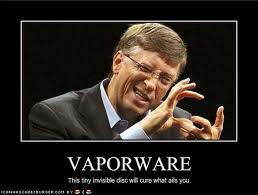
    2) Cements Microsoft's dominance in vaporware.


    3) Out: blue screen of death. In: blue cloud of doob.


    4) If you want more Clippy's, we're gonna need a little extra help.
    Clippy (NYMag graphic)